



The uneasy peace in Gaza has started a race among four emerging powers in the region, all competing to replace Iran’s retreat.
The ruthless conflict between Israel and Hamas is still fully active in Palestine. It’s so, despite the world’s long pretending to believe in a repeatedly proclaimed truce, which each party respected from the start only where it suited them. Yet the “pretended truce” is producing across the region a balance of power very different from the previous one.
Israel has unquestionably played, at least in the short and medium term, the dominant role, establishing itself as a force that none of the Middle Eastern middle powers will be able to oppose meaningfully.
In the long term, however, one way or another it may be forced to bear the burden — and the consequences — of the terrible ruthlessness it has shown. Such conduct, besides alienating much sympathy worldwide at both government and popular levels, will inevitably provoke feelings of vengeance among the Palestinians of Gaza, who have been the victims of its excesses.
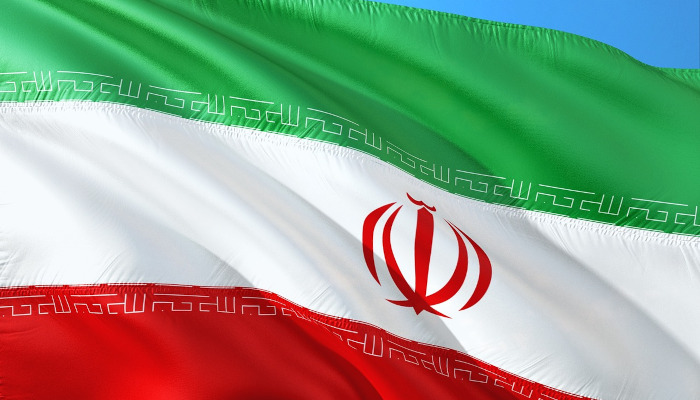
Iran, by contrast, emerges from these years of fighting with broken bones. Reduced to the role of a “paper tiger” in the region, Tehran has seen the network of allies destroyed by Israel through calculated, successive strikes. Iran had painstakingly built over decades, under the banner of Shia influence,
In the perennial Shiite–Sunni conflict, and even though the Palestinians are Sunni, it is indeed the Shiites who come out of the Israeli–Palestinian conflict heavily diminished. This will undoubtedly affect the next political moves of neighboring Sunni states, which are clearly searching for a new ex post balance to give the Middle East a semblance of stability.
One may exclude Syria, Lebanon, and Iraq — still plagued by persistent instability — and Jordan, which seems long ago to have definitively renounced a role that perhaps its royal lineage from the Prophet might once have allowed it to aspire to. Now, the contest for Sunni leadership, long underway, appears, as a consequence of the Israel vs. Hamas conflict, to have narrowed to just three, perhaps four, main protagonists.
The first is obviously Turkey, engaged for some time — thanks to the exceptional political skill of President Recep Tayyip Erdogan — in a challenging diplomatic game. It has allowed Ankara to regain strong influence across much of the areas that, until the early 20th century, composed the Ottoman Empire.
This has enabled the Turks to achieve significant gains, practically controlling much of Syria, and to present themselves as one of the most credible potential mediators. Moreover, this would be a mediator who is already willing to send troops on the ground to ensure compliance with hard-won agreements.
A step that Itay or the European Union seems unwilling to take these days. The refusal has already cost Italians the painful loss of any influence in Libya. Here, Ankara has supplanted Italy, intending to stay and profit from Italy’s shortcomings.
Also strengthened by the conflict is Egypt’s role, despite President Abdel Al Sisi’s consistent refusal to open his country’s doors to potential refugees from Gaza.
However, this was a politically understandable choice for the leader of a country that had to endure for a time a dominion — wholly ineffective and inept — by the Muslim Brotherhood (MB). MB still conducts guerrilla activity in the Sinai areas bordering Palestine, and it should not be forgotten that it is the organization from which Hamas originally emerged.
The role Egypt played in organizing and presiding over the peace conference in Sharm El-Sheikh that led to the truce shows, in any case, that it can play a significant role in any possible resolution of the tragic episode.
The Arab League has been chaired for several years by an Egyptian, Ambassador Abu El-Gheit, and thus Cairo can weigh in that forum as well, though probably not decisively.
The third candidate for Sunni leadership, Saudi Arabia, is a country that, if it has stood out for anything during the protracted conflict, has done so essentially for its absence.
Does it need to keep constantly good relations with the United States, on which the Saudis today depend almost entirely for military guarantees? Is it afraid that initiatives of its own might jeopardize the Abraham Accords? Is it aware of the limits of any Riyadh intervention in a situation so complex and inflamed?
A cocktail of all these things, combined with the idea that when calm returns, Saudi Arabia can carve out its proper role thanks to its wealth during reconstruction. A thought that, consciously or not, may have occurred to many key EU leaders as well.
Fourth and last are the cluster of Emirates on the Arabian Peninsula, led by Qatar. It was recently judged significant enough to prompt an unprecedented case in which US President Donald Trump admonished Israel for an action deemed beyond the limits.
Despite their political influence and apparently limitless financial resources, these states are nevertheless too small to exert decisive influence.
Napoleon once preached “La victoire est au gros bataillons!” and even now, especially in leadership races, a country’s size and population numbers continue to play a decisive role.
As the Chinese say, we are therefore heading into “interesting times” in the Middle East. Here, the smoldering flames of a war not yet fully contained will be overlapped by the conflicts of a triangular race for leadership. The race could be conducted without much restraint, given the ease with which the three involved “democratures” are used to acting on the international stage.
Through all this, one question remains: what happened to the so-called “Arab masses?” In other instances, they had shown tendencies toward awakening that seemed poised on the verge of a true Islamic renaissance.
In this war, they have neither been seen nor heard. Why? A question that certainly does not admit easy answers for the moment.