



The Ayatollah’s defeat puts more pressure on Moscow and Beijing. Yet, consequences may not be linear. America needs a comprehensive strategy for China.
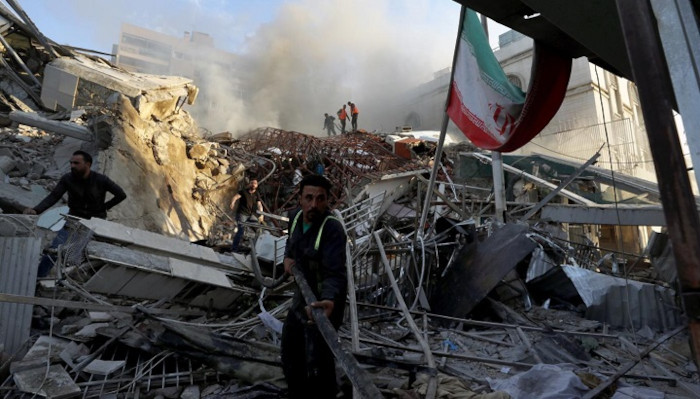
As US President Donald Trump announces the agreement on a ceasefire between Israel and Iran, the war in the Middle East has officially ended, and the ayatollahs have lost it. Still, as they are sophisticated and have a complex power structure that can withstand shocks, they live to struggle another day.
The entire balance of power in the region will be shifting. Israel is a great winner, but a majority Jewish state can’t be ‘hegemonic’ in a Muslim-majority region.
Turkey and Saudi Arabia are more likely to play a bigger role. However, because of the systemic show of force, they will need to pay attention to Israeli interests, which could, in time, lead to greater regional integration.
The ayatollahs’ power in Iran could survive, but regional influence—which had been growing since the overthrow of the Shah in 1979—is bound to wane and, eventually, disappear unless there is a radical change in Tehran. The Shiites, anyway, suffered a major setback in the millennium-long struggle with the Sunnis.
Pro-Iranian factions are politically dead in the areas where they held influence. It’s uncertain whether the ayatollahs will survive the humiliation or how they will spin the narrative about the loss of their strategic nuclear program.
For the Trump administration, it’s an apparent success with no risk and minimal effort, and a defeat for isolationism.
Therefore, there is a path here. The US can intervene with prudence, caution, and minimal effort to bring significant results at home.
This raises many questions about the US policy choices regarding Russia or China.
Will Russia become more reasonable in Ukraine?
With that, Russia—entangled in a war in Ukraine that it doesn’t seem able to win—will feel pressure. Iran has been an essential supplier of military goods and a significant political partner in the complex diplomatic game surrounding the conflict.
China, the third pole of this hazy coalition, has now kept its distance from Iran. Unlike with Ukraine or Gaza—where it rushed to pledge support for causes that proved to be lost (Moscow’s invasion or the Palestinian cause)—this time Beijing mainly remained silent, issuing a few bland statements about peace.
Apparently, Beijing is beginning to rethink its foreign policy and shift its stance.
It’s a new domino effect, but different from the past Cold War, mainly because China is very different from the USSR.
In Iran, Shia rule was established in the 1980s, and the old concept of Persia is at odds. Despite all their efforts, the ruling clerics haven’t managed to wipe out the Persian legacy, which may be stronger than ever. If the ayatollahs were to fall, ancient Persia could reemerge from a very shallow underground.
In Russia, generals and oligarchs can survive and might even be better off without President Vladimir Putin. If Putin were to fall, Russia could quite easily endure. It doesn’t necessarily mean the end of Russia.
China’s specials
This isn’t about a US-controlled “regime change”—it’s about a natural historical evolution, without any need for direct US meddling.
Yet China is very special. The old imperial system and the party organization are embedded in a new, strong, living form. About 30 years of Maoist slash-and-burn policies, and 40 years of Deng’s wild-East, freewheeling state capitalism, have torched all bridges with the past.
There is little or nothing China could revert to if Xi Jinping’s current rule were to collapse. Twenty to fifteen years of pervasive work through the almost almighty Central Party School, within a structural desert of ideas, have radically shaped China.
Even if the Iranian and Russian regimes were to fall, China might well survive and resist. It could suffer significant problems, but most likely, it could endure. It has already been prepared for this eventuality.
However, unlike Iran or Russia, China poses an existential challenge for the US. It is more complex and demanding than the Soviet Union was. In contrast to the USSR, China is integrated into the global economy and supply chains. It’s more pragmatic, less ideological, and more rooted in its culture and civilization.
China has long-term, comprehensive plans and programs that can be adjusted and refined, driving the country along a set trajectory. Only major political setbacks could derail this, and none have occurred in the past 15 years despite COVID and ongoing friction with the US and its Asian neighbors.
US new tariffs and trade negotiations policies may be positive, but they won’t eliminate the China challenge—quite the opposite. Therefore, the US may need a long-term, strategic approach to dealing with China.