



On the eve of a party plenum in which 45 of 376 members have been purged, China faces its most pressing question: is the model it has adopted right for its historical phase?
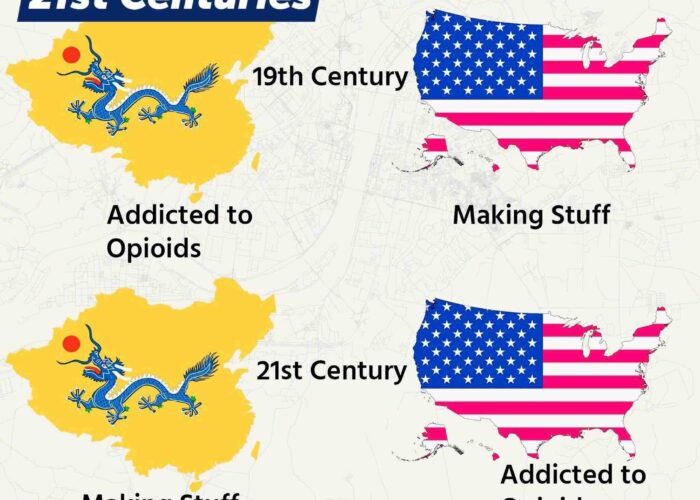
Beijing is uncertain. Domestically, it faces many problems, and foreign examples aren’t reassuring. If the US offers a positive model, Beijing might reconsider, but MAGA proves its point. The Pentagon versus the Confucius Centers.
In the early 1980s, after the Wall of Democracy protests in Xidan, and in the early 1990s, after the pro-democracy demonstrations in Tiananmen, when today’s leaders in Beijing took their first steps in politics, China feared heping yanbian, “peaceful evolution.”
The phrase described the gradual transformation of a communist state into a capitalist democracy, achieved not by tanks or revolution but by trade, ideas, and contact with the West. For a generation of Chinese officials, it was the great strategic danger: communism could collapse because of it. Yet it was also an unstoppable force. The Chinese state had to embrace reforms, i.e., peaceful evolution; otherwise, it wouldn’t work.

Italy’s streets are on fire, and Moscow may be holding the match. European governments must act to end any political ambiguity that favors Russia’s government. The US can’t gift France or Italy to Putin
Two forces, converging yet distinct, drive the violent protests in Milan and, perhaps, those in France and other European countries. The first is resentment, a social discontent that accumulated like dry wood. The second is the group that fans discontent, not to solve the problems but to make them grow. That probably helped organize the violence in the streets in recent days.
The two forces meet in a spark, which can be an incident, even an accidental one, during peaceful demonstrations. The incident, of course, may not be accidental; it may have been deliberately provoked.
The two forces must be addressed separately. Both are political, but they call for different policies. The first requires thorough analysis and medium- to long-term measures to remove the wood from the fire. The second requires swift action to prevent the fire from becoming a conflagration.














Recent Comments