


The regime is falling apart, and this could trigger tidal changes not only in the region but globally. America and China could be the first to take notice.
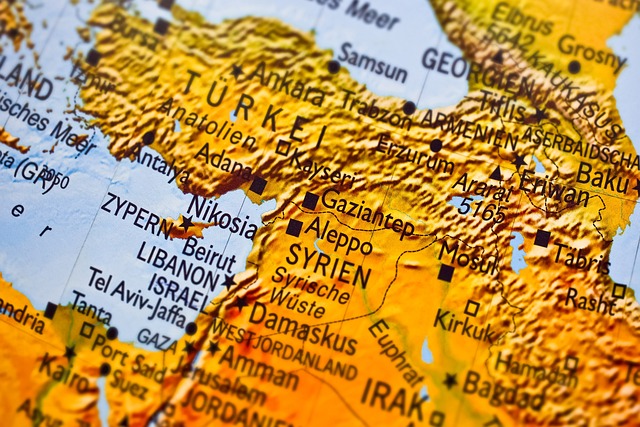
After a week of “long-distance” fighting, Iran is crumbling. Russia, overstretched in Ukraine, can’t offer help. China, after failures in Ukraine and Gaza—where it believed Moscow and Hamas would be victorious with ease—won’t be dragged into another lost cause. Beijing apparently realizes it cannot prop up a collapsing system.
Therefore, in these hours, Tehran faces a stark choice: either surrender, lick its wounds, and survive another day, or see the regime fall apart.
Here are a few lessons for the entire international audience. Perhaps one lesson is that the US, despite its power, cannot impose its will on anyone; it must adapt and respond to realities. If, despite all warnings, Iran refuses to surrender, it will eventually fall apart. The same applies to Russia. If, despite everything, President Vladimir Putin refuses a compromise, Ukraine can continue fighting, and the US should support it.
This evokes a ghost that has haunted America since 2003—the idea of regime change. But history offers lessons. In Iraq, Afghanistan, and Libya, the US tried to eliminate old structures and replace them entirely. It didn’t work.
After WWII, in Germany, Japan, and Italy, the US preserved old structures and selectively supported officials of former regimes. It proved successful.
If Iran’s regime collapses, the world must work with the remnants of the old system. If most of those officials are guaranteed a future, they will have a vested interest in overthrowing the current regime and ensuring a smoother transition for the new government.
This may also send a signal to Russia: not every military leader is necessarily aligned with Putin.
Broader issues
There are broader considerations for America’s isolationists: yes, the US cannot decide everything, and it doesn’t need to be involved everywhere. But it cannot completely turn its back on the world either.
The US can now claim to have won the Iranian defeat. China, similarly, didn’t back Tehran, so it can also announce that it’s not involved in what happens in Iran.
On May 30, China promoted the Convention on establishing the International Organization for Mediation (IOMed) in Hong Kong. According to the Chinese Foreign Ministry, around 400 high-level representatives from 85 countries across Asia, Africa, Latin America, Europe, and nearly 20 international organizations attended the ceremony. Of these, 33 countries signed the convention on the spot.
Even China, which has lost faith in the UN, has not embraced complete isolationism; instead, it is eager to promote a different world order. What will the US do? And what will happen next?
The battlefield, as always, is about ideas. What kind of order do the US and its allies envision? Martin Wolf in the FT (here) questions who President Donald Trump really governs for. He calls it “Pluto-populism”—the rich extracting from the poor through some deception. He argues this system is unsustainable.
When China reads this, it is shocked: “The American system is rotten, and we shouldn’t change ours.”
China’s economy is struggling, but its debts are mainly domestic. Beijing has much to show for its efforts: a sprawling infrastructure network unrivaled worldwide.
It’s a significant achievement, especially compared to the US, which suffers from a massive deficit amid decaying ports, airports, stations, railways, metros, and more. Where has all the deficit money gone? Many suspect it’s simply lining the pockets of the American super-rich.
On the other hand, Americans are confident, while the Chinese are not. There are many reasons, but in a nutshell: China lacks freedom, with no elections where people can—or even have the illusion of being able to—choose their future.
For half a century, many Chinese believed that siding with America would offer a better future. The country feels disoriented now that China is no longer aligned with the US.
China could draw some lessons from Iran.