



Hamas is winning the war of ideas and undermining Western values by distorting reality about “genocide”. Truth is crucial in politics and war. It is not like selling Coca-Cola or Pepsi. In a moment of huge tensions and immense uncertainties, dropping this foundation can lead to losing wars.
Whatever the military outcome of the ongoing Israeli-Iranian conflict, the fight is grounded on a perception of reality: why Israel should be destroyed (according to the Ayatollahs) or why it should be saved. It is actually based on a concrete element: is there a genocide of Palestinians in Gaza or not? If Israel is committing genocide like the Nazi, it must be destroyed, otherwise not. To answer it, we need a detour.
War is ultimately politics, albeit by other means. While there is an essential technical element in wars, politics remains paramount. In politics, whoever seeks the actual truth holds a massive advantage.
Mao gained power first in the communist party and then in the civil war, urging his comrades to seek truth from facts实事求是. He knew that power came from the barrel of the gun and that “truth from facts” drove the fingers pulling the trigger. After gaining power, he dismissed truth-seeking, and it doomed his rule.
The Soviets and Nazis, far removed from the truth in their conflicts with the West, emphasized technical dominance in the war while suppressing or distorting the truth and theorizing disinformation. Yet this strategy didn’t work for them.
In recent decades, many Western leaders have forgotten the lessons of the Cold War. It was not won on battlefields. It was won politically and peacefully for two reasons: the Soviet economy failed, while the Western economy thrived; the Soviets feared freedom of opinion, and the West didn’t. In other words, a principle of truth functioned in the West but not in the USSR. The Soviets feared the reality of a bankrupt economy and an imprisoned society.
Today, many in the West appear to have abandoned their pursuit of truth and, consequently, seem no longer able to effectively spread their ideas—instead resorting to a modernized version of Soviet-style propaganda.
Truth is never simple; it’s always complicated and not definitive. So simplistic fictions are easily peddled, and shortcuts are tempting.
Propaganda from Gaza
The West mastered propaganda through commercial advertising. In the late 1990s, after the Cold War, Russia began adopting and refining Western commercial propaganda techniques. They merged this with their old expertise in political manipulation, distorting the truth.
The underlying principle is simple: Coca-Cola and Pepsi are nearly identical; only the messaging differs. Some 90% of these beverages’ production costs go into advertising. Conscious consumers know this and choose based on branding and subtle taste variations.
Some now argue that the West-Russia debate is akin to choosing between Coke and Pepsi. If this principle is accepted, the Russian manipulators have already won.
But the truth is different. Freedom is better than paranoia—no one wants to live in a world where words can imprison or kill people. Better a world where words may not carry much weight, but at least they won’t get you killed.
Perhaps the problem is that some Western leaders no longer believe in their democratic system and seek to consolidate power, mimicking authoritarian regimes. This creates profound ambiguity in political messaging, as these leaders speak for themselves rather than for the system—just like dictators. This doesn’t deny the present problems of democratic societies, but shortcut solutions multiply the issues.
A truth about Gaza is that Israel does not know what to do with the Palestinians there. It treated the issue as unsolvable for over twenty years, leaving it unresolved.
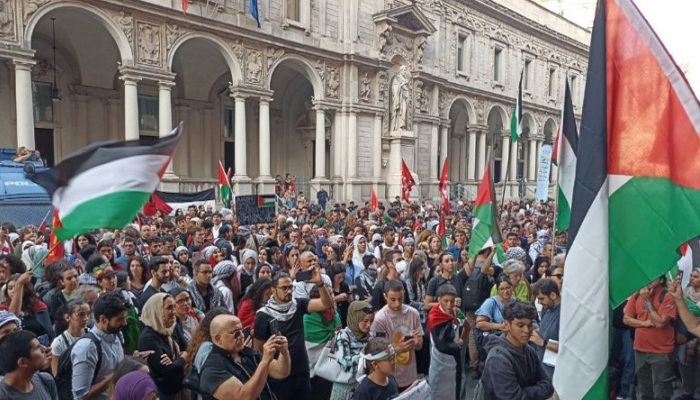
The October 7 attack forced the issue back into focus, but Israel still lacks consensus on a solution. Hamas exploited this indecision—the notion that the Palestinian question could remain unresolved—to craft a sophisticated narrative of “genocide.” (see here)
To sell this narrative, Hamas needed graphic images of destruction and bloodshed—hence, many Palestinian deaths. Hamas did not shelter civilians in its tunnels or prepare underground refuges. The apparent goal was to provoke a massacre of its people, manipulating international outrage to spread the “genocide” accusation.
A simple lesson emerges from this: The West mustn’t abandon the principle of truth or shy away from complex problems. If truth is ignored, adversaries ruthlessly exploit it, leaving the West adrift. To fabricate lies, one needs total control that forfeits the liberal societies driving global growth in the past three centuries. Then, it becomes a whole different ballgame.
Truth Gaining Ground in China?
As the SCMP reported (here), Chinese commentators have mocked the contrast between the US president’s pomp and the domestic unrest fueled by his immigration policies. To Beijing, America’s future looks uncertain—a factor that will heavily influence ongoing US-China talks. How can China engage with it if Washington cannot manage its affairs? Perhaps it is better to wait and see.
China is applying the same logic to Israeli actions against Iran. Military analyst Wang Shichun expresses deep disillusionment with Iran after the Israeli airstrikes, criticizing its overconfidence and strategic blunders, as David Kelly noted (here).
This shift could have significant strategic implications. Unlike its stance on Ukraine or Gaza, Beijing may refrain from picking sides—meaning no overt support for Iran. The Israel-Iran conflict could thus end sooner than expected.
But the consequences may be broader. China’s new approach could signal that it is refining its propaganda tactics, much like Russia—exploiting cracks in America’s credibility. Yet, at least partly, there remains a chance of taking China at face value.
A pragmatic sense of truth may have pushed Mao in the 1960s to seek to improve ties with the US and cut ties with the USSR. He may have been unconvinced by the results delivered by Soviet-trained Chinese economists, although he remained afraid of freewheeling capitalism.