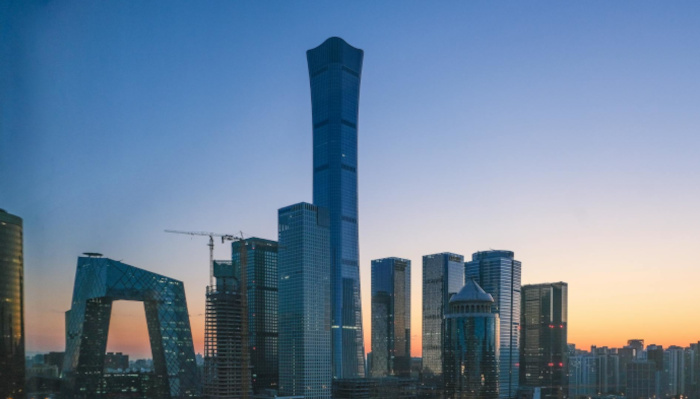




Beijing may have to decide where to draw the line and cut its losses in Ukraine. It may not want to follow Putin into the hole he has dug for himself.
Russia’s war in Ukraine has exacted a toll unprecedented in Europe since the end of World War II. Moscow may have suffered over 1.4 million casualties (killed, wounded, missing, or captured), including 500,000 killed, at a cost of over $500 billion — about 1% of its entire population and a third of its annual GDP – over four and a half years of war.
Millions are returning home deeply scarred by the cruelty of battlefields and with no clear prospects. It will tear apart families and whole communities for generations.
During this period, Russia has not extended its power over Ukraine or the former Soviet countries. NATO has grown stronger, with two new member states and rising military budgets. The United States, despite President Donald Trump’s initial hesitations, remains engaged in Europe and supports Kyiv.
The nature of the war on the ground, with the increasing use of aerial and ground drones partly replacing traditional infantry, has reduced Russia’s numerical advantage.
Greg Whisler and Michael Kofman argue[1] that:
“As the quantitative advantage grew on the Russian side, its ability to employ force at scale decreased. The resulting dynamic became a paradox: As Moscow fielded more forces, the value of that mass steadily diminished. The quality that the Russians expected to come from attaining quantitative advantages did not appear on the battlefield but was, over time, offset by Ukrainian adaptation, technology, and Western capital… Despite impressive wartime expansion, sustaining a manpower advantage through most years of the war, Moscow has been unable to convert this into significant battlefield gains or major breakthroughs… Russian forces could not come up with a solution to the compound challenges facing them, and they consistently pushed newly formed or replenished forces into offensive operations without taking the time to restore their capacity to execute… At this stage of the war, it is not clear if more forces would fix anything for Russia, unless its military changes the method of employment. Absent this additional mass, Moscow’s choices for breaking the battlefield stalemate are now limited”.
Russia’s options are narrowing. A general mobilization — sending to the front lines the youth of the big cities, spared so far from the conflict— would bring the war’s serious contradictions to the heart of the Russian leadership. Having already ravaged the provinces, it could devastate the big cities. The children, relatives, and friends of Moscow’s or St. Petersburg’s leaders would have to go to see combat or dodge the draft. Both options would create a deep crack at the heart of Russia.
There is no chance of a Russian victory or of a limited nuclear attack. If Moscow were to use the bomb, a nuclear escalation (which nobody, including the Russians, wants) would ensue. Then it would be a whole different ball game. A Russian incursion in the Baltics or any other military initiative could prolong the war but could hardly change its course.
Moscow emerged shattered from the conflict in Afghanistan in the 1980s, which caused only a fraction of Ukraine’s casualties. The damage to the society of roughly 140 million Russians from the war in Ukraine will likely have an impact lasting decades.
A recent essay by a leading Russian pro-government oligarch in The Economist[2] may suggest that the Russian elite is sensing the problems and groping for a way out.
China’s options
For China, prolonging the war at this point may entail rising incremental costs and rapidly diminishing benefits. Russia’s resources are shrinking as the war’s costs grow, meaning it will increasingly lack the means to pay for Chinese supplies. At that point, China will have to choose between abandoning Russia and spending its own money to keep Russia in the war. Both choices carry penalties for Beijing.
There is also a growing possibility that Russia could fall apart. At that point, Beijing’s choices become even more difficult.
To offset these risks, China could occupy or involve itself with Siberia, directly or indirectly. This would certainly expand Chinese territory and provide China with the mineral resources it desperately needs. But Siberia is not an empty territory — it is home to at least 20 to 30 million Russians who might not be thrilled to be governed by Beijing. Many of them would be battle-hardened, mentally unstable veterans of the Ukrainian trenches.
In any case, such an expansion would multiply the ethnic-unification problems that already plague China with just 8 million Uyghurs and 5 million Tibetans.
A Chinese acquisition of Siberia would also raise anxiety in Mongolia and North Korea. The latter would in effect become a territorial prisoner of China, yet armed with a growing nuclear arsenal nominally aimed at South Korea — but perhaps by then also intended for Beijing.
South Korea, Japan, and all the countries of Asia would become more nervous at that point. Nor has Beijing, in the meantime, improved relations with its neighbors. So, the Siberian acquisition would bring primary benefits alongside incalculable secondary damage.
China could also obtain part or all of Russia’s nuclear arsenal, giving it a force that, combined with China’s current capabilities, would match or exceed that of the United States. This would effectively trigger a second nuclear arms race with the United States, raising tensions across the board and potentially leading quickly to a division into rigidly separated blocs reminiscent of the first Cold War. This would directly affect Chinese commerce, crippling its trade surplus — today the country’s only genuine engine of economic growth.
The most rational and reasonable solution for China would be for the war to end as soon as possible. At this point, Russian President Vladimir Putin would need to serve as a scapegoat, and Russia should remain substantially intact in terms of territory and, in some way, neutral. China could help ensure a peaceful transition in Moscow by providing Putin with a haven, perhaps in North Korea.
Managing Defeat
With such an outcome, a series of not-insignificant damages would arise, but they could possibly be managed. There would be the reconstruction of Russia and the future of Central Asia, which over the past four and a half years has fallen under Chinese influence but, with the war’s end, could seek new alignments.
China would then have to manage the regional fallout from supporting a war that Europe viewed as directly hostile.
Before the battlefields in Ukraine, European objections to China were vague and essentially good-natured — European countries protested the lack of human rights in China. Chinese support for Russia, which Europe views as an enemy, has created a direct geopolitical clash between Europe and China. That clash is similar to, and perhaps worse than, the one that exists between the United States and China in Asia.
At the same time, the issue of China’s trade surplus with Europe has flared up. It has highlighted the risk of wiping out entire traditional European industrial sectors due to Chinese competition. The two elements reinforce each other and create friction between Europe and China that did not exist just five years ago. To begin rebuilding a positive-sum relationship between China and Europe, the conflict would first need to be removed from the equation.
Therefore, at present, EU problems with China far surpass those with the USA, which have also been growing in the meantime. Had China remained neutral toward Russia, the international landscape would have been different, and the EU might have inched toward Beijing or limited its friction to commercial issues.
Unpleasantness
Of course, the end of the conflict leaves two rather unpleasant possibilities for Beijing. The first is that Russia, far from being neutral, aligns with the United States, thereby encircling China.
The second is that Russia shatters into a thousand pieces, becomes a failed state, and creates dangerous instability for China itself.
In any case, these possibilities do not diminish as the conflict drags on —they grow exponentially.
If Russia becomes a failed state or aligns with America, it increases the likelihood of the same happening to Iran, which is currently under attack by the United States.
Until now, China could hope that Russia would find some accommodation, thanks to Putin’s shrewd maneuvering. But that has not happened; if anything, the Kremlin chief’s moves have plunged Russia ever deeper into a situation with no way out.
Now the issue is not winning but managing and containing defeat. The sooner Beijing faces it, the lower the cost. Over time, the opposite could be true unless the USA and the EU fall apart before Russia does.
It does not seem like a realistic gamble. China might bet on outlasting America in a race over a few decades, and it is a very risky bet. But the chances that the USA and the EU fall apart in a few short years before Russia does seem very slim.
[1] https://warontherocks.com/a-return-to-mass-russian-force-expansion-in-the-war-with-ukraine/
[2] https://www.economist.com/leaders/2026/07/09/the-man-who-would-change-russia