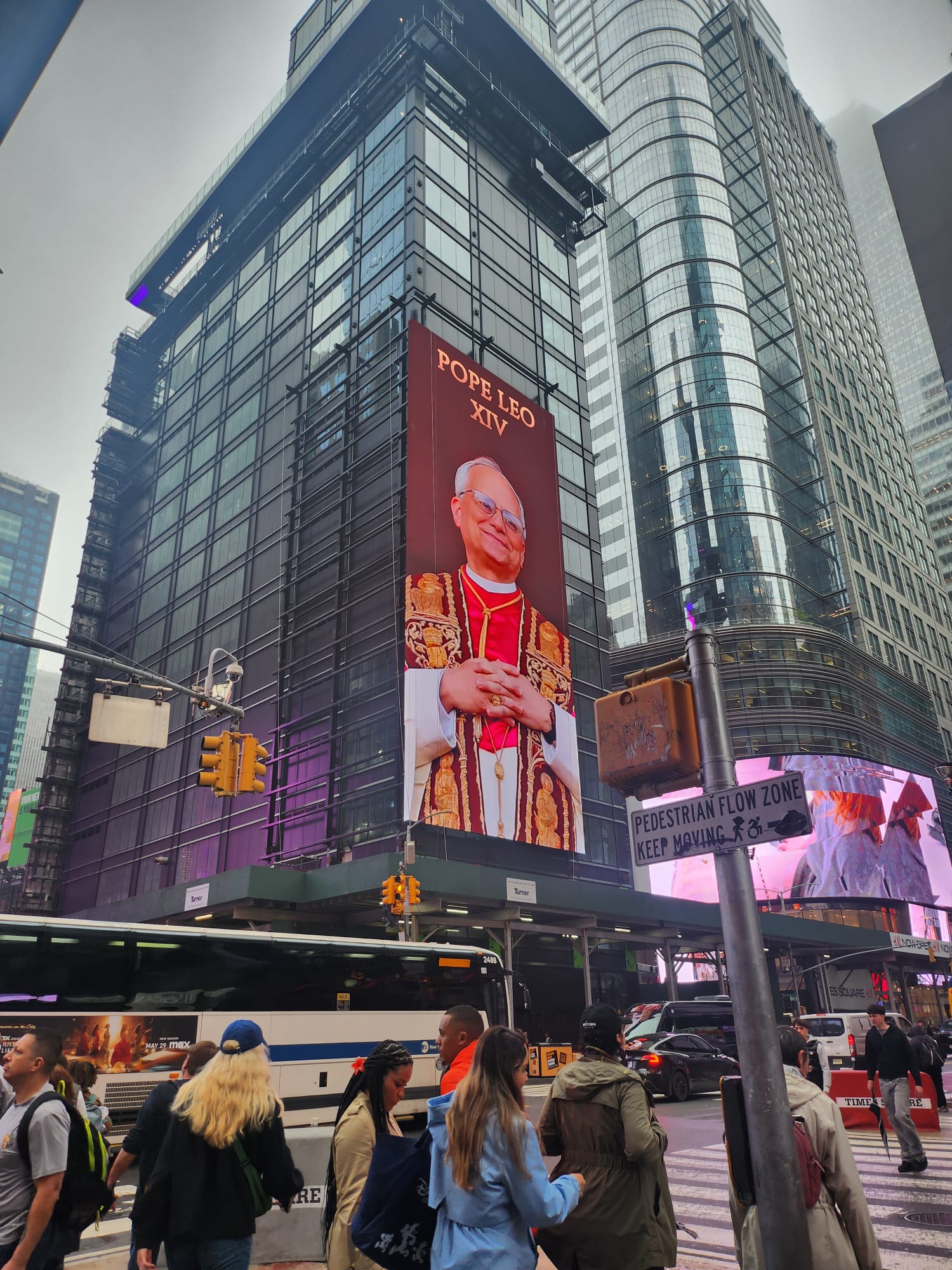




In his messages to the United States on the occasion of the 250th anniversary of the Declaration of Independence, Pope Leo XIII builds upon Cardinal J. Bernardin’s discourse on a consistent ethics of life in order to define the position of the Catholic Church in the face of major moral and social challenges.
It was late 1983. R. Reagan was in the White House, and J. Andropov was in the Kremlin. The Iran-Iraq War was raging, and Lebanon was torn apart by civil war. In September, the world found itself on the brink of a nuclear outcome to the Cold War. It was then that the Archbishop of Chicago, Cardinal Joseph Bernardin, delivered his historic lecture, “The Seamless Garment,” at Fordham University.
The so-called “culture wars” were casting their first dark shadows over the Catholic Church and the unity of the faithful. Cardinal Bernardin, well aware that such kind of wars might cause fragmentation within American Catholicism, took it upon himself to offer the American Church a unifying vision capable of reconciling various positions and defusing the potential conflict between American Catholics, which later materialized.
His proposal, building on the American bishops’ letter “The Challenge of Peace,” was for a comprehensive and coherent ethics of life. Bernardin believed that this document from the United States Conference of Catholic Bishops represented “a starting point for developing a coherent and comprehensive ethics of life. The sanctity of human life is his central idea, as well as our responsibility—both personally and as a society—to protect and preserve it. Because life is sacred, taking even a single human life is of incalculable importance. The recognition that every human life has transcendent value has led a significant part of the Christian tradition to affirm that life can never be taken”.
In his lecture, Cardinal Bernardin argued that the consistence of Catholic ethics hinged on the impossibility of separating individual morality from social morality. At the time, the main issues were abortion and war. “We understand our opposition to abortion and nuclear war as specific applications of this broader principle. We have also spoken out against the death penalty because we do not believe that its use fosters respect for life within society. The purpose of proposing a consistent ethics is to affirm that success in addressing any issue that threatens life requires concern for a broader societal disposition regarding respect for human life.”
***
The two messages Pope Leo addressed to the American people and nation on July 3 and July 4—the conferral of the “Medal of Liberty” and the 250th anniversary of the Declaration of Independence, respectively—weave together the threads of this consistent approach to Catholic ethics. Approach that was obscured and subsequently shelved by the American bishops’ and faithful’s decision to make “culture wars” the defining feature of internal relations within the country’s Catholic Church.
Pope Leo XIV emphasizes that Catholics’ contribution to the American project is the practice of their faith. This practice, “far from standing in opposition to the responsibilities of citizenship, lends new vigor to the pursuit of justice, peace and the common good, bringing to perfection every natural gift bestowed by the Creator.”
Any ethics of life that does not consistently pursue this social and global realization is incomplete. It lacks Jesus’ Gospel and cannot represent it entirely in the country’s civil and public life.
Human dignity is inherent in every person, regardless of who they are, what they have done, or their national background. It “calls for reverence, protection and care. In this spirit, a full understanding of this dignity leads to recognizing the importance of safeguarding human life from its beginning at conception until natural death, and of building a society in which the vulnerable, the suffering and the forgotten are always met with compassion, solidarity and love. Defending human life also includes welcoming, protecting and assisting immigrants, whose hopes, sacrifices and contribution have formed part of the history of this country from its very beginning. In every generation, those who have arrived seeking freedom, opportunity and a place to belong have helped to shape the nation’s character. To receive them with compassion and generosity is not only an act of charity, but also a recognition of the dignity that belongs to every human person.”
The history of the United States—and the promise and dream it has embodied for two and a half centuries—speaks to the magnitude of the challenge facing the American people and their institutions today. “I join you in asking God’s blessings upon America’s future, that the lofty ideals enshrined at the beginning of the Declaration of Independence may continue to guide the flourishing of the nation in unity, justice and peace. As every American knows, however, the path to building a society that would embody those high ideals of liberty and justice for all was not always easy and, in many respects, is still a work in progress. Indeed, the effort to realize this vision is one that must be taken up anew in each generation and in the face of ever new challenges.”
A country’s “moral greatness” is “is manifested, above all, in its capacity to support, protect and cherish the lives of all, especially the most vulnerable and those whose worth is questioned.” Any form of exclusivism—whether based on faith, race, or social and economic status—diminishes a nation’s strength and greatness.
***
Just a few days after the Trump Commission on Religious Freedom published its report, which has been criticized for focusing almost exclusively on American Christianity, Pope Leo recalled this central value in the founding of the United States, interpreting it in an interreligious and cosmopolitan light: “The religious freedom necessary to follow responsibly the dictates of conscience in this regard, free from fear and coercion, as enshrined in the First Amendment to the United States Constitution. It is this freedom that holds sacred the inner sphere of the person where convictions are formed and where conscience can guide the decisions made in the intimacy of the human heart. This same freedom also ensures the right of every person to worship according to one’s own belief, and of individuals, communities and associations to give public expression to their faith. In fact, religious freedom gave rise to the American tradition of allowing for interfaith dialogue and interreligious cooperation in promoting the public good and enriching the debates on the great moral and ethical issues that have faced the nation and shaped the course of its history.”
Today, the United States not only faces major ethical and moral issues and but has also embarked on a path of resolving them by force, with one side prevailing over the other in a spirit of resentment and revenge that tears apart the nation’s social fabric. In light of the current state of American society and politics, Pope Leo emphasizes the importance of rediscovering the spirit and style of the nation’s origins through a “public discourse marked by moderation, respect for the views of others and an ongoing effort to find common ground in promoting the cause of peace and reconciliation, at home and abroad.”
This common ground is precisely what the United States lacks today, at a time when the governing administration is operating in a way that precludes it. It is a sign of an executive branch that flaunts its grandeur, strength, and indiscriminate desire to dominate the constitutional framework of the United States yet fears a cohesive citizenry when faced with issues that ignite the conflictual dialectic that characterizes the instituting force of society.
“The forbearers of this country, men and women of diverse backgrounds, religions and languages, were able to find that common ground and the strength necessary to pursue a better future. The principles that inspired America’s founders, rooted as they are in the truth of the human person, brought them together in a single cause, a common dream. Unity lent strength to that dream, giving rise, under God, to the United States of America. E pluribus unum — out of many, one. In order for a nation to flourish, it must be truly united; united not by goals bound to momentary endeavors, but by ideals that do not fade with the passing of time.”
***
The May 1983 document on peace was the last sign of cohesion within the U.S. Conference of Catholic Bishops. Afterward, the “culture wars” increasingly became the local Church’s pastoral guiding principle. Even in the face of its initial disintegration, Cardinal Bernardin remained consistently faithful to the ideal of cohesion within American Catholicism. The first American pope is now reviving this consistency for the Church in his country.
Today, there is no one like Bernardin in American Catholicism or among the bishops, and his absence is keenly felt. In their message to Pope Leo XIV, the American bishops, gathered for their spring plenary assembly, placed heavy emphasis on individual morality and the secularism they claim is overtaking the United States. They devoted a few lines to defending immigrants’ rights.
The issue of peace was entirely absent from the message, even though the United States is at war. There was also no mention of the cultural fragmentation within American society, which is dangerously approaching a climate of “civil strife.”
Although addressed to all Americans and the citizens of the United States, these two messages from Pope Leo are first and foremost addressed to the bishops. Alongside a sudden nationalist devotion to the Sacred Heart, the bishops should cultivate an equal conviction in that evangelical sensitivity to the common humanity shared by all—even those who are not with or of us—which Jesus demands of his disciples.