


A 15-day truce will give Trump time to go to Beijing and stabilize the markets. But the crisis offers many lessons about political intelligence and the new limits of war.
Oil is resuming its flow through the Strait of Hormuz, markets will calm down, and so will inflation, at least for now. Iran accepted a 15-day ceasefire, mediated by Pakistan, following the threats and appeals of American President Donald Trump. The US should now have the time and means to head into the summit with China in mid-May with a credible hand, and thus negotiate a trade truce that could bring some stability, at least until the midterm elections. Meanwhile, the Iranian government, shaken by bombings and targeted killings, will have to lick its wounds and think about the future.
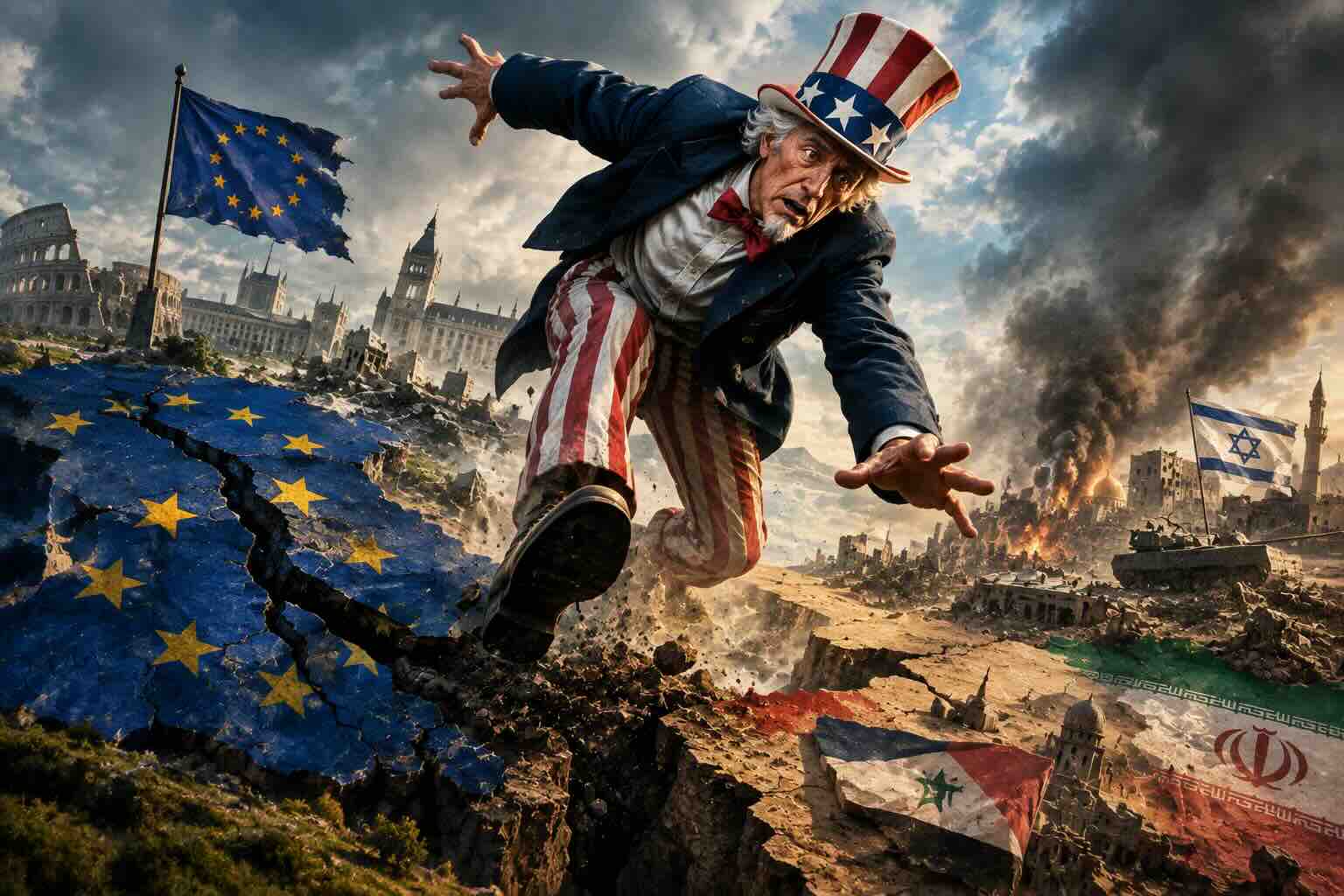
It is clear that the America that struck today could strike again, and it is equally clear that Iran has no alternatives except the existential one of blocking the strait — though in that case it risks a final retaliation against the country.
Over the next 15 days, and likely in the coming weeks and months as well, Tehran will have to reason through what to do. If the more moderate voices within the regime manage to steer the country in a new direction, a new chapter will open for Iran. If the regime instead entrenches itself in hardline positions, the country’s economic — and therefore social — difficulties will grow over time.
For China, it could be yet another problem: taking Iran under its wing after having already shouldered Russia.
America skirted at the last minute the gamble of a land war that would have flattened Iran but could have bogged down the US without any clear end in sight. Yet it showed that if America is threatened in its vital interests, it can credibly threaten to go all the way in.
The US could not go to China, which controls the production of REE and most industrial goods, while Iran, China’s ally, controls global energy and helium prices, thereby affecting the manufacturing of microchips. Plus, Israel and the Gulf countries needed clarity—either the USA wins, and Iran loses, or the other way around.
Over 60 years later, Hormuz might have been the closest thing to the Cuba crisis, the one that almost brought the US and the USSR to a nuclear war in 1962. Now, Trump should be freer to deal with Cuba as he’s pushing for a transition there.
Lessons
There might be important lessons learned from the crisis. The first is about intelligence and its use. The US and Israel have been effective at pinpointing targets. Still, they apparently missed the political dynamics in Tehran, betting that, under duress, the regime would buckle and not block Hormuz. The opposite happened. The assumption was wrong from the beginning, and when it didn’t pan out, the US doubled down, escalating the attacks and postponing the summit with China. The summit should have been postponed once again if Trump hadn’t threatened the annihilation of Iran and achieved a truce.
But the escalation was unnecessary, based on faulty intelligence. The killing of Iran’s supreme leader, Ali Khamenei, was already the necessary result. It was enough to shake the regime and set in motion some changes that would take time and diplomatic efforts. In general, the US has showcased a new and unique capability. It can kill anybody anywhere. America now has to learn how to wield this new political leverage.
The US failed to grasp Iran’s political landscape. There might have been some wishful thinking, mistaking protests for cracks in the leadership. The two are different: a popular uprising only topples the regime when it is extremely well organized, or when the regime collapses, disintegrates, or is completely defeated by foreign intervention.
Iran proved resilient in the 1980s, just a few years after the revolution, when it endured 1.2 million casualties yet didn’t give in to Saddam Hussein’s Iraq, which the US then supported, as Giuseppe Cucchi recalled (here). Nearly 40 years later, it might still be as stubborn.
US and Israeli intelligence have proven to be highly effective at identifying targets to kill or destroy, but, as Marc Polymeropoulos and Jeremy Hurewitz explained (here):
“Yet the applause around this success may in fact mask a potentially serious collection gap, as we don’t see the United States or Israel gaining advance knowledge of the Iranian regime’s plans and intentions. Why are we concerned about this? Because both Washington and Jerusalem seem to have been repeatedly caught flat-footed from the strength and character of the Iranian response. The Iranian aerial attacks against over a dozen countries in the Middle East and the closure of the Straits of Hormuz should have been actions that were picked up by US and Israeli spies.”
Also, apparently, the US and Israel underestimated Iran’s drone and missile arsenal stockpile and its industrial capacity.
More questions
In short, if there are political fissures in a regime, external pressures may help conceal them. A pressure release could crack them open. The regime will have to confront not the immediate enemy attack, but the slow grinding motions of economic and social damage. To that, a naked crackdown is no answer, because it doesn’t bring food or services to the ordinary people left with nothing but grievances that require some changes.
On that point, Jonny Gannon makes a broader observation (here): regime change in Iran is much harder than the US thinks. Covert action or foreign attacks can help topple a leader, but they rarely build legitimacy.
It’s unclear whether the intelligence community failed to provide the necessary information or if political leaders chose to ignore it. In reality, intelligence is only as good as the leaders decide to pay attention to it. Clearly, something was wrong here. The New York Times reports that (here) there was opposition in the US about the attack, but Israeli Premier Benjamin Netanyahu convinced the room.
Now the markets can breathe. Oil prices will go down, and so will inflation pressure. And some medium- and long-term drivers have been set in motion.
In a few years, pipelines could be built to bring oil and goods from the Gulf to safe ports in the Mediterranean or Oman. Then Iran would lose a strategic advantage and a bargaining chip.
Moreover, Iran has been battered. In the short term, Iranians will blame Americans, but after a few weeks and months, they’ll hold the regime responsible for dragging them into this misery. These grievances will reach the leadership, and even if they might not cause a regime change, they could widen internal cracks.
Iran’s survival may rely more on China, which is already burdened with supporting Russia.
On markets and war
Here, there is a lesson for China about what real democracy is democracy. US markets that hate Iran can turn against the US and its president. Markets are fair, can’t be pushed around, and work on free information. Stop free information, markets will stop existing, and modern wealth will disappear. So even in war, US markets do not obey the US president. This is the economic base of democracy and modernity, with its pros and cons.
Then, can wealth be accrued as efficiently without the help of free markets? Will global free markets trust China’s semi-controlled markets? And for how long? Will the bond between the dollar and oil, which has existed for over 50 years, really fall apart because of the Iranian adventure?
Maybe there are some lessons for the US, whose enormous military advantages also come with vulnerabilities. In a modern limited war (that didn’t exist before modern weapons systems and a globalized information sphere), you need to control the outcome. You do it with clearly defined, achievable objectives. Although you may have the escalatory advantage, you need to avoid any escalation. Then you can affirm your victory on the field, but equally important on the infosphere. If things spin out of control, you lose the narrative thread, and whatever happens on the field can be spun politically against you.
If this is done, war can be achieved through the air (as Douhet theorized a century ago). Without it, you need boots on the ground and to establish peace, like always. This is done by affirming your mission as righteous, by annihilating the enemy, or both. It was ordinary in ancient times, now, with comfortable lives, few children to spare for war, direct TV bringing horror into the kitchens, distance from the hardship and cruelty of making food (chickens are no longer slaughtered at home, very few toil on the hard soil), it’s much harder.
These emotions are not just theoretical; they directly influence markets that can dip and crash, wiping out trillions in savings, millions of jobs, and lives, and causing social and political upheaval in sophisticated nations. These nations are like Ferrari cars: beautiful, extremely fast, capable of miracles, but they need smooth roads to drive on. In the country, they get stuck in the mud and choke to death.
More primitive people, without refrigerators or supermarkets (the modern distance of killing your food), with plenty of children and patriarchal families (where grandfathers are master of life and death of youngsters), find it hard to understand the reasons for your war. Plus, they are too numerous and too culturally distant to annihilate, so they have an advantage in land fights.
If this is the situation, local political assessments are crucial. Surgical strikes can work only if the diagnosis is accurate, and one knows how to intervene.