


While in Rome for a gathering of the Catholic bishops’ conferences, Chinese bishops could not meet with Vatican officials nor with the Pope. This episode highlights the meticulous control exercised by China state authorities on the local Church.
A couple of Chinese bishops attended the recent meeting of the presidents of the episcopal conferences to mark the tenth anniversary of the apostolic exhortation Amoris Laetitia. Despite their involvement in the event, they were unable to meet with anyone from the Secretariat of State responsible for China, the Secretary of State, or the Pope.
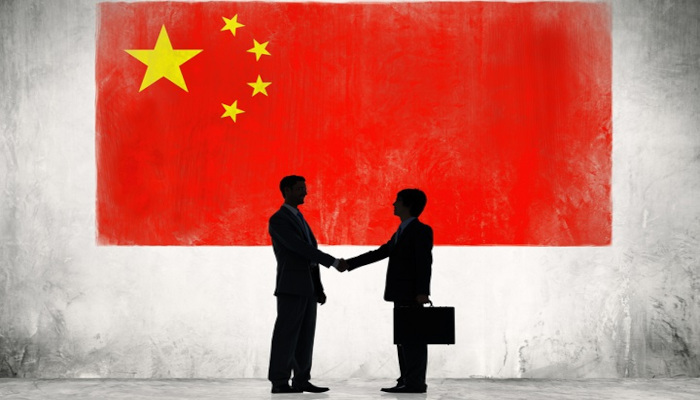
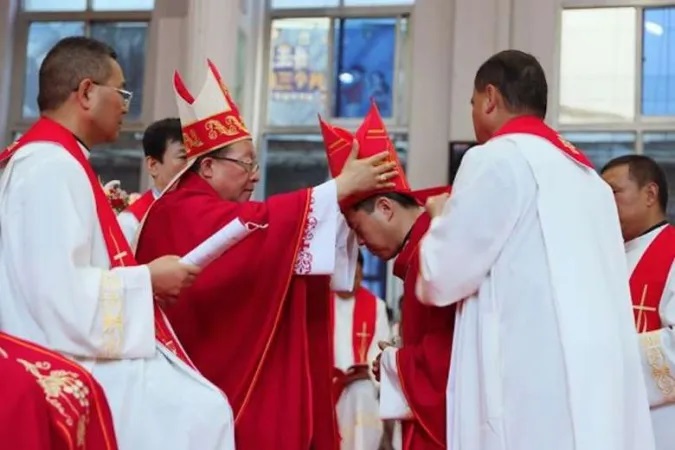
This episode highlights the meticulous control exercised by state authorities, despite the agreement between China and the Holy See. Nothing can deviate from Beijing’s precise directives. Nevertheless, the agreement on the appointment of bishops is functioning, albeit with some hiccups and delays. Following the ordination of Giuseppe Chang Yanfeng in Chifeng (Inner Mongolia), the following were consecrated as bishops: Francesco Saverio Duan Yongkun in Bameng (Chifeng), Paolo Liu Honggang in Datong (Shanxi), Andrea Ding Wang in Chongqing (Sichuan), and Ignatius Ding Zuaying in Hefei (Anhui).
Since Pope Francis’s Petrine ministry began, there have been nine appointments. Since the agreement took effect in 2018, 19 bishops have been consecrated with the government’s consent and Rome’s nomination. As Asianews points out on October 15, the young age of the chosen candidates is striking. Four of the five appointed in 2026 were born after 1980.
Not only were they educated within the Chinese context, but they also “grew up under the current leadership.” Shaped in the Party’s public schools and selected from tightly controlled seminaries, they have often had the opportunity to pursue specialized studies abroad. Will this be enough for them to grasp the meaning of religious freedom and human rights and understand that church membership is not always aligned with political direction?
These questions do not detract from the positive aspects, namely a selection process that ensures transparent moral standards and an acceptable level of Catholic maturity.
The Chinese government’s repressive and pervasive control is well known. Under Xi Jinping, this control has been further strengthened in the name of the “Sinicization” of faiths. In other words, political loyalty takes precedence over all else.
The president of Missio in Aachen, one of Germany’s most important missionary organizations, noted this in a statement on Katholisch.de on October 23. He speaks of the recent increase in repression: “Which specifically targets religious activities involving children and young people.” Chinese authorities prohibit religious instruction and participation in worship by minors. Signs at church entrances forbid children and young people from entering. In our countries, they are more commonly found in arcades. Surveillance cameras supported by cutting-edge technology enable the state to comprehensively monitor these and other regulations. Even live streaming religious services on social media is almost completely blocked. Furthermore, starting in 2025, bishops, priests, and members of religious orders must surrender their passports, which will only be returned for authorized travel abroad.
How can we reconcile this small diplomatic opening and the resulting caution with the justified condemnation of regulations that infringe upon personal freedom and human rights?
Diplomacy emphasizes avoiding a schism that would be difficult to mend, the limited awareness of the issue in China’s stoic civil context, and the belief that results will only be seen in the long term, perhaps in 30 to 40 years. Nevertheless, official dialogues—which are not always subdued—contain many specific references to human rights, particularly religious ones.
One of the key figures reminded us: “In due time, the archives will bear witness to how much the Holy See has done in its dialogue with the Chinese government, as in other critical regions of the world. We cannot make a ‘scene,’ but the necessary points are conveyed to those in authority.”
The worrisome darkening of the global climate, the crisis of multilateralism, and the work of diplomatic missions imply that legitimate public protests and parallel, non-conflicting diplomatic actions should not be pitted against each other.