




The US might find a silver lining in Ukrainian attacks on Russian oil facilities by boosting the American oil industry. However, Moscow could retaliate with hybrid strategies that may destabilize some EU countries, like Italy.
Is it a global market game changer? If Ukrainian attacks on Russian oil facilities continue and escalate, Moscow could lose much of its export capacity. This might cripple its war efforts and could have a far greater impact on the market.
India, Turkey, and possibly even China would need to diversify their supply chains. Meanwhile, alternative suppliers are shrinking. The US also blacklists Iran and Venezuela. Iran faces the threat of a new attack from Israel, and a strong US fleet is off the Venezuelan coast, threatening to overthrow the anti-American Caracas regime.
Then America, already a significant oil and gas producer thanks to its new fracking technology, could expand its oil markets. Many US allies are already required to buy US arms to upgrade their arsenal and are urged to buy American oil to replace Russian oil.
Beyond the intentions of any leaders, like President Donald Trump of the United States or Vladimir Putin of Russia, this perspective shifts the dynamics of the conflict.
So far, the USA has viewed the war as a threat to its economy. It has been a significant expense in the effort to hold back an adversary, Russia, which endangers European historic allies, but remains well outside American strategic priorities. However, the oil angle could be a silver lining for American industry, boosting its oil production and processing capabilities. The US oil industry may have a vested interest in defending Ukraine against Russia and the Russian oil industry.
If so, this could be a significant turning point in the war. Kyiv might get more and better support, and the war could turn in its favor.
Besides what happens on the front lines, the Russian economy might collapse, and China would face a difficult choice: keep supporting Russia and spend more, putting its already strained economy under pressure, or abandon Moscow to its fate. It’s unlikely that the China-Russia relationship will break, but this new development could test it and cause tension.
Beijing is resourceful and inventive and could develop a third and fourth option. Yet the current crossroads present new, challenging political scenarios for both Russia and China.
This impact also affects Iran and Venezuela. If their ‘big brothers’ struggle, their situation could become even more difficult. This is especially true for Venezuela, where the regime is faltering.
These growing concerns might explain the recent surge of provocative Russian actions. Drones and aircraft entered NATO and American airspace, and hybrid attacks involving cyber operations occurred across Europe.
The threat of a sudden Russian escalation could indicate that Moscow is gearing up for a larger conflict with NATO, where some members are notably unprepared and hesitant to deploy their armies. The implied request might be to curb Ukrainian long-range missile and drone attacks.
It’s uncertain how Europeans or NATO will respond, whether they’ll strengthen their defense measures or hesitate. Regardless, the Ukraine war has grown more intense, bringing a new challenge: confront Russia or give in. This situation also tightens China’s options, leaving even less room for political flexibility.
This could also indicate a real strategic weakness for Russia. At the same time, it might also create an opportunity for a hybrid Russian effort in those NATO countries that are hesitant in their opposition to Russia.
Italy could be an easy target. It is one of the three largest economies in the EU, with two openly pro-Russian parties—one in the government, Lega, and one in the opposition. M5s. In recent days, there have been significant and violent pro-Palestinian protests. Pro-Palestinian activists in Italy are often also pro-Russian.




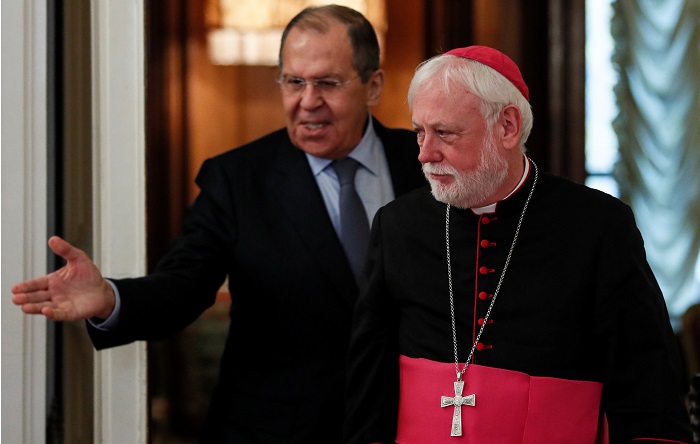


Ukraine war at an oil turning point – World News
Ukraine war at an oil turning point - Day News
Ukraine war at an oil turning point | Today Headline
This article shows a great ignorance of technical matters.
US oil production is part of the fracking boom that is now nearing its end. Recent effort at fracking produce gas and oil for a shorter time showing that the best places have already been found. The oil produced by fracking is light oil while US oil refineries are built to process heavy oil as produced by Canada and Venezuela and as it bought from Russia until not long ago – no doubt one of the reasons why US is sending amphibious forces to the sea near Venezuela. US is exporting its own light oil.
Most of the Russian territory and its oil refineries is outside the reach of Ukrainian missiles. Oil refineries are very vulnerable to fire and are built to limit the extend of fires and to rebuild any damage caused by such fires.
Russia is reaching limit of the wide belt of military defensive structures Ukraine built along its border with Russia. It is also using many fewer drones and other missiles than it is producing. It makes sense to suppose that Russia will use some of reserve forces it has near the front in combination with a large increase in the use of missiles to increase the area of Ukraine its is conquering probably to the Dnepr and/or the Black Sea coast. Ukraine wouldn’t have lost the four oblasts Russia annexed in 2022 and it would have kept the areas it is now expected to loose if it had been allowed to reached a peace treaty with Russia, as was nearly achieved in April 2022.
Un giro radical de Ucrania en la guerra pone en alerta a Rusia y dirige todas sus miradas hacia este país - vof-news.es