



The USA, Russia, and Israel are losing face in their military operations and will try to save it. How will the EU deal with it?
In Europe, the art of saving face — even when things go truly badly — is neither a well-known nor a particularly well-developed science among our decision-makers, and above all among political operators.
Things are very different in other parts of the world, and in particular in Africa and Asia, where probably everything can be lost — and in certain cases without any particular consequences — except face. Face must be saved at all costs on pain of your immediate and definitive relegation to the great limbo of the unknown, from which you’ll never again be permitted to re-emerge.
Despite everything, however, there are situations so important to the future of the community you belong to and of your country that, even in Europe, Russia, or the United States, saving face becomes a matter of mere, immediate survival.
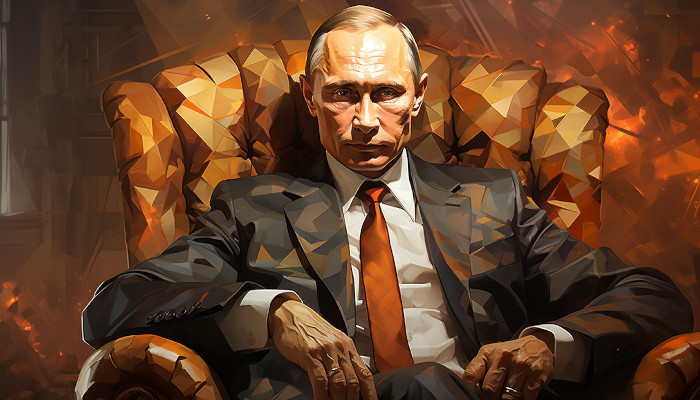
This is the situation in which US President Donald Trump and Russian President Vladimir Putin currently find themselves.
It is also the situation in which Israeli President Netanyahu will shortly find himself when, once the smoke of the bombardments has cleared, it becomes apparent that the Israeli Defense Forces cannot advance further in Lebanon. It would sustain a number of casualties that would be unbearable for its public opinion.
Trump indeed deafened the world for some time with miraculous promises regarding the defeat — or at least the containment — of an Iran where a series of targeted assassinations of leadership figures, directed by the US, together with the proposal of regime change. Some touted like a Shah’s son who left nothing but terrible memories at home. A regime change was supposed to lead to unconditional surrender before American power and demands.
Not only did this not happen, but the blockade of the Strait of Hormuz — the manifest consequence of the near-total failure of American action — ended up saddling the entire international community with conspicuous and unforeseen negative burdens. They are attributable to the responsibility of the United States and its President, who is, of course, also Commander in Chief, even in a climate of undeclared war.
Putin, for his part, has also repeatedly lost face over these years of war against Ukraine, in which the much-vaunted military strength of Great Mother Russia has failed to prevail over a former periphery of the old Soviet empire. The periphery is inferior in population, territorial extent, and resource endowment.
Having set out with the wind apparently in his sails — which should have allowed him to deal with a former province that refused to return to the empire in a couple of days — the Russian President has instead managed to take a succession of blows. There was a serious initial fiasco; a coup attempt that came very close to succeeding; a series of setbacks on the ground in theatres where every advance has cost him rivers of blood and approximately one million dead or wounded, concentrated mainly in republics which, however peripheral, will find it very hard to forget how their sons were used without scruple as cannon fodder.
Worse still — for there is never a limit to how bad things can get in cases such as this — Russia’s action has managed to give NATO precisely that impulse towards renewal which the Organization would perhaps never have been capable of generating on its own. An impulse that is now, for the first time in its history, inducing the European Union to confront the issue of military nuclear capability, which it had always previously avoided.
Finally, the case of Israel and its Prime Minister — a man and a country that seem prepared to commit themselves to a continuous military confrontation entirely lacking any prospect of conclusion.
For how much longer, however, can either the man or the country continue down this road without losing entirely that minimum residue of sympathy they still enjoy in international circles?
Beyond a certain point, “too much” becomes an undeniably “too much” — and the moment is probably already approaching when figures of prestige will rise throughout the West to underline how “the king has no clothes”. That is: how Israel, about the Palestinian Arabs, is acting by intolerable methods.
Three leaders, therefore, who, within a very short time, will be called upon to attempt to save their own face, and who will probably try to do so by selling to their own public opinions news that is abundantly distorted and/or interpreted in a self-serving manner.
What to do about it? Nothing, except to try to combat disinformation to the extent possible.
Remembering, perhaps, that it sometimes works by eliminating all inconvenient news that does not align with what those who run the show wish to demonstrate.
In Latin countries, news distortion relies on the skill of extraordinary journalists, capable of making arguments appear to you as the fruit of your own independent reasoning — arguments which, crumb by crumb, they have patiently suggested to you through their articles.
Pay attention, therefore. And a great deal of it.
In any case, whatever happens with the three leaders, whether they manage to save or lose face, there will be the problem of what to do with their countries, which are locked in extremely complicated situations. It poses a problem for the EU, too: how to deal with those three countries, with or without their face-losing leaders.