



The Loneliness of Europe. Churches and the Union, this is the title that the digital platform SettimanaNews has given to its annual meeting with readers (Albino-Bergamo, November 7-8). The international balance that has held since World War II ended in 1945 and the fall of the Berlin Wall in 1989 is crumbling. A redefinition of world hegemony is underway.
If we do not want to resign ourselves to the role of an insignificant periphery and accept the decline of international institutions as inevitable, then Europe is our possible future. Individual European states (including Italy) cannot effectively influence future balances. This change also challenges the church in its task of proclaiming the gospel.
The global balance has been upset
Russia’s military aggression against Ukraine, the nationalist stance of Trump’s current US administration, and China’s bid for hegemony are shifting the economy’s direction from the market to the politics of the most powerful states. This shift replaces shared rules with military power, collaboration with confrontation, and peace with the threat of war.
The European Union is overwhelmed by a triple shock of military, economic, and ideological forces. The war in Ukraine has revealed Putin’s imperial ambitions and brought war back to Europe. It has also exposed the inadequacy of the continent’s defense forces at a time when the United States is scaling back its commitments to the Atlantic Alliance. The issue of rearmament is emerging, placing the burden of response on citizens, institutions, and churches after eighty years of peace.
The U.S. administration has called the free market into question and is imposing heavy tariffs on all countries, including allies, to promote its own interests. It is preventing any regulation that could harm its own companies. Ideologically, “Trumpism” transcends the liberal tradition of the Republican Party. With the help of new technologies and social networks, it has demonstrated its desire to reset and rewrite the rules of democracy, and perhaps even abandon it altogether, as evidenced by its support for the attack on the Capitol in 2021. This is a direct assault on the principles that established the European Union and continue to guide it today.
It is a tense time for Europe
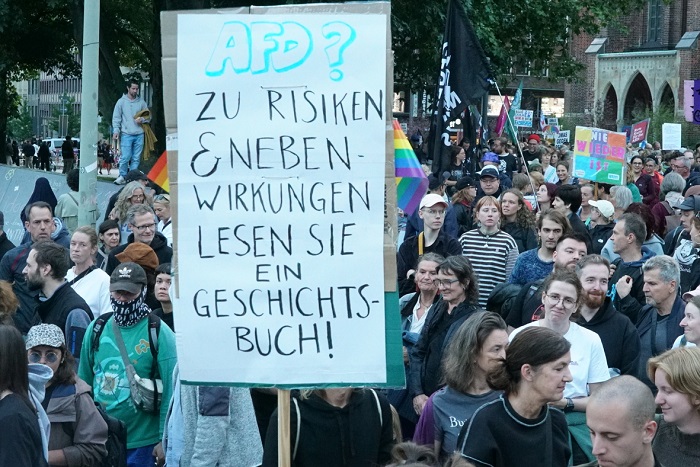
The change has highlighted the fragility of the European political and institutional enterprise. This enterprise has already been tested by decades in which the interests of states slowly regained their space, and the delegation of sovereignty came to a halt. Major joint projects, the urgent need for a shared foreign policy, and military defense tasks remain fragile. This is especially true given that some states, such as Orbán’s Hungary, oppose any progress, claiming to want the benefits of the Union without the resulting commitments. Many other political forces share this political stance, including the Lega in Italy, Alternative für Deutschland in Germany, and Rassemblement National in France. Brussels’ valuable regulatory work is no longer enough to avoid addressing the most difficult issue: the political integration of Union countries.
Due to the inertia of governments and institutions that seem reluctant to take responsibility in the face of accelerating historical forces, emergencies are multiplying. The Italian president Mattarella has repeatedly emphasized the duty to defend Ukraine’s nascent democracy and the challenging task of establishing a European defense that is neither a simple extension of U.S. claims nor merely a response to the push for unconstrained rearmament. Building an autonomous defense apparatus requires significant investments and widespread consensus. This will affect public spending and open the door to events we hoped to eliminate from our shared experience.
Individual European countries cannot cope with cyber-warfare and space control on their own. One of the most important issues is technology and large platforms. Those who control data can influence people and determine the form of democracy. In this area, too, the EU has lost ground to the US and China. As Mario Draghi said on August 22, “From the way the global economy is evolving, one thing is now clear: No country that wants prosperity and sovereignty can afford to be excluded from critical technologies. The United States and China openly use their control over strategic resources and technologies to obtain concessions in other areas. Any excessive dependence has thus become incompatible with our future sovereignty. No European country alone can muster the necessary forces to build the industrial capacity required to develop these technologies.”
There are many other issues, ranging from industrialization to education, that are rarely discussed. One such issue is the demographic decline that is robbing Italy and Europe of their future. Other issues include the weaknesses in the functioning of EU institutions, such as insufficient funding by member states, devastating competition between them on tax issues, and the requirement for unanimous decisions which has now become completely incomprehensible.
More generally, there is a lack of consensus among populations regarding the European project. Beyond individual critical issues, such as lack of medical coverage and efficient transportation and modest schools in peripheral areas, there is the question of the enterprise’s reference values and a “vision” capable of inspiring commitment and motivation.
The churches face challenges and fragility
This is where the specific role of faiths, and Christian churches in particular, comes in. The Catholic Church has been involved in the process from the beginning. There have been critical points, such as the failure to include “Christian roots” in the Treaty of Lisbon (in force since 2009), and regarding legislative guidelines on personal and family morality issues.
Overall, however, support has been strong from both the Holy See and the relevant episcopates. For example, consider Pope Francis’s speech at the Charlemagne Prize ceremony in 2016. “In the last century, Europe showed humanity that a new beginning was possible. After years of tragic conflicts culminating in the most terrible war in memory, something unprecedented in history arose with God’s grace. The ashes of the rubble could not extinguish the hope and search for others that burned in the hearts of the founding fathers of the European project. They laid the foundations for a bulwark of peace—a structure built by states united not by imposition, but by free choice, for the common good, renouncing confrontation forever. After so many divisions, Europe finally found itself and began to build its home […]”.
Memory allows us to draw inspiration from the past to courageously face the complex, multipolar framework of our times and accept the challenge of “updating” the idea of Europe with determination. Europe must be capable of giving birth to a new humanism based on three capacities: the capacity to integrate, the capacity to dialogue, and the capacity to generate. While the Catholic Church has been the most systematic in supporting the European project, other Christian churches have also supported it in different ways and at different times.
I am not aware of any formal, official position against the European political project by the ecclesiastical leaders of the Christian denominations. Both the Reformed churches and the Orthodox and Anglican churches have shown sympathy and agreement. Regarding Brexit, the UK’s exit from the Union, Anglican leaders expressed support for remaining in the Union. There was no shortage of criticism and distance. For the Reformed Churches, the absence of any reference to Christian tradition in the treaty is questionable, as is the institutions’ lack of attention to religious minorities and persecution outside of Europe.
Resistance is more consistent in Orthodoxy. The monastic world, in general, has been very critical of the European Union, seeing it as a dangerous threat to ecclesial traditions and moral laws. Opposition to individual identification numbers and health regulations during the pandemic is an example of this. Even more serious is the nationalistic shift of many Orthodox churches. These churches have recognized themselves as playing a fundamental role in post-ideological national identity. However, they have slipped into forms of collusion that lack the critical depth and universal dimensions required by the Gospel.
The most serious case involves the leadership of the Russian Orthodox Church and the “Slavic” churches, such as those in Serbia and Bulgaria. Cyril has embraced President Putin’s military aggression against Ukraine to such an extent that he has imposed a demonic narrative of the entire West and its recent history on his church. The European Union is portrayed as a polluted source of public depravity and the Antichrist, and Russia is seen as the only resistance against it.
Returning to the Catholic Church, it is worth noting the mistrust, if not outright opposition, of the episcopates in the Visegrad Group countries (Hungary, the Czech Republic, Poland, Slovakia, and some Balkan countries). They accuse Brussels, not always without reason, of imposing “rights” (including abortion, same-sex cohabitation, and sex change) that local populations do not support. They claim that Brussels is using Western legal platforms to nullify local identities and traditions.
This position is widely shared by the Council of European Bishops’ Conferences (CCEE) and is partially opposed to COMECE (Commission of the Bishops’ Conferences of the European Community). The two positions differ in their views on the potential demise of neo-Christianity in light of Francis’s magisterium. Regarding relations with states and legislators, the paradigm of “non-negotiable values” must be overcome. The binding reference should be the Gospel and the “signs of the times,” not the magisterium and natural law. This approach could prevent a “state of confession” in response to unacceptable EU legislation. Significant dissonance does not remove the Church’s responsibility to support Europe’s common path.
The Catholic church needs more vision and less ideology
The European Union was born in the crucible of the postwar period with the imperative of peace. However, other fundamental values have emerged around it, which the Treaty incorporates. These include democracy, freedom, independence, sovereignty, prosperity, and equity. However, the Union is often reduced to a market, a currency, and a set of technical rules. This prevents the Union from nourishing the hearts of citizens and providing a vision that can motivate and sustain effort.
In the context of recognized non-confessionalism and autonomy with respect to religious claims, the Union often experiences ideological secularism, which is geographically limited to Belgium, France, the Netherlands, and the Czech Republic. Embraced by an important bureaucratic class, this secularism lends itself to Pope Leo’s critical observation. During his meeting with the European Parliament’s Working Group on Intercultural and Interreligious Dialogue on September 29, he said: “European institutions need people who know how to live a healthy secularism—that is, a way of thinking and acting that affirms the value of religion while maintaining a distinction from the political sphere, not separation or confusion. Here, too, more than words, the example of Robert Schuman, Konrad Adenauer, and Alcide De Gasperi is worth following.”
In order to engage the working classes and those on the margins of society, including young people, it is imperative to provide a “political vision” that incorporates institutional and administrative data alongside the promotion of moral and spiritual values.
As Ernst-Wolfgang Bockenförde has rightly noted, the state and liberal institutions thrive on value assumptions that they cannot guarantee. One of the last heirs of the critical thinking of the Frankfurt School, Hartmut Rosa, adds: “Religion has the strength and a reserve of ideas. It has a ritual arsenal full of songs, gestures, spaces, traditions, and practices that give meaning to being called, transformed, and resonating. If society loses all this, if it forgets the possibility of relationships, then it is doomed. When asked whether today’s society still needs the church or religion, the answer can only be yes.”
Neither the regulatory framework, institutional power, nor the Churches’ long and controversial historical tradition can intercept this demand for meaning in personal and collective life. Rather, it is the Gospel values themselves: peace, forgiveness, reconciliation, and solidarity. Their relevance remains.