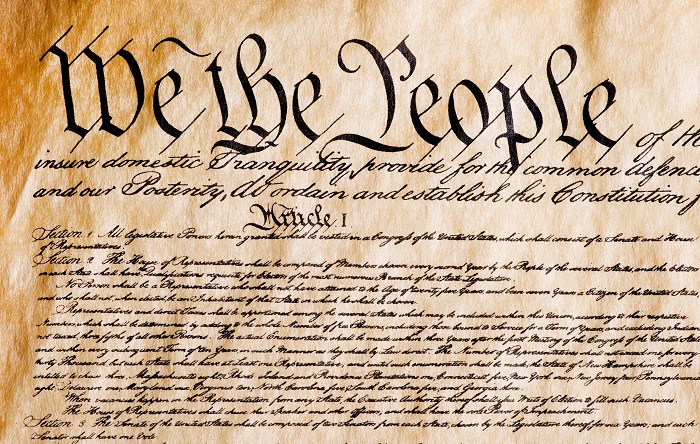




In the USA and Europe, immigration is the root cause of the new identity crisis. In China and Asia, it’s about politics and Taiwan. There seems to be a new global quest for identity similar to the one that shaped nation-states two centuries ago, moving away from old royal identities.
America was a nation of immigrants and settlers. The difference between the two is largely ideological: settlers radically displaced the previous population, whereas immigrants adapted to the anthropological environment they found.
Therefore, settlers established the cultural framework immigrants had to accept to be integrated into society. Still, when immigrants become too numerous, they de facto turn into settlers, anthropologically displacing the original inhabitants. So, the difference between the two could be paper-thin.
America’s recurring problem has been and remains integrating each new generation of immigrants from different countries. Another of its problems, until recently, was maintaining a White, Anglo-Saxon, and Protestant (WASP) majority identity.
To preserve this majority identity, America didn’t incorporate the Philippines or Cuba, nor did it expand too far into Mexican territory — actions that, together with internal minorities, would have eliminated the WASP majority, as Daniel Immerwahr explained in his 2020 “How to Hide an Empire: A History of the Greater United States.”
Yet that wasn’t enough. Today, there is an even more significant identity shift, because for the first time in over two centuries, the majority of the population is no longer White and Protestant. And, despite being a minority religion, Catholicism is the single most important and influential religion in America. All these shifts are changing the composition of the American atom.
WASPs no longer have total rule; they are part of the majority but do not hold absolute sway. They may fear being “settled,” becoming the new Indians, and sometimes choose to live in closed communities that protect them from the changing environment. Still, opposing change rarely prevents it. The best antidote to revolution is reform.
Europe, different immigrations and national and continental identity
Unlike America, Europe had never been a country of immigration until about 40 years ago. It was a place of emigration. It therefore has no true old cultural or social experience with immigrants. They were colonizers, and now, seeing waves of immigrants, fear being colonized.
Moreover, for former colonizing powers, new immigration mixes with old colonial legacies. In France and the UK, citizens of former colonies in the 1950s and 1960s chose the colonizing country over their country of origin. They then chose to be loyal subjects of the colonizer and, in some sense, accepted being second-class citizens away from home.
Naturally, from the 1950s and 60s onward, the situation changed radically. The second, third, or fourth generation no longer wants to be a second-class citizen. They have often had confused, contradictory relationships with the ancient country of origin, just as their relationships with the actual homeland where they were born and have always lived are confused and contradictory.
On top of this substratum, successive waves of immigration have arrived from other European countries, Asia, or Africa. For Europe, this is an even deeper identity shift than for America. In these European countries — until a few years ago and even today — there was only a national identity, shaped basically since the 19th century, and no European identity.
This European identity is a coat of paint, a veneer laid over centuries of diverse history in the last few decades. Beneath the paint, cracks and deep fractures in the structure are visible. Yet the paint is there — it is not fake. Indeed, the paint rests on a base of plaster laid by Europeans and Americans after World War II, when they buried the hatchet after centuries of war and sought a common path.
One does not go back too far in time, but between plaster and paint, there are now over eighty years of something held in common. As for the United States, still, sometimes seeking a WASP identity is an understandable, if naïve, reaction, so across Europe, the reasonable and understandable quest for a mythical, almost mystical national identity is equally naïve and understandable.
The battle against naivete should not obscure the reality: the new Europe is halfway across the ford. The great true effort should be to give itself an identity. This must be substantially developed at the drawing board and spread through a process of education in schools and the mass media. There are no other means.
Roots of social consensus
To manufacture it, a deep consensus among leadership is needed. It also means that the long-term political process should be removed from the daily challenge of the ballot box. It should start with a reasonable and pragmatic assessment of the state of affairs.
Europe needs a workforce; it is not having enough children now or in the foreseeable future. By contrast, Asia and Africa are still producing children and have excess labor. If channels are not created to relieve the demographic pressure on both sides — one without “water”, the other with too much — the dam cracks and ultimately collapses.
Strengthening the dam means that the water passing through the dam’s outlets must be adjusted to the new climate on the other side. Europe must find its own identity and also give it to the new “Europeans” arriving from outside.
It is not an easy process, but for example, the Catholic Church is already working on this, and at this point, it should be supported rather than hindered.
Moreover, cultural identity must be grounded in a social contract. But that, too, is fraying in Europe.
The USA still works, though with fatigue and malaise, because it is the land of opportunity. Here, everyone can become rich.
Europe was the land of the welfare state, where everyone was taken care of. The welfare state was also the answer to communism: proof to Eastern Europe that the West could take care of everyone better than the East. Yet now the allure and threat of communism are gone, and the welfare state is decaying too.
If in Europe there is no longer a welfare state, or it’s not guaranteed, and there is also no land of possibilities, where is the social driver — the social glue? Europe, even with a cultural identity, could fall apart.
Then the European crisis becomes deeper than the American one. And European elites often seem oblivious to it.
China’s identity crisis
China and Asia face different identity crises, not based on immigration but on territory and people. The People’s Republic of China (PRC) lays claim to the island of Taiwan (the Republic of China) also on the basis that almost all local people are Han, the ethnicity that makes up 95% of the PRC’s population. Other PRC ethnicities, such as the Uyghurs, Tibetans, and Mongols, are restive, and their original lands make up about half of the PRC’s territory.
If Taiwan, almost entirely Han, were granted political independence, the claims to independence by Uyghurs, Tibetans, or Mongols would grow stronger, and the PRC could be poised to lose half of its space.
Presently, the prospect of PRC military intervention is controversial on many levels.
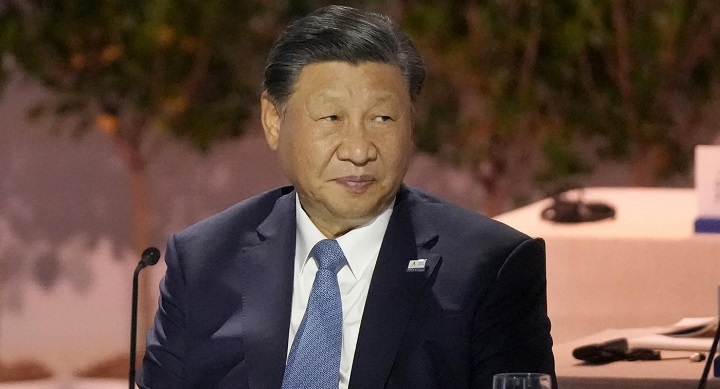
President Xi Jinping has recently tweaked Chinese policies on Taiwan. It has officially abolished ethnic designations (marked on official residence permits), thereby watering down minority identity. It is also trying to woo pro-PRC forces in Taiwan. In early April, it invited KMT chairman Cheng Li-wun (friendly toward Beijing) to the Mainland. The bet could be backing Cheng to become Taiwan’s president in the early 2028 elections. Then bilateral dynamics could take a different turn. The road to peaceful reunification could be open despite US objections.
But things are not that simple.
Still, China’s problem with Taiwan is not simply bilateral, nor is it simply with America. It is a problem of China’s relations with Asia.
In 1999, after the Asian financial crisis, the countries of the region did not align with America when it raised concerns about Chinese encroachment in the South China Sea. They were either neutral or pro-Chinese. They distrusted America, which had supported and perhaps triggered the 1997-98 meltdown that had shaken the region’s economies to their foundations.
Today, China no longer enjoys the former regional goodwill; it is surrounded by suspicion. If China were somehow to regain control of Taiwan, it would create a divide between South Korea and Japan — the two most advanced economies on the continent — and the Philippines, Vietnam, Indonesia, Malaysia, and all of Southeast Asia, as well as India.
Thus, beyond the will of the Taiwanese themselves, the region would have its own intention not to facilitate and support such a return, thereby creating a new political geography in the area.
Conversely, to eventually achieve the return of Taiwan, China would need the full trust of all these countries in the region. At that point, America’s position would be different.
We also see America’s position on Iran: it is not simply bilateral. Behind the tension between America and Iran are the Emirates or Saudi Arabia, pressing for the Iranian question to be resolved one way or another.
That is, the American intervention rests on local interests. Without a support base in Japan, Vietnam, India, and Indonesia, America’s position on Taiwan would be different.
If China truly wants to resolve the Taiwan question, it must first untangle the knots it has accumulated over the past 20-30 years in the region. Otherwise, the region, perhaps using the pro-independence forces in Taiwan as a shield, will obstruct reunification.
The Taiwan question then concerns the global political order, in which the region is central. The Asia-Pacific is home to 60% of the world’s population and 60% of global economic growth.
The Chinese identity crisis is not simply domestic; it’s about what China can and should be in the world. Beijing needs to convince the world, not a bunch of immigrants, of what it wants to do.
Similar challenges apply to Asia, which, though suspicious of America, seems more inclined to side with Washington than with China and thus to bet on a more Asian USA.