




In the Trump-Xi meeting, the long-term issues are the backdrop the two won’t discuss. They strain bilateral ties, but are too thorny to touch. Both will wait for the midterm elections.
(based on a conversation with Marco Mayer)
The May 13-15 Beijing summit between US and Chinese presidents Donald Trump and Xi Jinping takes place on two levels: one of deep, long-term issues, the other of short-term, superficial ones.
The long-term issues that America and much of the world have with China are dual in nature — economic-commercial and geopolitical. The economic-commercial dimension means that China’s surplus, its non-convertible currency, the closure of its domestic market, and the depression of its domestic consumption are and will increasingly become an unmanageable problem for global trade and the economy. 1.4 billion Chinese can’t live off the consumerism of 300 million Americans. This Chinese imbalance is not only with America but also with many — if not almost all — of its trading partners. More or less, everyone complains about their trading relationship with China.
At the geopolitical level, there is also the question of whether China has cordial relations with its neighbors. Rightly or wrongly, they lament Chinese assertiveness on territorial matters and, more generally, how bilateral political exchanges are managed. There is no relationship of equals, and they perceive bullying.
The United States, on the other hand, has other kinds of problems. Its growing debt and its trade deficit are objective imbalances in world trade as well. They are offset by the fact that American technology and finance have provided the great industrial and technological revolutions of the past forty years, and, on the other hand, the greatest financial returns in the world on the largest and most respected market.
American political relationships also face difficulties. For 80 years, NATO has been the keystone of American and global security, yet it did not substantially change even when, in 2011, America announced its Pivot to Asia. The first real shock to NATO came in 2022, with Russia’s invasion of Ukraine.
Then Sweden and Finland joined NATO, strengthening it. But the new political enlargement was not matched by military operability. The European members of NATO did not contribute in a preponderant way — in terms of equipment or funding — to the Ukrainian military and economic effort against Russia. It remained largely on the shoulders of the United States. Meanwhile, the US had for a decade needed to look towards Asia, precisely to counter China and strengthen its allies there.
This has created objective tensions between the United States and NATO. Nor has NATO broadened its scope of engagement in Asia — something that would have helped the United States. We thus have a United States that is politically off-balance between its old axis of alliances and its new political-military commitments. Russia, Iran, and China have taken advantage — and could increasingly do so in the future — of this American imbalance.
The jolt
At this point, Trump delivered a powerful jolt. If the old American Order no longer functioned, it was just as well that it be shaken by America itself, moving from a passive to an active position. The jolt has not yet produced a new equilibrium, and the instability — already great before — now seems even greater.
Indeed, in Asia, the network of alliances and agreements has not yet been set in stone. It remains highly uncertain. America — or even potential allies — do not want a NATO-type structure that demands many things of its members, including that they be democratic regimes. This prevented Spain from joining NATO until the fall of Francoism. In Asia, Vietnam is certainly not democratic, yet it has increasingly good relations with America, Japan, and India alike. On the other hand, these Asian balances demand — precisely because of their bilateral nature — greater attention from the United States, which has traditionally been more accustomed to Europe than to Asia.
These underlying problems will very likely not be addressed head-on during the forthcoming Beijing summit. Both sides seem interested in taking each other’s temperature and maintaining diplomatic contacts, because the wars underway in Iran and Ukraine remain highly uncertain.
What is certain, however, is that neither Russia nor Iran is a winner, beyond their proclamations of victory. The economic reality doesn’t escape Beijing’s attention. Their economies have been devastated by war, while the West complains about rising oil prices — all things considered, an insignificant development given the conflict’s current impact.
It is a time-limited summit. It will set parameters that will remain in effect until the American mid-term elections in the autumn. By then, both China and America may be interested in revisiting their respective positions and the overall picture.
In the meantime, the wars in Iran and Ukraine might also have borne fruit. One of those fruits will have been an understanding of whether Europe, or Japan, India, and South Korea — net oil importers and the first victims of expensive energy — will have weathered the ongoing energy crisis.
Beyond the eventual outcome, China, the USA, Asian neighbors, and the rest of the world must prepare for structural changes to peacefully address a situation that could otherwise easily degenerate into a generalized war.
China’s great strength lies in its industrial capacity, which equals that of the rest of the world combined, in primary industry — mineral processing — and in secondary industry — the production of capital and consumer goods. Its Achilles heel is that it lacks technological primacy and is simply chasing American technology.
US tech primacy
America has, over the past 40-50 years, been the only center of truly great technological innovation. This marks a turning point compared to the past.
Until World War II, Europe remained the great forge of industrial and technological innovation. After the end of the Second World War, America began to come alongside Europe — both Western and Soviet-orbit Europe. In the 1970s and 1980s, first with the computer revolution and then in telecommunications, the US rapidly asserted a near-total monopoly over new technologies.
Today, artificial intelligence — both in software and hardware — is purely American in origin. The Chinese, who are giving chase and could sometimes surpass America in specific areas, are not, for now, the originators of any technological revolution. The Chinese are aware of this gap and want to close it.
It seems, however, that America has not fully come to grips with its own gap — the backlog it has accumulated in primary and secondary industrial production. Both gaps — the Chinese one in technology and the American one in industry — reflect genuine structural problems.
The Chinese gap in technological innovation may also stem from an illiberal climate, both intellectually and in financial and market investment. To put it bluntly: China might need to become more liberal to drive the next wave of technological innovation rather than simply chasing America.
America, conversely, might need a different social structure for labor to bring back home the industrial production that has migrated abroad. Furthermore, China would need deep political reforms to spur domestic consumption and offset its over-reliance on foreign markets. Reforms may also be necessary in America to rebalance, at least in part, the excess debt.
The rest of the world cannot simply stand by and watch but must decide how to act in this confrontation.
In Asia, the decision seems to be to align — with some caution — with the United States. The alignment is primarily security-focused for now, and it is unclear whether it will evolve into an economic-commercial direction. The free trade agreement sought by Obama in 2015 was rejected by Trump in 2016. In other words, it is unclear what economic and commercial order America wants for the world, beyond seeking to rebalance its excessively lopsided trade. The use of tariffs does not seem to have had much effect so far. Perhaps something more articulated and multilateral is needed — though that is not yet visible on the horizon.
Short Term
In the short term, which will be discussed at the summit, there are no clear results to be expected.
Hormuz. China wants the Hormuz Strait reopened, but it has a problem with responsibility for its closure in the first place. The Chinese believe that the ultimate responsibility for the closure lies with the Americans, who attacked Iran. From this diagnosis arises the problem of how to address the current closure.
If Iran had reached an agreement with America before the Beijing summit, it simply would not have been on the agenda. If the Iranian question remains open, however, it becomes an important — if not central — item in the discussion between China and the USA, and China naturally holds a position that, if not pro-Iranian, is certainly not as anti-Iranian as America’s. This could give Tehran leverage to extract additional concessions in the future.
Tariffs. China and the USA could reach an agreement on tariffs at a mutually acceptable level. The two sides will also likely seek areas of cooperation, which could include fentanyl and, perhaps, North Korea as well.
China has expressed concern about the new agreement between Pyongyang and Moscow, which pulls North Korea away from Chinese influence and thereby makes it a major source of regional instability.
On top of this is the problem of North Korea’s nuclear rearmament drive. If this is not brought under control, South Korea, Japan, and even Vietnam and the Philippines may seek their own nuclear weapons. These would be missiles all pointed at Beijing. China could therefore have a genuine interest in containing — if not halting — North Korea’s nuclear and missile rearmament. But the devil is always in the details.
Ukraine. Something positive on Ukraine or the Middle East could emerge from the summit — in words, at least. There is mutual distrust between the United States and China. Even a flimsy agreement matters and is a positive development amid exasperated tensions.
China’s Alternative. China could take advantage of the current difficulties and Trump’s widespread unpopularity to establish its credentials as an “alternative” power — far more stable and reliable than the USA.
This attempt has been underway for years, and China — historically reliable in its long-term commitments — can certainly be seen as a source of stability compared with the volatility and unpredictability of Trump’s shifts.
There is, however, a fundamental problem. America, despite Trump, is an open society and therefore more transparent, beyond the current president’s gyrations. China is a closed society, so it is a matter of pure trust in the Chinese president, who has been reliable externally but internally has been — and remains — highly uncertain.
The recent dramatic purge of the military is the latest evidence of this. More broadly, over the past decade, the anti-corruption campaign — which has touched the entire state apparatus — has further underscored the uncertainty that runs through Chinese society today.
To offer greater certainty to the outside world, China would need to implement reforms that make its internal market mechanisms and bureaucracy more transparent and reliable. But such reforms are delicate and politically divisive.
At the geopolitical level, China has difficult or openly strained relations with its neighbors. The most serious case is Japan, but this is not isolated. All the countries in the region also talk among themselves, in addition to talking to America and China, and these political, security, and commercial conversations have created — and will increasingly create — dynamics of tension and mutual instability. Unlike in Europe, where there is a common framework (the EU), there is no common structure here, and uncoordinated bilateral conversations may create traps and short-circuits. A common regional framework has pros and cons.
Such tensions today are directed primarily at China, though America is also a target. In reality, when America and China talk to each other, they are also speaking to the other countries of the region, generating new and different dynamics that are not yet clearly stabilized.
What is increasingly evident in Asia is the almost ancillary relationship between America and Japan, and Japan’s relationship with countries in the region, such as India and Vietnam — where local elites during World War II were pro-Japanese, against the French or British colonialists. These old ties have been dusted off and could become increasingly important in the future.
Europe. The bilateral commercial issues between the United States and China are nearly identical to those between Europe and China.
The Europeans can seek short-term accommodation, but if the underlying issues are not resolved, they will return with revenge tomorrow. The Germans have calculated that they are losing some 100,000 jobs a year to Chinese competition. If this underlying problem is not addressed, governments that today strike a deal with China will be kicked out tomorrow, and a new anti-Chinese chauvinism could take hold in Europe — far stronger than what exists in America today. One cannot trade short-term placebo solutions for larger long-term structural problems.
There are deep structural problems between Europe and China. They must be addressed seriously; otherwise, they will become a far greater problem tomorrow — for both Europe and China.





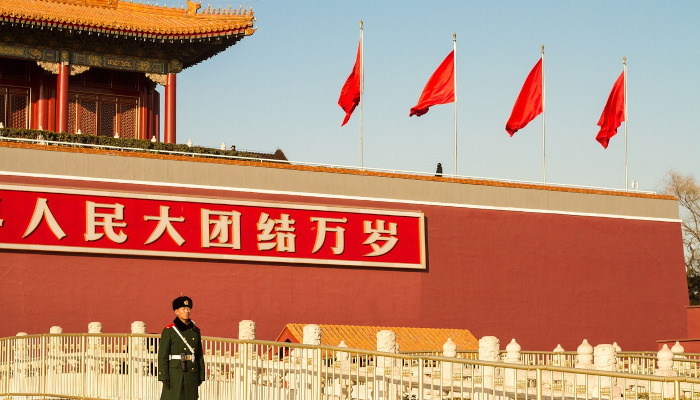

Xi-Trump: summit pro tempore - SettimanaNews