

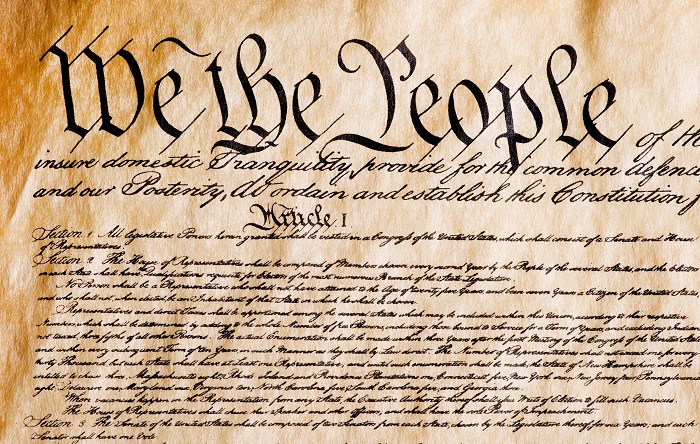
Florida’s clash: Attorney General call theology, bishops call the law. Is the essence of US constitution in trouble? The bishops of Florida’s response to Attorney General James Uthmeier’s letter is a masterpiece of constitutional law. It sets forth arguments supporting the autonomy of Churches and religions in matters of faith and doctrine. At stake are not only the constitutionally guaranteed freedoms of religion, but also the independence of the U.S. Supreme Court from the executive branch.
The letter in which Florida Attorney General J. Uthmeier asserts the state’s legal authority to impose his interpretation of Catholic teachings on the Catholic Church poses a grave threat to religious freedom in the United States. At the same time, such de facto creation of a state theology that claims to be the sole correct interpretation of the Catholic doctrine could reinforce and justify autocratic governments’ control over the Church’s life and decisions anywhere in the world (one need only think of China).
The Florida Conference of Catholic Bishops released their response in recent days. It is dated Friday, August 7, 2026. The bishops put forward two main arguments. One is of a constitutional nature, defending the doctrinal autonomy of Churches and religions. This autonomy is guaranteed against the political power of states and the federal government by the First Amendment and the U.S. Supreme Court’s jurisprudence. The second argument clarifies Catholic doctrine regarding vaccinations. The bishops state that this action is not required but is taken “out of respect for you and your office and with the understanding and expectation that your office will respect the Catholic bishops’ constitutional rights and religious freedom.”
Thus, the same theological argument aims to clarify the constitutional irrelevance of the “state theology” produced by the Florida Attorney General for compelling the bishops to comply with Florida statutes. This in no way diminishes the state’s legislative power. However, the Florida bishops state that this power must be justified and exercised “on neutral statutory criteria” as required by the U.S. and Florida constitutions. The interpretation and application of Catholic teaching is “exclusively vested in the bishops of Florida’s dioceses by United States and Florida constitutional law.”
At a time when the Trump administration has made religious freedom for Christians in the United States a cornerstone of its domestic policy, the emergence of a state theology—not just only in Florida—is in blatant contradiction to this flagship issue of Washington. In fact, “any insinuation that a government official can dictate to the Catholic Church (or any religion) how to apply its tenets and dogma violates well-established constitutional rights to religious freedom. It is beyond cavil that the bishops, not the state, decide how to interpret and apply Catholic principles and theology.”
This controversy offers a glimpse into the potential end goal of the Trump administration’s political Christianity: the government establishment confiscating the spaces of religious freedom that define faith. When this occurs, such government not only explicitly demonstrates that it is turning its back on the democratic foundations of its governance but also implicitly begins shaping a theocracy in which only Churches and religions that submit completely to its political agenda can survive.
The state theology developed by the Florida Attorney General is the concrete legal outcome of Trump’s papal garb image posted on X a year ago. It is against this outcome that the Catholic bishops of Florida are raising their voices in defense of the U.S. Constitution: “The constitutional defect in your office’s inquiry is not merely the conclusions it posits, but the inquiry itself. Whether Catholic doctrine requires, permits, or disfavors a particular exemption is a religious question entrusted to Catholic authorities, not state officials. The government may not decide that Church teaching is insufficiently religious, insufficiently consistent with Catholic doctrine, or insufficiently compelling to justify an ecclesiastical policy. Nor may it require Church leaders to defend their interpretation of Catholic doctrine before civil authorities as a condition of operating religious schools.”
Trump’s attempt to make Christianity a quasi-state religion in America may be appealing to Churches and Catholics in the country, but the price is proving to be high: allowing the government “for itself to determine what Catholic doctrine actually requires.” This undermines the well-established constitutional doctrine formulated by the Supreme Court on this matter. This doctrine affirms the right of Churches and religions to be free from any “interference” by states or the federal government regarding “faith, doctrine, and internal governance.”
Against the backdrop of a dystopian scenario in which an attorney general uses theology to argue for the force of law in front of the Church and a Catholic Church that invokes constitutional law to preserve its freedom in matters of faith and doctrine lies the third major subject of the dispute: the U.S. Supreme Court. The Florida judiciary has never mentioned it, substituting its own theology for the law. Yet, the bishops have explicitly cited it several times as the last institution guaranteeing effective—and not merely nominal—religious freedom. Clearly, this episode transcends the dispute between the State of Florida and the Florida Conference of Catholic Bishops; the constitutional and political legitimacy of the Court’s rulings is at stake. A legal dispute has been initiated that would grant political power the sole authority to determine the correct doctrine of a Church or religion. It could be a Trojan horse of sorts, designed to pave the way for the day when the U.S. executive branch might claim the sole authority to interpret the U.S. Constitution.