


The rise of Germany’s AfD and Italy’s Vannacci brings back the temptations of WWII. It’s easy to fall for easy answers to complex questions. Yet the alternative is even simpler: do Europeans really want to be ruled by Moscow?
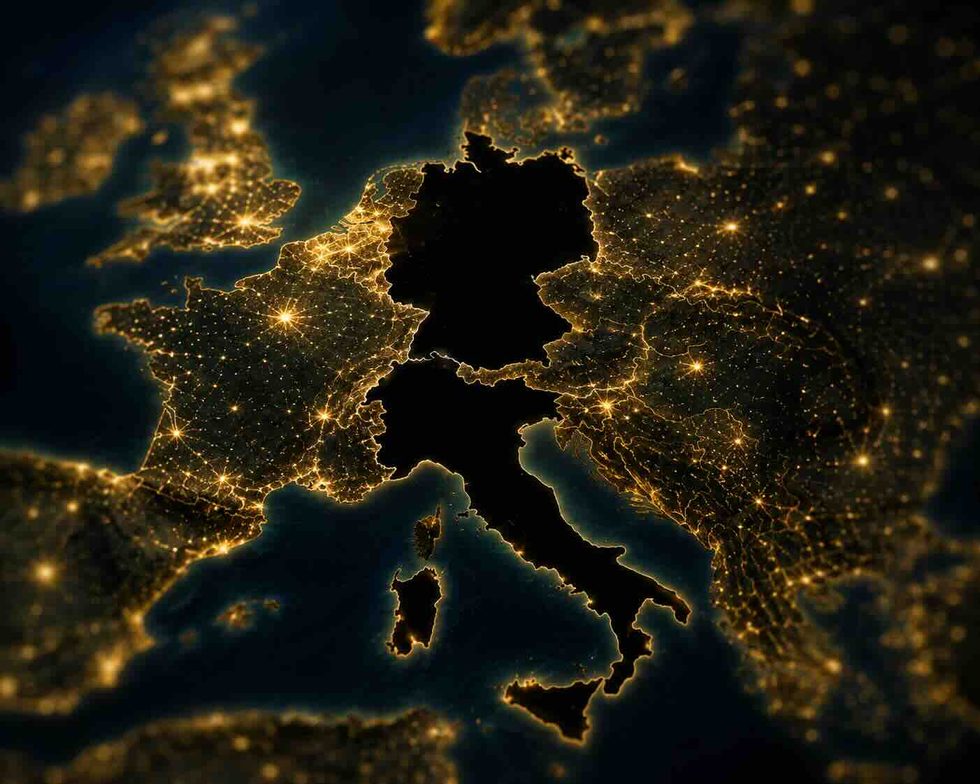
The dual challenge posed by the AfD in Germany and by Roberto Vannacci in Italy risks becoming the spark for a European regression that drags the world down unknown paths. Or perhaps, more accurately, down all-too-familiar ones: those of a century ago.
Indeed, for over a thousand years, Germany and Italy have been the axis around which the continent’s history has turned. That axis has plunged the continent and the world into the most devastating conflict in history.
On Sunday in Saxony, the AfD could win a large enough majority to govern the German federal state on its own. This would be an alarming signal for Poland and Russia. The AfD is pro-Russian, and this revives never-quite-dormant nightmares of a partition of Poland and Central Europe between Germans and Russians, as noted by Marcello Neri.[1]
Scapegoats
Another signal is the near-official normalization of state racism against immigrants, particularly those from Muslim and African countries. German racism, at bottom, has a fairly simple history.
Germany, at the end of the 19th and the beginning of the 20th centuries, was marked by pro-Jewish rhetoric and anti-Slavic sentiment. Then, as Michel Korinman explains in Deutschland über Alles, in 1917, during the extraordinarily bloody offensives on the Eastern Front, the Germans realized there were simply too many Slavs. Racism is fundamentally a search for a scapegoat; it needed to focus on small numbers, like the Jews, rather than large ones, like the Slavs. Racism then switched targets.
It’s easy to imagine that, after the initial surge of anti-Muslim and anti-African sentiment, neo-Nazi racism will follow the old Nazis’ footsteps. There are over a billion Muslims and just as many Africans across scores of countries. It’s hard to be racist while in power when you’re dealing with so many people who wield so much power in so many states. It’s much easier to be racist against the usual small, enviable group: the Jews.
The same logic applies to Russia. Squeezed between two fronts, the Poles and Central-Eastern Europeans were overrun by the Germans but, for the most part, were later absorbed by the Russians. It’s easy to imagine that Moscow today thinks along the same lines, updated for modern times.
A major surge of neo-Nazi influence in Germany would upend the axis of European power, lend legitimacy to Marine Le Pen’s rise to power in France, and frighten Central Europeans half to death, pushing them to abandon Ukraine.
At that point, a great deal could begin
to shift on the virtual political front, handing leadership of Europe and the West to the man in Moscow, Vladimir Putin.
In reality, even with an AfD victory in Saxony, we remain very far from this scenario; many difficult steps would still need to occur. Still, we are close enough to it that this scenario can no longer be dismissed as mere fantasy. It has become plausible.
Forces from the past
The strength of the far right today is the same as it was a century ago: it scapegoats migrants while promising social and economic security for everyone. Social and economic security is indeed at risk for many Europeans today, due to the many-sided challenge of economic and social transformation, industrial crisis, rising unemployment alongside the parallel rise in cheap labor supplied by non-European migrants, and a perceived—though often unreal—rise in petty crime.
All of this is topped off by a slapdash ideology of Western collapse or decline, which dovetails with anti-Western theories calling for a return to a fabulous, barbaric past. In many ways, this plays into the hands of states that actively wish for and root for the West’s decline.
The answer offered to these problems is the simple one of imposing draconian order and doling out small handouts to the poor and the unfortunate.
The underlying theory is a return to a wild, ancient triumph that never actually existed, except in mythological fantasies of Valkyrie dances. Simple answers to complicated questions become especially appealing to frightened people who feel at risk, impatient, and without the time or breathing room to think more broadly.
This makes the political response difficult for democratic governments. In America in the 1940s, the neo-Nazi enthusiasm found among broad segments of society may have also prompted intervention against the Nazis in WWII.
Today, perhaps, a joint effort using many political levers could begin to reverse course in Germany.
If Berlin feels under Russian threat and if the Russians attack Germany, the Germans must and can mobilize in a national effort against Russia, cutting off the wind and fuel supply of the pro-Putin far right.
The German state is strong, and across most of the country, the far right doesn’t have the support it enjoys in Saxony, in former East Germany. In theory, it’s possible to turn the tide.
Italy
In Italy, things are both simpler and more complicated. They are more complicated because Vannacci is not isolated. He is only one of three pro-Putin parties, and none of the other governing or opposition parties takes an openly anti-Russian stance, opting instead for wait-and-see positions.
This atmosphere, combined with Italy’s enduring fondness for political horse-trading, gives Vannacci room to maneuver that the far right lacks in other European countries. It’s also more difficult because the ruling majority party has far-right roots, and only recently did Prime Minister Giorgia Meloni say that she cannot call herself an anti-fascist, even while condemning fascism.[2]
Meloni should clearly declare herself anti-fascist and set right her party’s and government’s narrative by distancing herself from the far right. If she doesn’t, the far right will completely devour her after first mutilating her, as is happening now.
So it becomes harder to draw a clear line between her and Vannacci on the question of fascism. Why is Meloni’s fascism acceptable while Vannacci’s is not?
What’s more, Vannacci may appear more articulate, more self-assured, and more composed than the prime minister.
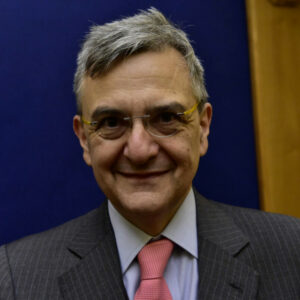
Still, in theory, things are simpler in Italy. Unlike in other countries, where far-right leaders have no political track record to measure against, Vannacci does. Between the eve of the Russian invasion of Ukraine and its actual start, he served as Italy’s military attaché in Moscow. He was the country’s institutional point of reference for interpreting the unfolding events.
In that very particular position, he first stated in confidential reports that Russia would not invade, and later argued that Russia would cut through Ukraine like a knife through butter.[3] The facts plainly show both statements were wrong. Moreover, the invasion was not unforeseen, nor was the Russian defeat.[4]
In other words, at the most crucial, most consequential moment of his career for the country, Vannacci gave clearly mistaken guidance. Vannacci is therefore either incompetent or knowingly spread blatantly false information to his own country and is a traitor—or both. There is no fourth possibility.
This past record alone should be more than enough to nail down the former general and condemn him to public disgrace.
To NATO or not NATO
Moreover, for Italy, Germany, France, and all of Europe, there is really just one fundamental question: do European countries want to remain in and with NATO, or entrust their security to Russia? Perhaps if this alternative were clearly put to every far-right voter, few would trust Moscow as Europe trusted Washington for 80 years.
Today, as always, foreign policy is a decisive component of domestic politics. Faced with the far right’s simple answers, perhaps there’s an even simpler alternative to offer voters: do you want to become subjects of Moscow, or remain within the current balance of power, with all that each choice entails?
Democracy is beautiful because it is truthful, and the truth must be presented to voters without pretense: which side do ordinary people want to be on? If the questions are framed the wrong way, the answers will always be wrong too.
Here, the role of the Catholic Church can be unique. Unlike a century ago, when Catholicism was ostracized in half of Europe, the Holy See now enjoys unparalleled prestige. Its task is unforgiving and seemingly contradictory: to prevent a break with Russia and to stem the rise of neo-fascism in Europe. The Pope would need a miracle to do it. But he has a special relationship with God. He is on a mission for Him. If someone can work a miracle today, that’s him.
[1] https://www.appiainstitute.org/articles/europe/what-past-for-germanys-future/
[2] https://www.nytimes.com/2026/08/21/world/europe/italy-giorgia-meloni-interview-profile.html
[3] https://www.ft.com/content/dd2069b2-9fa0-4b87-95dc-cd7ee75f3096?syn-25a6b1a6=1
[4] See for instance https://www.settimananews.it/informazione-internazionale/putin-asymmetric-war/