




Fissures and uncertainties with friends and allies, an ongoing degrading campaign against the US president, are undermining 80 years of American power. China is benefiting from it, but it should be prudent.
India may become a significant and unexpected complication in US President Donald Trump’s efforts to secure a peace deal on Ukraine, with even larger effects. The meeting at the end of August in Beijing between Indian Prime Minister Narendra Modi and Chinese President Xi Jinping, with the Russian blessing, could provide Moscow with precious wiggle room to stall and procrastinate any cease-fire with Kyiv. (see here) A closer Russia-India-China (RIC) triangle means that new possible US sanctions against Moscow could be compensated with less trouble.
It could be a blow for Trump. If he loses the Midterm elections next year, he could become a lame duck, and the US could be thrown into a state of confusion for the following two years. Betting on the American disarray until the new presidential vote in 2028 could be well in the interests of Russian President Vladimir Putin. Short of a political win, now nearly impossible in Ukraine, Putin could boast of the chaos he managed to spread in America and the West.
It is about the future three years, but it begins now and could be divided into two chapters: the allies and Putin’s strategy.
The allies
In these first months of Trump’s presidency, for the first time in the past eight decades, a fissure between America and its allies has emerged. This crack started about the defense of Ukraine, the relationship with NATO, and the ties with Russia. American allies, both west and east of Russia, feel left behind, if not totally abandoned, by the US. America was for almost a century the bulwark of their security. Therefore, for the first time, they seem to be adopting a dual strategy. In the short term, they are trying to manage Trump, while many have begun to consider long-term alternatives to a world order centered around America.
This long-term thinking is unprecedented for American allies since the end of World War II. Of course, all American allies knew that American support might not always be 100% and that America could withdraw at some point. Still, no old ally truly believed that American presence could disappear entirely. There’s a difference between leaving Afghanistan or Vietnam after ten years of war and shrugging off security guarantees for Germany or Japan. Now, some may feel that any country could become another Afghanistan overnight, forsaken by sudden ruminations in Washington.
These shifts in thinking could have very significant medium- and long-term effects. America is not only a country but also a global system with a thin but essential balance between inside and outside. If America jeopardizes its international system to sustain itself, there is a risk that the US might lose both the worldwide system and itself.
A concrete example of this new feeling is the next Xi-Modi summit. The United States had spent over twenty years reeling in India’s alignment toward the US. During the first Trump administration, this seemed solidified by a strong personal relationship between the American president and Modi.
However, after the recent brief border clash between China and Pakistan, something went wrong. India now faces higher US tariffs than China. China was singled out as the main adversary by Trump’s people before the presidential vote. The new US attitude probably prompted India to reconsider its relationship with China.
Of course, old China-India suspicions have not been buried. India just tested a medium-range ballistic missile capable of carrying a nuclear warhead, thus signaling it’s ready to confront China. At the same time, Xi made a surprise visit to Tibet, reaffirming Beijing’s sovereignty in the region. Tibetan spiritual leader the Dalai Lama (turned 90 in July) said his reincarnation will be born in India, which could give India a special role as de facto “guardian” of the new Lama (see here) and thus a say in Tibet. Moreover, the Modi-Xi summit is happening after the Indian Prime Minister will have visited Japan, famously wary of China.
Therefore, the rapprochement is occurring with great caution. But it’s happening, and it is happening under Russia’s watch. It’s unclear what consequences this Indian shift may have, or whether it will last, and how important it will be in the coming months and years. But the issue goes beyond India.
It is a sign of deep doubts among allies. The meeting between Modi and Japanese Prime Minister Shigeru Ishiba could be significant, as Tokyo is also concerned about its ties with America. Then, even if the next American president were to change course, or if Trump himself were to reverse his stance, a precedent has been set. Even close allies begin to doubt whether the US is truly committed.
This raises enormous questions for America, its allies, and its adversaries. Everything becomes more uncertain, and the coming months could be tense.
Moriarty Putin
The new situation driven by tariffs could be hazardous for America, even if some American politicians may argue that it is necessary to reset American coffers. Truly, without a strong America, the American international order is also doomed. Yet the disruption could undermine decades of strides and efforts.
Plus, it’s accompanied by a constant global and domestic campaign against Trump. He is portrayed as unreliable and ineffective. Thus, a country led by such a leader is also untrustworthy, and a country electing such a leader is so too. Therefore, America is defective, and democracy can’t be trusted. A powerful message is resonating in America and abroad, isolating the presidency and the US.
Cui prodest? Who gains from this?
Putin is losing politically and militarily in Ukraine. In Europe, he helped create an unprecedented unitary anti-Russian drive and military buildup. In Asia, he is losing power and influence to China or North Korea. Even loyal Belarus is growing afraid of Moscow. At the end, Russia is losing it all: its territory, its identity, as east and west shrink to a new Muscovy, a dominion around Moscow and a few neighboring cities.
Yet this is not the end of the story. The news coverage says that Trump subjects the world to an ongoing reality show where the goal is not to reach any conclusion or agreement. It is to maintain high attention with drama, thereby creating some collective neurosis around him. It’s then unclear whether Trump genuinely wants to reach a deal with Russia. Maybe not. With an agreement, the drama ends. (see also here)
This may not be an accurate depiction of reality, but it’s a message that’s been peddled around. By now, Trump should be aware that not only is Putin cheating him, but that he might also be riding the ongoing campaign against him. The stories of Trump being a Putin’s puppet suggest that Putin is some super Moriarty (Sherlock Holmes’ super villain) of international politics. The US, led by a patently incompetent leader, who’s perhaps also a Russian puppet, is evidence of the American decline, foreshadowing a Russian overall victory. Putin would be stupid not to ride this narrative, and he’s not stupid.
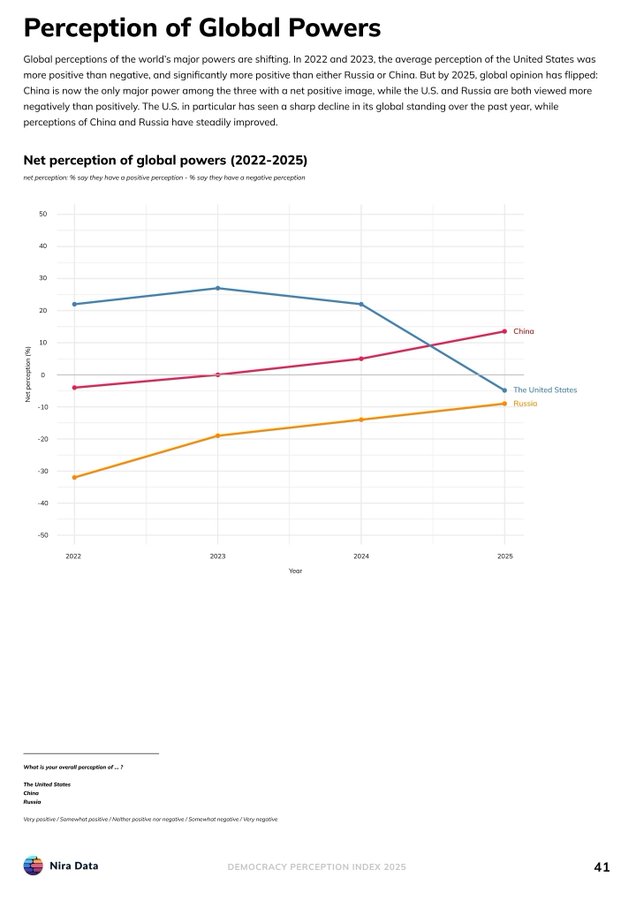
Trump has proved time and again he’s practical and pragmatic, responding to markets or external stimuli. He could reconsider his approach to Russia and even to tariffs. The next few weeks could be crucial, as Trump prepares to meet Xi, and China is objectively the greatest beneficiary of the current US-Russia conflict.
But Beijing shouldn’t be gloating about it; it should be cautious and humble about it. Things could suddenly turn upside down. American fissures could be fixed; Russia is too quick to anticipate what card will be played next. It’s a time of chaos; perhaps everyone should take a pause and seek some truce. But it’s hard to stop the merry-go-round. Trump could find a chance to begin to pivot on August 25 as he welcomes to the White House South Korea’s new President Lee Jae Myung. (see here)




When the world converges against Trump
There is a lot to be said about this article. I limit myself to the Ukrainian matter.
In a preview of the war RAND Corp. ( RR3063 ) wrote in April 2019 that Ukraine was likely to loose territory but that the Russian economy would soon collapse due to international sanctions. Russia reading that report or, more likely, having decided earlier that war was likely, had prepared its economy for that eventuality. Its economy is growing during the war. It is the world’s largest exporter of nuclear power stations, one of the largest exporters of foodstuffs, a major exporter of weapons. It has in Purchasing Power terms after China, US and India the fourth largest economy of the world.
When Russia invaded in February 2022 with a force about a third of the size of the Ukrainian army, and a third of the size of its own army, Zelensky was intimidated and proposed a diplomatic agreement that was acceptable to Russia. However in April Boris Johnson inspired Zelensky to choose war.
Russia removed its forces from a large part of Ukraine and prepared for a war of attrition, while Ukraine followed NATO teaching for a war of manoeuvre.
In 2023 the large Ukrainian assault failed dramatically and since then Russia succeeded in keeping its own personnel and material losses far below those of Ukraine. We see now how Ukraine is unable to keep the size of its army, even while using press gangs to find recruits. It also is unable to give its recruits an adequate military education. As an extreme(?) example The Independent recently published a story about an Englishman who after losing his job decided to leave his family and volonteer for the Ukrainian army. He was lost at the front 22 days after being inducted. He had no military experience.
Now that the Russian army has grown much larger while the Ukrainian one is shrinking we see that on the Ukrainian side the front cannot well be maintained and the war will soon be ended on Russian terms.