


The situation is explosive, but Trump has a way out—do nothing, wu wei. It’s easier than pushing for something that grows harder by the day.
An unstable mix of long- and short-term pulls is stoking tensions and bringing everyone closer to an unpredictable blast.
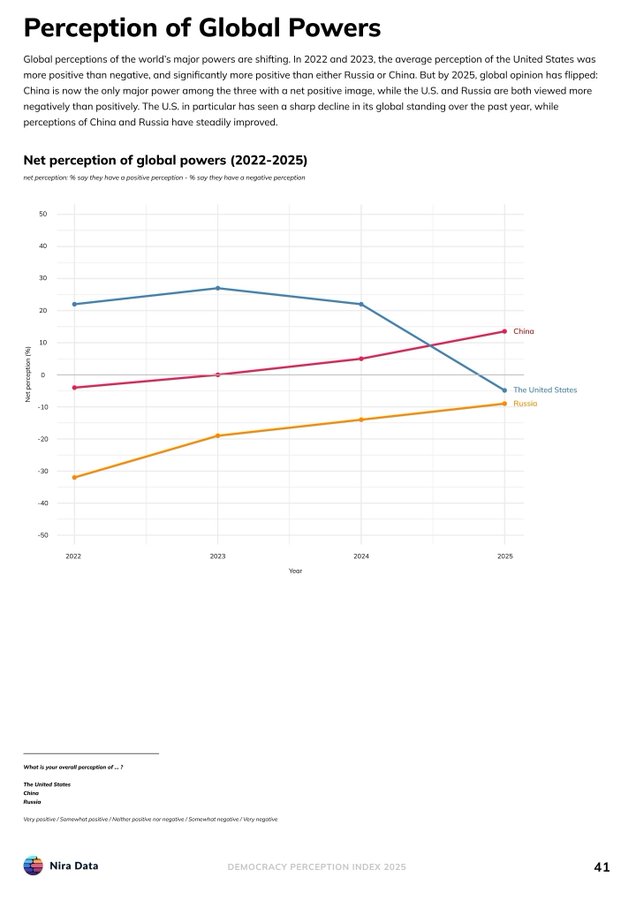
Short-term US hesitation and zig-zags put many countries close to the United States in the difficult position of caving or standing up to China and Russia, possibly without American support. Either scenario erodes American clout and exacerbates tensions and anxiety.
In the long term, those countries are rearming (as the US wants) and awakening to the not-so-distant chance that the US won’t have anybody’s back (perhaps to the US’ chagrin).
Taiwan is a constant danger in Asia. The island, de facto independent but de jure part of one China, is likely to trigger a war far more dangerous than Ukraine. A full-scale invasion seems remote, but growing pressure through outside military maneuvers and domestic protests is a fact; it’s already happening. The problem is what Taiwan will do and how other countries, like Japan or the Philippines, react.
The South China Sea and the 3000 km-long contested border between China and India have similar risks. Many states feel unsure what the US will do if push comes to shove because of the recent American statements on NATO, once a backbone of global security. In Europe, many are suspicious of Russia’s intentions after Ukraine.
To cope with these scenarios, some US allies are coordinating among themselves even without America.
Some US allies believe they must unite or be individually gobbled up in the long run by Russia or China. Chances are that countries like the UK or Japan won’t simply cave to Russia or China.
Israel’s dialectic defense relationship with America could become a larger paradigm. For America, it could be thorny. Dealing with one Israel isn’t simple; dealing with three, four, or more Israels could be messy. South Korea, Vietnam, India, France, Germany, Poland, Indonesia, and Thailand could go on a national industrial military build-up besides straight rearmament. This could change many reindustrialization dynamics in the US.
Clash of termism
Russia and China may have time to exploit the present confusion between the US and its allies in the coming months.
But in the mid- and long-term, things could turn out differently. Other countries could become organized even without US support—standing up to Russia while weakening the US global grip. This could turn out to be a recipe for significant confusion.
The first step should be for the US to get its house in order, starting with its budget deficit. There is no way to mince words here: the US is a republic, and it needs to tell its billionaires (modern-day electoral barons, able to sway votes by moving advertising money around) to be responsible for their interests and pull their socks up. In medieval Europe, feudatories called in their families and assets to save the kings in times of need, just as rich Venetian merchants of the Gran Consiglio did to rescue the Serenissima.
The US needs the same now. Do American barons believe they can survive without the US? The survival of the US is the prerequisite for its own survival and thriving.
Externally, the US needs to show its presence; otherwise, its footprint will vanish—hitting its stock exchange, its currency, and its billionaires.
President Donald Trump may feel he needs to win the midterm elections, reassure business opportunities for his billionaire allies, and earn a Nobel Peace Prize to secure his legacy. The problem is whether Russia or China wants to help Trump in that, or if they will exploit his ambitions to make him fall. A lame Trump stumbling on for four more years could be a massive bonus for Russian President Vladimir Putin, failing to vanquish Ukraine on the ground.
This raises another question: do they trust Trump to deliver on any agreements, or do they believe he might renege? China may have more time; Russia less. Moscow may need to break Ukraine before the midterms, before Trump recants any pledges. This creates a fragile timeframe to meet both Trump’s and Putin’s goals.
Without a clear victory or ongoing war, Putin may be lost, so he has no long-term incentive to cater to Trump’s needs. However, he might be willing to meet Trump’s requests if he can achieve something he can showcase as a clear success.
Still, Ukraine, Europe, Japan, or South Korea may feel they can’t afford to let that happen, as it would embolden Russia’s ambitions on both ends of Eurasia.
To meet Putin’s wishes, Trump should give something to this array of restive allies. They won’t simply toe the line because they’re told to; they feel their lives are at risk and are being commandeered by the US and threatened by Moscow or Pyongyang.
Additionally, the Houthis’ attack on Israel just hours after Ukraine’s successful destruction of a Russian airbase in Siberia on June 1 underscores that all ongoing conflicts— in Ukraine and the Middle East—are interconnected parts of a larger picture.
Therefore, Trump’s simple goals create a complex situation that his direct, ‘deal-driven’ approach apparently struggles to navigate.
Follow the flow
In recent months, China scored some good results by simply following its old Taoist adage wu wei 无为, do nothing. Then, for the US to get out of the impossible situation, one may resort to a simple suggestion from ancient Chinese philosophy – let all follow its natural course, shunqiziran 顺其自然. If the Russians drag their feet on a peace agreement, pursue peace, keep negotiations open with Putin or his aides, and be ready for a deal when the moment strikes. In the meantime, support the Ukrainians and back the Europeans who assist them. Russia is bleeding in Ukraine, and China is shedding resources too.
If neither Russia nor China sees that it is in their interest to stop the war before it crashes either country, why should the US or anybody else bend over backward to save them instead?
Moreover, Russia and Putin may have diverging destinies. Conditions to save Russia could be different from conditions to save Putin. It’s all well and good that many want to save both Putin and Russia from a disaster they put themselves in, but this can’t be at the cost of jeopardizing everyone else. Putin and Russia must want to save themselves first. And so should China. Moreover, on June 3, the Ukrainians sabotaged the foundations of the bridge linking Crimea with the mainland. The string of successful attacks may indicate that parts of the Russian security forces are slacking or may be altogether fed up with Putin, something that China should pay attention to.
Beijing is in a tricky position. Damned if the war goes on, because it is bleeding it dry in more than one way; damned if it doesn’t, because the US would concentrate on Beijing.
So unless the US makes a mess of itself, the solution for Americans is already there—let it unravel and sort itself out of the mess. Conversely, by excessive activism for an elusive peace, the US can make things worse for anyone, possibly even for Putin.
Similarly, in Asia, open channels with China, lay out some requests, and see how they respond. Talk, meet allies, and argue: “It was all a big misunderstanding.”
Commerce: Offer deals explaining the reality—the US can’t afford its trade deficit, and if the US goes down, the world will, too.
Domestically, the big barons must chip in. Better defense, healthcare, and education benefit every American, but particularly the rich “owners” of the republic.
In a few months, Trump could pull this off, win the midterm elections, and earn the Nobel Prize. It won’t be easy, but it could be much easier than pursuing the present course.
Finis