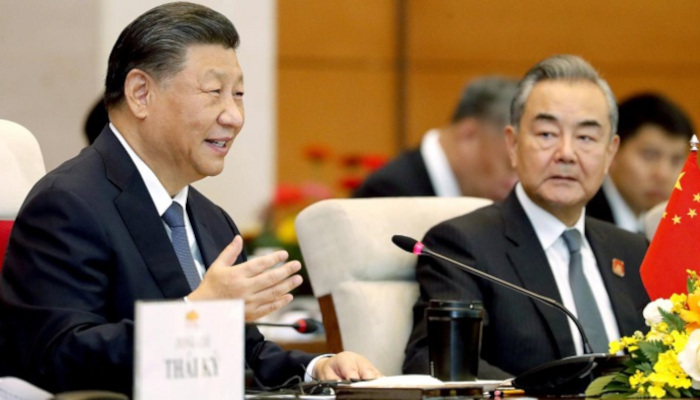




The atmosphere during the Vatican delegation’s visit to China in September 2024 was positive. However, the results of the Chinese delegation’s recent three-day visit to Rome were problematic.
Even the smallest steps forward seem impossible. The Vatican delegation, consisting of eight people like the Chinese delegation, had the impression that they were only working on the long term, 20 to 30 years. After all, the international landscape has changed.
The Trump administration has legitimized Putin again, withdrawn its support for Ukraine, and considers Europe a quasi-enemy. This has weakened the image of the West. China, feeling greatly strengthened, has lost interest in its relationship with the Holy See, although it has not been terminated.
Furthermore, the Chinese leadership remains stuck in an interpretation of religion and the church that excludes any kind of joint intervention, which they perceive as undue interference in their internal affairs. Repeated explanations do not seem to overcome the barrier of misunderstanding.
However, there are some new developments: Pope Leo’s confirmation of the Vatican’s diplomatic orientation in recent decades and the September 12 appointments concerning the new diocese of Zhanjiang.
Before discussing these developments, I would like to mention two previous events, albeit of different importance. First, a conference was held in Hong Kong from August 11 to 12 to commemorate the centenary of the consecration of the first Chinese bishops. This event followed a conference held in Rome in May 2024 to honor the first local Chinese council, which took place in Shanghai in 1924. AsiaNews (August 24, 2025) reported on the conference, recalling the main themes, which included inculturation, the role of Chinese cardinals, and notable bishops, such as Jin Luxian. The conference also provided a contemporary perspective on the significance of inculturation in relation to “sinicization.”
The second fact is the “fall” of Abbot Shi of the Shaolin Temple. The monastic center, known for Kung Fu, has become a prestigious place of worship, commerce, and influence. Abbot Shi played an instrumental role in these developments, though he was also highly controversial. His downfall seems to have been triggered by his visit to the Pope on February 1, which was unauthorized and unwelcome to the government.
Although the visit was kept low-key, it probably irritated the Chinese authorities, who then allowed accusations of embezzlement, improper relations, and illegitimate children to surface, bringing about the end of the monk’s public career.
Bishops and dioceses
The appointment of Msgr. Joseph Ma Yanen as bishop of Zhangjiakou, the simultaneous recognition of the “underground” bishop Joseph Wang Zhengui as auxiliary bishop, and the legitimization of another “underground” bishop, Augustine Cui Tai (albeit as emeritus, as he has reached the age of 75), represent a positive step for Rome.
These appointments accompany the formation of a new diocese, Zhangjiakou, resulting from the government’s merger of two previous dioceses (Xuanhua and Xiwanzi). Rome recognizes this merger as pastorally appropriate.
On September 12, the director of the Vatican press office, Matteo Bruni, stated: “We are satisfied to learn that today, on the occasion of the taking up of the office of auxiliary bishop of Zhangjiakou by His Excellency Bishop Giuseppe Ma Yanen, his episcopal ministry is recognized for civil purposes as well. Similarly, the episcopal dignity of His Excellency Bishop Agostino Cui Tai, Bishop Emeritus of Xuanhua, is recognized by the government. These events, the result of dialogue between the Holy See and the Chinese authorities, constitute a significant step in the new diocese’s journey of communion.”
Two days earlier, the official Vatican communiqué described the new diocese as follows: “The territory of the Diocese of Zhangjiakou corresponds to the capital city of Zhangjiakou. It has a total area of 36,357 km² and a population of 4,032,600, about 85,000 of whom are Catholic and served by 89 priests.”
The issue of diocesan boundaries is one of the thorniest. The Holy See recognizes 140 dioceses in China, whereas the government acknowledges only 90. The problem lies not only in civil reasons but also in historical traditions and pastoral needs. In this case, the two issues have been combined, though this is not always the case. The problem has not yet been addressed in its entirety because the Holy See–China agreement concerns the appointment of bishops, not the redefinition of territories.
Implementing the pact is very slow and difficult. In any case, the diplomatic approach of maintaining open dialogue, fostering mutual understanding among bishops—Cardinal Stephen Chow of Hong Kong has been invaluable in this regard—and with the Pope is confirmed. This approach allows time for more significant steps to be taken.
Meanwhile, the process of sinicization desired by Xi Jinping continues to produce further impediments to the already fragile “religious freedom.” Pressure on “underground” bishops and priests continues. In May, new regulations took effect that strictly regulate the religious activities of foreigners. In September, additional provisions were introduced to regulate communication and training through websites, applications, and forums.
These measures are part of a comprehensive operation of control, censorship, and restrictions affecting the entire Chinese population.