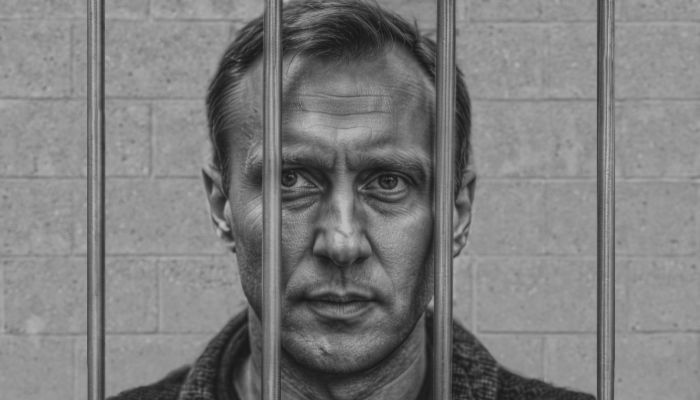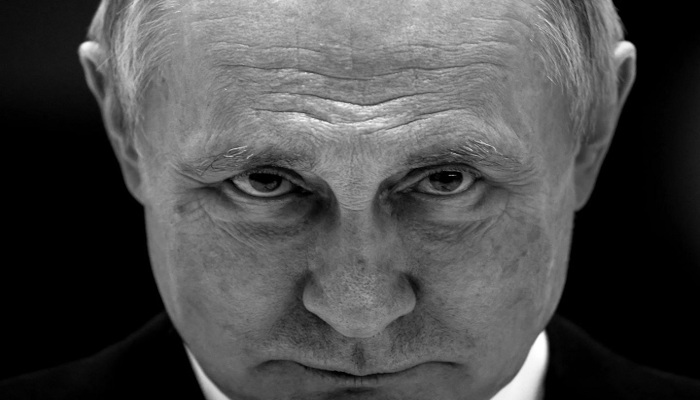




Accusations levelled too strenuously at others often reveal the accuser’s own failings – a psychological defense called displacement or projection, what the New Testament (John 8:7) meant in warning against “casting the first stone.” Inflammatory selective accusations – “autocrat,” “aggressor,” “terrorist,” “authoritarian,” and other swear-words – are hurled at adversaries with subjective enthusiasm but little objective basis. Typically, a national media amplifies the rhetoric. On the individual level, as on the national, accusation is also a sign of narcissism. Immune from any and all criticism, the narcissist bonds with the scapegoat onto which he unloads his guilt.
In April 2019, Asia Times published my article titled “Rethinking US Sinophobia.” The phobia is almost exclusively American, stemming from Washington’s anxiety over losing its self-conferred title of global leader or superpower, as the geopolitical distribution of national power shifts centrifugally toward a multi-centered order and away from single power domination.
The anxiety is often expressed when politicians and their media call China “the other superpower” without taking into account China’s historical recognition of the perils of imperial overreach. China’s primary concerns are close by, its rightful territories: Xinjiang, Tibet, Taiwan, and Hong Kong, as well as the integrity of the homeland, which has been divided and reunited many times over the millennia. The Sinophobia syndrome is not nearly so florid, if even present, in other national ideologies, partly because it is only a recent peer, unlike Russia.
Russophobia has a wider history, primarily British but later also German, Japanese, as well as American. In the post-World War II period and down to the current conflict over Ukraine, Russia was the target of diverse accusations. Although Russia had done the heavy lifting for the allies in the victory over fascism, while France had joined the Third Reich, the two changed places after the war: France was reinvented as an “ally” of America and Britain, while Russia was turned into an enemy and accused of seeking world dominion, the mantle Washington claimed for itself – global leadership for its contributions to victory over Germany and Japan as well as its economic prowess.
As the (occasionally) sagacious Henry Kissinger put it: “For the West, the demonization of Vladimir Putin is not a policy: It is an alibi for the absence of one.” Diesen, Glenn, Russophobia (Singapore: Springer Nature, 2022), p. 5.
Remarkably, even before his spring 1946 speech in Fulton, Missouri, with President Truman in the audience, highlighting the conflict “between communism and Christianity,” in April 1945, Churchill had secretly authorized Operation Unthinkable, a war-gaming exercise for attacks on Russia. “Unthinkable” became known only in the 1990s. See Julian Lewis’s book Changing Direction (2nd edition).
In the current war in Ukraine, the Western narrative places the burden of guilt exclusively on Russia. The obligatory language is “unprovoked aggression,” “full-scale invasion,” and the denial (initially) that NATO had anything to do with the war. Among the many facts and factors conveniently ignored in this narrative is the 1997 warning “that the u.s. led effort to expand NATO. . . Is a policy error of historic proportions.” The warning was published by the Arms Control Association and signed by 50 major figures in national defense.
[https://www.armscontrol.org/act/1997-06/arms-control-today/opposition-nato-expansion]
This present article however is not about recent events but historical background, some salient moments in early Russian history starting half a millennium ago.
If Sinophobia arises from differences of race, religion, and historical experience, russophobia is more about similarities, especially with the American experience – a vast multiethnic land / tribal lands, small settlements expanding over great distance – westward for gold, eastward for furs . . . (in Russia’s case).
[w]hether in the wilds of Siberia or of America: the pioneers who are far beyond the reach of the central government become a law unto themselves, and in dealing with the aborigines descend to their methods and manners. The story of the Cossacks in their dealings with the native races of Siberia can be easily enough equaled in that of the frontiersmen of the United States, who have by similar means gradually wrested the continent of America from the improvident hands of the red Indian. [“Yermak’s successors” from George F. Wright, Asiatic Russia (NY: McClure, Phillips, Phillips 1902 pp. 150, as quoted in George A. Lensen, Russia’s Eastward Expansion (Prentice Hall, 1964, p. 27).
The earliest turn toward autocracy occurred in the 14th century when Mongol power was crushing the Rus in Kiev. Ivan I of Moscow (1288-1341) moved the government to Moscow, from where he was able to stave off the Mongols by adopting many of their political and military tactics and later applying them across the vast land mass.
Ivan IV the Terrible (1530-1584), the first titled tsar, expanded the empire westward to Siberia. He had good relations with Britain and even proposed marriage to Queen Elizabeth. He established a secret police, and, given the brutality that marked his rule, Josef Stalin could be considered his avatar.
Russia took its biggest step eastward toward empire in the early decades of the eighteenth century when Sweden was the dominant Baltic power. The Russo-Swedish conflict broke out in the Great Northern War (1700-1721, ending with the Treaty of Nystad. The war involved several Scandinavian nations and Poland, but the main contestants for dominance were Sweden under King Charles XII and Russia under Tsar Peter the Great.
At the time, Sweden was larger than France and Germany together and militarily advanced, but after Peter’s ultimate victory, Sweden lost more than half of its territory, into which Russia expanded. Moreover, for the first time, Russia built a strong navy (with British help), which gave Russia control of the Baltic Sea. The war made Russia a major European as well as an Asiatic power.
In the Northern War, Britain sided mainly with Sweden but also temporarily with Russia, which provided raw materials (timber, rope) for its own navy. Britain’s more immediate concerns (India, the American colonies) limited its participation in the northern War.
An interesting connection between America and Russia formed during the American Revolution, when the legendary commander in the Continental Navy, John Paul Jones, undertook service in the Russian Navy. In 1783, Empress Catherine II annexed Crimea, previously under Ottoman protection. In the ensuing Russo-Turkish War of 1787-1792, Jones played an important role in Turkey’s defeat.
Flexing Russia’s newfound strength, Tsar Alexander I sought new trade relations with Britain, still reeling from its indecisive war with the American Revolutionaries, 1812-1815. Napoleon sought to contain trade within the European continent and invaded Russia in 1812 to block Russian trade with Britain. By year’s end, the invasion had failed, and Napoleon’s grand campaign lay in ruins.
After the Congress of Vienna (1814-1815), Britain’s relations with Russia alternated between cooperation against France and republicanism and conflict over Poland, which Britain wanted to be independent and Russia wanted to annex. Anglo-Russian relations resumed and continued in 1848, the year of republican uprisings against the European monarchies, but conflict soon broke out again.
The Crimean Russo-War (1853-1856) began as a replay of the 1787-1792 Russo Turkish War. Britain and France joined forces to defend the Ottoman Empire, in order to prevent Russia from expanding westward from the Black Sea through the Turkish Straits and into the Mediterranean. Such an expansion threatened Britain’s valued commercial and military ties with the Ottomans. Instead, Britain won the war and urged Russia to expand eastward, to Siberia, Japan, and Korea, advice Russia took, though the tsar retained a badly damaged Crimea.
At the same time, Tsar Alexander II (succeeding Nicholas I in 1855) decided to spite Russia’s wartime enemies by backing Bismarck’s plan to break Denmark’s hold on the duchies of Schleswig and Holstein. In 1862, Otto von Bismarck became minister-president of Prussia, determined to unify Germany and to acquire the duchies along the northern border with Denmark.
After Bismarck annexed Schleswig, Austria annexed Holstein. Next, Bismarck defeated Austria in 1866 and annexed Holstein to Prussia. The war with France (1871) was next on Bismarck’s agenda, the year he became chancellor (1871-1890). Defeated, France lost Alsace-Lorraine, regaining it only after World War I, and compensated by turning its attention away from Europe to the colonies of Vietnam and Algeria.
Bismarck consistently favored good relations with the tsars, and German-Russian relations, whether in collaboration or (later) in conflict, have functioned as a kind of clockwork of Eurasian geopolitics on down so through the wars of the twentieth century to today.
As for Russia’s 1856 defeat in the Crimean War, the tsar did turn east, as Britain and France had hoped. Russia’s next big move was the Trans-Siberian Railway. Construction began in 1891 in Vladivostok, alarming Japan. Three years later, Japan went to war with China in order to establish China as a buffer against Russia and to gain territory (Taiwan, Liaodong ports). After Japan’s victory over China (1895), Russia made claims on Korea and Manchuria, claims so threatening to Tokyo that it readied itself for war against Russia.
In February 1904, Japan attacked the Russian fleet in Port Arthur. Victory over China and its 1902 alliance with Britain (including the purchase of the latest British warships) gave Tokyo confidence. By September 1905, Japan was victorious again, taking Korea as a protectorate and, in 1910, annexing it, while the tsar, driven from the east, focused his attention back to the west.
Russia’s shift west brought World War I to the horizon. This time, a Russian presence in Germany’s east was welcomed by Britain and France, which faced an existential threat from a fast-rising Germany. London had already turned its attention to the continent and away from the waves Britannia traditionally ruled. This dramatic shift left the dominions (Canada, Australia) with more autonomy in the Commonwealth and incidentally made Dominion status more attractive to the Indian national congress.
President Theodore Roosevelt soon realized that Russia was not the main enemy. He had mediated the Russo-Japanese War quietly, tilting in Japan’s favor, only to suffer victor’s remorse, concluding that Japan would become more of a problem than Russia. In 1906, he sent the fleet around the far east as a warning signal to Tokyo.
In 1907, London reconciled with St. Petersburg, as Paris had already done in 1904, positioning all the pieces for war. Germany’s only partner was a weakened Turkey, Russia’s eternal foe. In August 1914, the fighting between Russia and Germany began.
Most of the less-than-sagacious leaders and generals anticipated a short war, a few foresaw the true timeline; none foresaw a communist revolution in Russia. In March 1917, Tsar Nicholas II abdicated, and Alexander Kerensky became the leader of the Provisional Government of the Russian Empire and Republic, pending elections. It was an ideal moment for a neutral Washington to step in and broker a peace.
U.S. President Woodrow Wilson had other ideas. Instead, he declared war on Germany, joining the Entente. He wanted the war to continue until the warring parties had so exhausted themselves that Washington could dominate the Europeans, for whom he had little respect and who were already heavily indebted to U.S. banks. Wilson bribed Kerensky to keep fighting, but the soldiers, suffering high casualties, were demoralized and clamoring for peace. It was an ideal moment for Lenin to step in and incite a revolution.
The revolution of 1917-1918 made Russia once again the enemy of Western Europe as Britain and France, the main Entente powers, had to fight a whole year without Russian pressure on Germany’s Eastern Front.
Lenin, determined to withdraw from the war, denounced all the belligerents and issued a decree on peace (November 1917) calling for immediate negotiations with “no reparations or annexations.” In December, an armistice with Germany was agreed, and in March 1918 he transferred to Germany a vast territory, including parts of Poland, Ukraine, and the Baltic countries.
With all quiet on its eastern front, Germany was able to continue fighting France and Britain; thanks to Lenin, Wilson’s plan to keep the war going had succeeded. In hindsight, contemplating the ruins of the worst and final year of World War I, some critics blame Wilson for the rise to power of Hitler, Lenin, and Stalin, as well as for the punitive peace that set the stage for the sequel.
In the period 1918-1922, the Bolsheviks came under attack from anti-communist Russian forces. British forces joined them in Murmansk as Japanese and American forces landed in Vladivostok. On these fronts, the Red Army struggled mightily and ultimately prevailed, expelling the foreigners by 1922, the same year the Soviet Union was established. World War I’s timeline for Russia was eight, not four, years, Russia and Germany had another war to fight.
Through the mid and late 1930s, Moscow sought to contain the threat nazi Germany posed, reaching out to London and Paris for cooperation. But the British in particular had sympathy for Berlin and were more inclined to see Germany fight Russia than to help Russia against Germany. Churchill, who took the opposite view, was a voice in the wilderness until he became prime minister in May 1940, eight months after the war had broken out.
By that time, Russia was eight months into the precarious Molotov-Ribbentrop Non-Aggression Pact of August 1939, which postponed the long-planned nazi invasion of Russia. In the interval nazi forces defeated France in six weeks (May-June 1940) and tried to subdue Britain with an aerial bombing campaign (the Blitz) which lasted from September 1940 to May 1941. Luckily, newly developed radar enabled Britain to track the bombers and survive.
The following month (June 22), the nazis invaded Russia; the operation was called Barbarossa, after the Holy Roman Emperor (1155-1190) who sought to make Germany a major power in Europe; he died fighting in the Third Crusade (1189-1192) to retake Jerusalem from Saladin, the Muslim leader of war against the crusader states. In the 19th century, Barbarossa’s achievements were exaggerated, giving him a quasi-mythical status and a fitting symbol for Hitler’s war against the despised “Slavs” east of Germany.