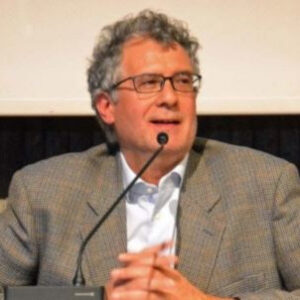



German Catholicism still plays a central role within the global Church, and it is a key player in the country’s life through its charities and many educational and social agencies. With the so-called Synodal Path, the German Catholic Church has become a forerunner of the synodality Pope Francis called for in the global Church. This week, the German Conference of Catholic Bishops elected Heiner Wilmer as its new president. Wilmer is the bishop of Hildesheim and the former Superior general of the Dehonian Congregation.
The election of Monsignor Heiner Wilmer as head of the German Catholic Bishops’ Conference is an important milestone for the future of the Catholic Church, not only in Germany, but around the world. Bishop Wilmer’s election signals a change of pace for German Catholicism, extending its horizon well beyond the country’s borders. In addition to the global experience he gained as Superior General of the Dehonians, bishop Wilmer is known for his international culture and cosmopolitan spirituality.
His doctoral studies brought him into contact with Italian society and French philosophical culture. He spent a year in the Bronx, New York, teaching at a Jesuit high school. He also carried out his ministry with disabled people in the Community of l’Arche in Canada and with deteinees in a high-security prison in Germany. He relates well to young people, listens to them, and gathers their suggestions for teaching in schools and for creating a Catholicism that can communicate with and appeal to younger generations.
He is fluent in several languages and keenly interprets the social and political events of our time. With Bishop Wilmer, the German church has found someone capable of representing it in public debate. He has a sensitivity similar to Pope Francis for the poor and marginalized – victims of the dystopian system of contemporary societies. In his diocese of Hildesheim, he has initiated a truly synodal style of leadership, seeking dialogue and criticism from his collaborators and Catholic people to find answer to the challenges contemporary western society poses to a Church that wants to be involved in people’s life and historical events.
These qualities qualify him for the tasks of mediation and negotiation befitting a group leader. This applies within the German Church, where tensions among bishops exist over major pastoral issues, such as blessing same-sex couples, the role and authority of women in the Church, and organizing a truly synodal style of decision-making with all believers. His intelligent diplomatic character and international experience also qualify him to cultivate clear and frank relations with the Vatican and global Catholicism.
At the helm of a diocese in a state of diaspora such as Hildesheim, where Catholics are a minority scattered over a vast territory alongside Lutheran Christians, Muslims, and Jews, Heiner Wilmer does not pine for a Catholicism impressive in numbers. Nor does he mourn a “power” that, if it ever existed, is now part of the Church’s history. Instead, he and his collaborators in the diocese have sought to initiate pastoral projects, as well as cultural and social dialogues, that make the experience of the Catholic faith a source of hope and support for everyone. In this way, the pastoral style of the Hildesheim’s diocese embodies the literal meaning of the Gospel: a surprising joy that draws close to everyone, no matter their circumstances are.
In his appointment as the German Catholic bishops’ delegate to the COMECE (Commission of the Bishops’ Conference of the European Union) and European Union, Wilmer expressed his support for the European political and social project. He outlined the framework for cooperation between the Catholic Church and European institutions in these terms: “These three areas of public life—shaping a new humanism, exercising a prophetic role, and safeguarding the ideal of the constitutional state—are areas in which the Catholic Church and other churches, denominations, and faiths can contribute to the promotion of the European project. Together, they can give this project spiritual depth and a soul, as Delors said. I stress ‘together’ because the time for religious faiths to act alone or engage in divisive confessionalism is over. Instead, it is time for alliances that build bridges and construct the mosaic of human coexistence.”