



Times are risky; intellectuals should be extra careful not to make ‘enemies for free.’ Wars cannot be holy in any way; the US would lose most from it.
Some European and American liberal intellectuals seem to be absolving their own consciences. They place themselves on a pedestal and might worsen issues by lashing out at MAGA policies and some American international positions in elegant prose.
Of course, some MAGA tendencies are highly dangerous—some fascist temptations are real—but there hasn’t been, at least so far, a successful March on Rome (the one that brought Mussolini to power in Italy in 1922). Could there be? Maybe yes, and for that reason, it must be prevented and avoided, not paved the way by claiming it’s all downhill from here.
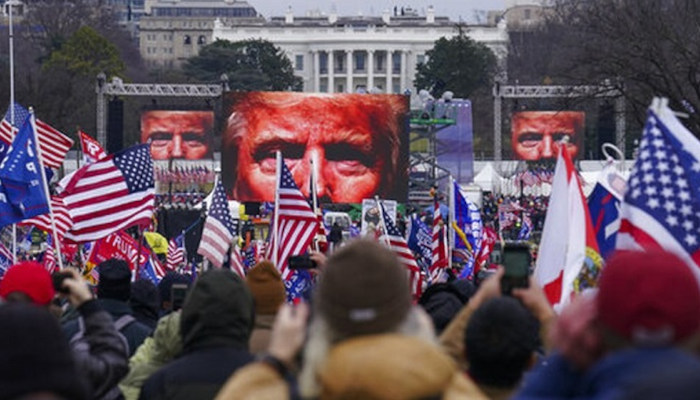
While some of President Donald Trump’s supporters might dream of fascism, others surely dread it. They understand that if the USA became fascist, it would have a huge impact worldwide; it’d cripple America’s role and standing globally.
These intellectuals, nobly critical of MAGA or Trump, might be sometimes politically naive, and in being so, they may incite and enable the worst tendencies. They favor fine words and their own moral purity over the effort to confront horror, even risking their own well-being.
Most importantly, some seem to fail to recognize that the worst MAGA, like fascism a century ago, does not arise in a vacuum but also stems from the arrogance, haughtiness, and crude, overbearing attitude of a certain left that neglects the reality of many poor people in the name of abstract ‘pro-poor’ banners.
Gramsci, the prophet of communism in Italy who died in a fascist jail, criticized himself in his prison diaries. He said that after the war, from 1919 to 1922, his party neglected the hardships of many veterans. It despised them and branded them as ‘warmongers’ and thus handed them over en masse to Mussolini, the founder of fascism and a former socialist. Gramsci described this as “making enemies for free.”
A century later, some on the transatlantic left might ignore Gramsci and repeat the same mistake the Italian Communist Party made.
Moreover, fascism was terrible, for sure, but it wasn’t a simple situation. Italy at that time, rightly or wrongly, feared being overwhelmed by the communist revolution that had taken over Russia and was shaking the world. King Victor Emmanuel III, certainly no genius nor lion heart, instead of trusting the elder Giolitti, whom he feared, handed Italy over to a reckless young man, Mussolini, hoping to control him. And we saw how it turned out.
Today might be different. MAGA’s fortunes could be waning in the US and elsewhere. In Italy, right-wing Prime Minister Giorgia Meloni is struggling after failing in a referendum on the judiciary; Viktor Orbán is likely to lose Hungary’s elections on April 12. Right-wing trends may be beginning to fade.
Therefore, protesting the irresistible rise of fascism might be risky. It could fling open doors that for now remain ajar. It doesn’t mean we should ignore what’s happening in America; we need to stay alert.
At the same time, it’s not the moment to make enemies for free. Failing to recognize the different groups among Trump’s supporters is to rush headlong into the night where all cows are black. In the end, one inevitably ends up gored.
Unholy Wars
Against this backdrop, the Pope took a stand. Last Sunday at the Palm Mass, Pope Leo said that “Christ, King of Peace, cries out again from his cross: God is love! Lay down your weapons! Remember that you are brothers and sisters!”
It appeared to be a clear response to US Defense Secretary Pete Hegseth, who had also prayed that the military would use “overwhelming violence” in Iran during his first Pentagon Christian worship service since the war began.
Wars are horrible, but holy wars justified by religion are worse because they aim not only to destroy lives but also people’s souls. This has happened in the past; the Church did it too, but it cannot be repeated today.
When leaders of any government cite the Bible or any holy scripture to justify a conflict, they are engaging in a holy war that, from a purely practical point of view, becomes endless because it pits one faith against another – it can only end with the destruction of the other people’s faith. It opens to a reality where everybody is fighting for their religion against other people’s religion, and there can only be a temporary truce, but the annihilation of the enemy is the ultimate goal.
One way to resolve wars and conflicts is to remove their religious context and present them in practical terms that can be tackled through politics and diplomacy.
The United States, as the keystone of the global political order, has a vested interest in maintaining stability by preventing escalation. It has no interest in waging any kind of religious wars in a world where everyone has their own faith. Doing so would open the hell gates of medieval wars, where everyone fights against everyone.
To invoke the specter of religious clashes, as Hegseth has recently done, is not only un-Christian and inflammatory but also deeply contrary to the interests of the world and America itself. The United States has the most to lose in using religious rhetoric in wars.