


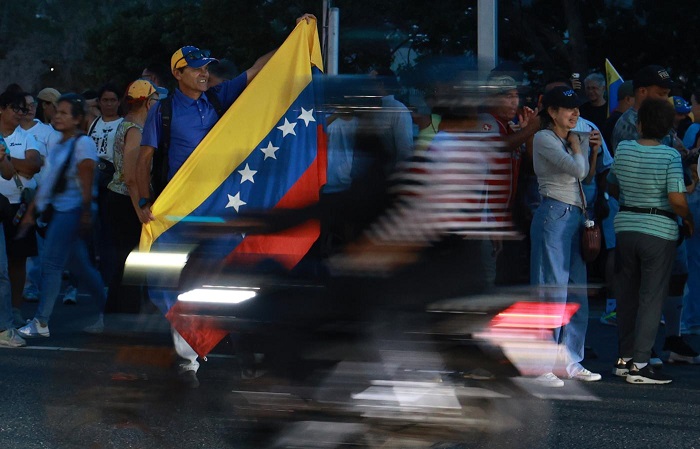
On October 23, the Venezuelan Bishops’ Conference published a pastoral letter addressing the country’s social, political, and economic situation. At almost the same time, the opposition leader, María Corina Machado, announced that she was back in her home country.
Following the U.S. military intervention that led to Maduro’s ouster and last summer’s earthquake, Venezuela has virtually disappeared from the global spotlight.
The bishops describe a Venezuela that is left to fend for itself. It is unable to find a way out of political polarization and embark on a national path toward reestablishing the rule of law and “restoring the full validity of the Constitution.” On the other hand, there is a growing awareness that Venezuela lacks the power to determine its own future and that a process of national reconciliation is necessary to regain its sovereignty.
The overall situation in the country further fuels the emigration of the younger population, who see their chances of returning home slipping away. “We observe the existential weariness, family grief, and anguish of the Venezuelan diaspora,” say the bishops. The main causes of the Venezuelan people’s suffering—whether they remain in the country or leave—are primarily “widespread impoverishment, human rights violations, the slow pace of judicial proceedings against civilian, military and political prisoners, and the neglect suffered by the vast majority of this land’s people.”
The education and healthcare systems are in a “tragic and profound crisis.” Regarding education, the bishops point out the precarious state of infrastructure and express concern about the high school dropout rate. This issue not only jeopardizes the country’s sociocultural future, but also the ability of every person to exercise their right to full citizenship within a democratic system governed by the rule of law. Regarding the healthcare system, the bishops highlight the “persistent shortage of necessary supplies in public hospitals” and the “deterioration of the healthcare network,” which excludes a large portion of the population from access to essential medical care for a dignified existence.
The economic crisis appears to have entered a vicious cycle, and little is being done to escape it. The loss of purchasing power, erosion of pensions, use of foreign currencies in the domestic market, informal employment, and failure to redistribute oil production proceeds risk driving the poorest segments of Venezuelan society into a state of “everyone against everyone.” Signs of this breakdown of even the most basic social bonds include an increasing number of children being abandoned by their families, despair among young people, and the neglect of the elderly.
Politically, little seems to have changed despite the leadership change brought about by the United States: the government continues to exploit institutions for its own benefit, and the current ruling class still imposes strict limitations on democratic safeguards when exercising political power. These conditions are also due to the partial suspension of the Venezuelan Constitution. The bishops emphasize the necessity of “free and transparent elections” to initiate political renewal and fully reestablish the rule of law in accordance with the Constitution. For this to happen, however, it is necessary to establish “an impartial National Electoral Council and an independent Supreme Court of Justice. Only then will it be possible to guarantee due process, lift ineligibility restrictions, and respect the political rights of all citizens.”
The Catholic Church reaffirms its solidarity with the people and its commitment to strengthening solidarity initiatives in education, healthcare, and the economy. Of particular importance is the decision to expand the services of the Diocesan Centers for Human Rights “to provide legal, moral, and psychological support to victims of human rights violations, political prisoners, and their families.” True national reconciliation cannot take place without first working with the victims of Chávez’s and Maduro’s political regimes. This work involves listening so that victims can find their voice and express their concerns, thus creating the basic conditions for engaging with the part of the country that persecuted them. Engagement not motivated by hatred or resentment but by a desire to build a country that belongs to everyone, regardless of their political affiliation. In Venezuela today, only the Catholic Church can carry out this work, thereby contributing to the “urgent need for a comprehensive reconstruction of the nation.”