


The super policeman’s death could plunge Italy into chaos. The country needs peace, not another wave of vicious power struggles. Can it get it?
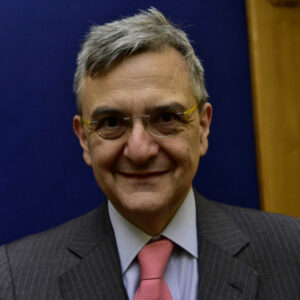
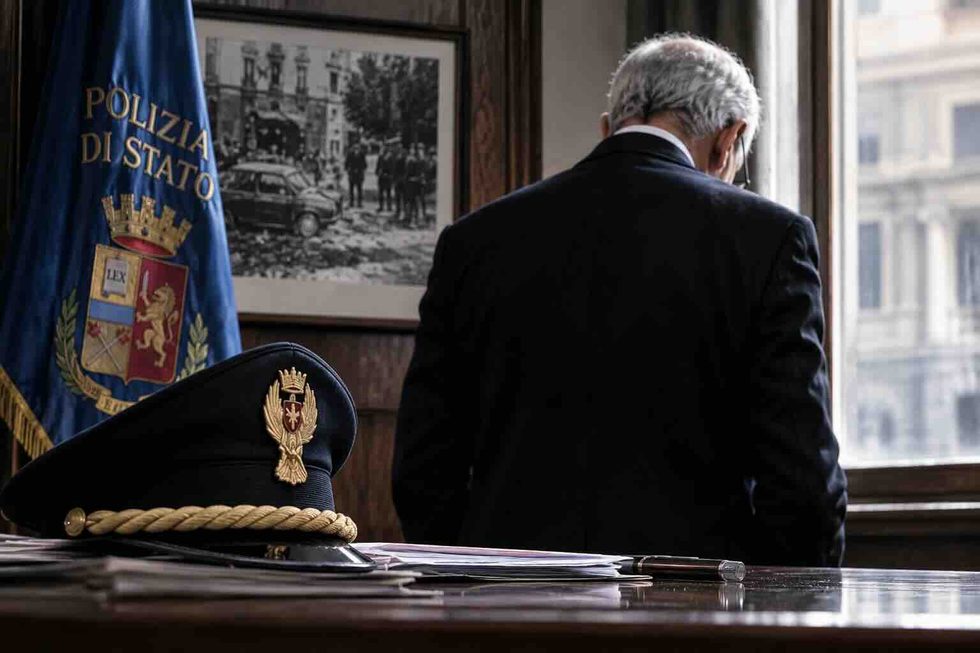
Gianni De Gennaro, for decades the country’s most powerful policeman, shot himself at his country home in Tuscany, leaving behind a few notes and documents.
Prosecutors in Caltanissetta had placed him under investigation for misleading the inquiries and removing documents related to the 1992 bombing that killed Judge Paolo Borsellino and five members of his protective detail in via d’Amelio.
With the carnage of Via D’Amelio and, just a few days earlier, that of Capaci, where Judge Falcone was blown up, the First Republic came to a close.
Today, with the demise of the chief investigator of those two massacres, the Second Republic ends. The government is a lame duck after defeat in the March referendum on justice, and it has weak international relations. Can it manage such a difficult passage today, with such an illustrious death which has so many ramifications? And if it fails, what will become of Italy?
De Gennaro had long been celebrated as a hero of the anti-Mafia struggle, crucial in dismantling the criminal organization in Sicily. The allegations, if proven, would cast his entire career in a darker light, suggesting he may have shielded mafiosi or political figures who had colluded with them.
His standing as the nation’s foremost anti-Mafia figure had made him a linchpin of the political order and the cultural consensus that took shape after the bombings and the arrests of the top bosses.
He had helped chart Italy’s course over the past 35 years, a period in which the country has seen five presidents of the republic and 14 prime ministers, heading 21 governments. Through it all, every Italian institution adhered to that consensus.
The Caltanissetta investigation threatened to place not only his career but the shared narrative of those decades in a different frame. There is no certainty that the accusations can be proven, yet over the past week they have been constantly leaked to the media, in what many saw as smearing the policeman without appeal. In such an atmosphere, any defense from him would only have reinforced the perception of his guilt.
The anti-Mafia struggle was particularly brutal and murky. Italy never had a historical resolution to that period, nor political amnesty for the law enforcement officers who fought it. In the early 1990s, President Francesco Cossiga had unsuccessfully called for an amnesty for those convicted of the political terrorism of the 1970s and 1980s. An amnesty was considered politically very sensitive for terrorism. A historical resolution about the Mafia could be even trickier.
Now, rewriting that narrative and finding a new consensus would be a political earthquake, calling into question the history of recent decades and the rectitude of countless civil servants. Institutions could be shaken in a country where about half the electorate does not vote and in a world already fighting two wars. The Mafia was fought after the Cold War, during a period of global peace, very unlike the present.
It is unclear whether the Caltanissetta inquiry will gain or lose momentum after his death. The tragedy suggests that Italy has not truly recovered from its Mafia battles and may need some resolution. This is a country where time does not pass but stands still, in memories relived and reexamined again and again.
That is why the suicide may open a Pandora’s box of accusations and counter-accusations, tarnishing everyone, as perhaps only Italy knows how. De Gennaro knew everyone in the country, and all were his friends or his enemies. Both camps might now fight over his legacy, and over the meaning of his tragic end.
His death has reopened old wounds and unsettled old scores, political or judicial, righteous or wrongful. The nation ought to draw a line under its past, and its political and moral leaders should seek an accord to close that chapter and turn to the future. It could be hard.
The killings of the judges triggered an instinctive reaction: everyone was called upon to rally around the institutions to draw a line with the Mafia, no matter how that line was drawn in practice. Now De Gennaro’s suicide raises more questions than answers. People wonder whether he actually shot himself or was shot, and in either case, what does it mean?
What should the institutions do? Unlike 34 years ago, the government and institutions are weak, and the international arena is in total turmoil, leaving little time or spare energy to care for Italy. The Third Republic’s labor could be very tough.