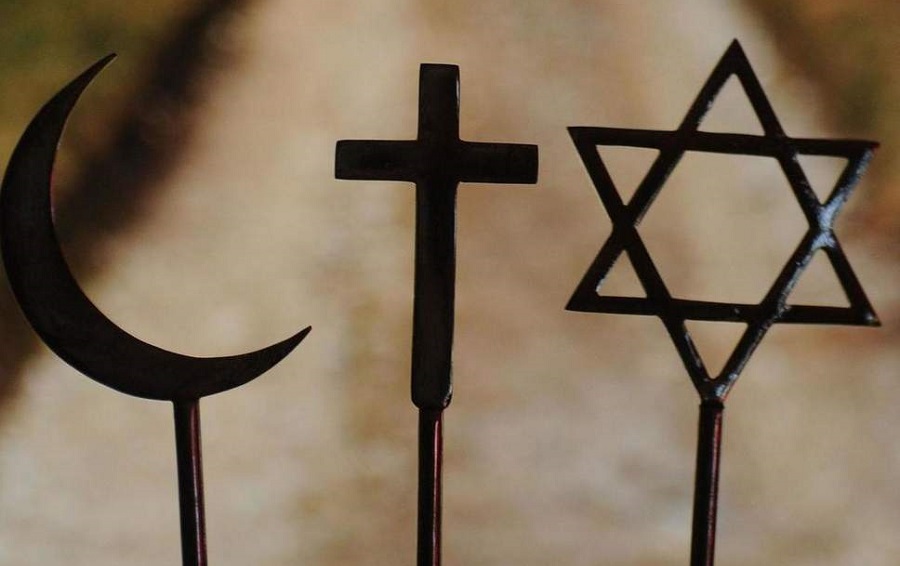




Anti-Semitism is not alone; Christianophobia is a new phenomenon, and it is spreading fast in the world, and the cradle of Christianity, Western Europe.
Many voices are being raised in Western countries against acts of vandalism and anti-Christian aggression. In France, 86 senators have called for the establishment of an inquiry commission. In Germany, the Catholic Episcopal Conference and 47 local churches (Protestant and Catholic) have denounced the worsening situation. In Canada, a bill on the matter is under discussion.
The issue has also been raised in the USA and in the states belonging to the OSCE (Organization for Security and Co-operation in Europe), which is referenced by OIDAC (Observatory on Intolerance and Discrimination against Christians in Europe).
Christianophobia should not be confused with persecution. It refers to occasional facts and violence, because it is not directly against the faith but justified by other, debatable reasons, and because it manifests, albeit in a hostile and reprehensible form, the democratic dialectic (cf. here on SettimanaNews).
Christianophobia is a sickness of democratic coexistence, while persecution is a direct consequence of autocratic and totalitarian power. Both phenomena are on the rise, and both suffer from insufficient and culpable inattention from Western media. They are often the subject of manipulation aimed at gaining political consensus for right-wing political forces.
Persecution: Not Accounted For
Persecution has grown strongly in recent decades. On September 29, Archbishop Paul Richard Gallagher of the Vatican Secretariat of State recalled this at the UN General Assembly: “Freedom of thought, conscience, and religion is another pillar of peace, and yet the persecution of religious minorities, particularly Christians, persists globally. Christians around the world are subject to serious persecution, including physical violence, imprisonment, forced displacement, and martyrdom. Over 360 million Christians live in areas where they suffer high levels of persecution and discrimination, with attacks on churches, homes, and communities that have intensified in recent years. Data shows that Christians are the most persecuted group globally, and yet the international community seems to turn a blind eye to their situation” (cf. here on SettimanaNews).
Christianophobia in democratic states has many debatable roots. They range from generic vandalism to the targeted damaging of religious artifacts (buildings, statues, liturgical objects), from reactions linked to cultural trends (cancel culture, laicism) to social phenomena like the rebellion of Black Americans or the response in Canada to the discovery of supposed burials of native children, from personal assaults to indirect “censorship” of people of firm religious affiliation, from misunderstood phenomena (offensive graffiti or creative street art) to obtuse opposition to contemporary forms of religious art.
France
Following vandalism in 27 churches in the Landes region, the damage to a cross in Nice, and the murder of an Iraqi believer in Lyon, 86 senators from the French center-right have signed a manifesto denouncing the state administration’s lack of attention to anti-Christian phenomena.
In the first six months of this year, there were 401 incidents, up from 350 in the same period in 2024, after a slowdown recorded in the two previous years. The Ministry of the Interior records the facts in a notarial form without adequate commitment to counter them. The law prevents reporting religious affiliation, with the result that attacks on Islamic and Jewish institutions are more prominent in the media than those against Christians.
The proposal is to establish a national system for reporting and supporting victims, as well as an inquiry commission to investigate vandalism against churches and cemeteries.
Germany
Last August, the Episcopal Conference reported the growth and violence of acts of vandalism against churches and Christian institutions and invited the police and those responsible for citizen security to react to the violation of insurmountable symbolic boundaries of civil coexistence.
Forty-seven local churches (Protestant and Catholic) have shared an investigation produced by the Protestant news agency (EPS). They are preparing countermeasures, including surveillance technologies, the presence of volunteers, and structural security measures.
Some dioceses have started a centralized inventory of the assets of each parish church. In any case, it should be noted that every damage has a significant immaterial cost: a deep wound to the religious sentiment of the faithful. Some vandalistic acts have remained in the collective memory, such as the one against the relics of the city’s saints in Bonn in 2016 or the damage to the “Calvary” in Wettenhausen (Augsburg) in 2022.
Canada
On September 19, the Government proposed a bill to protect citizens who frequent places of worship by censoring those who prevent access and carry out acts of intimidation against the faithful. Provisions requested by various groups of different religions in the face of the strong growth of hate and assault acts.
Crimes of this type in 2024 were 920 against Jews, 229 against Muslims, and 61 against Christians (in 2021, there were 155). But, according to some, damage to property and churches should also be tackled head-on. Others have expressed concern that the law could impede freedom of expression, a risk the government is reluctant to take.
OSCE and OIDAC
Since 2010, the Observatory on Intolerance and Discrimination against Christians in Europe has provided some elements, still imprecise, regarding Christianophobia on our continent.
The 2024 report confirms the further growth of violence against Christians. The crimes are quantified at 2,444 cases, occurring in 35 European countries. Among these, 232 are personal attacks. The most affected nations are France, the United Kingdom, and Germany.
Among the recorded crimes, 62% are vandalism, 10% arson, 8% threats, 7% physical violence, 2% murder (or attempted murder), and 11% in other forms. Worrying forms of discrimination in the workplace, at university, in politics, and in the media are also cataloged. Up to the violation of freedom of conscience regarding military service, in the medical practice of abortion, and freedom of conversion (in the case of passing from Islam to the Christian faith).
Part of this climate is the “constitutionalization” of the “right” to abortion and the scant attention given to faiths in legislation on euthanasia.