



The spread of cryptos and their new uses alongside the traditional US dollar creates new challenges for the global system as debt and inflation mount.
The evolution of money is intertwined with that of human beings and, in particular, with their economy, serving as a language that records the good and bad moments of its history.
Currently, one should highlight the consequences of the current phase of the spread and legitimization of crypto, considered both as an autonomous category and in forms hybridized with “traditional” financial instruments (such as certificates and derivatives).
In particular, the aim is to assess the effects of the US President Donald Trump’s decision to designate five cryptocurrencies as official reserves of the dollar: Bitcoin, created by Satoshi Nakamoto (a pen name); ETH, from the Russian-Canadian Vitalik Buterin; XRP, from the Americans Chris Larsen and Jed McCaleb; SOL, from the Ukrainian Anatoly Yakovenko; and ADA, from the Americans Charles Hoskinson and Jeremy Wood.
This opens the possibility that the current international monetary regime could shift from a fiat-dollar system (a dollar accepted voluntarily) to a dollar-crypto standard (a dollar still accepted voluntarily but redeemable in crypto). This would represent a profound monetary transformation of questionable legal standing even under the U.S. Constitution, and would, in any case, be yet another breach of international monetary cooperation — cooperation that enabled great prosperity for humanity throughout the twentieth century, but whose importance is today frequently underestimated, if not outright ignored.
One repeatedly hears that, following the spread of crypto and similar instruments — but above all due to the rise of Artificial Intelligence (AI) techniques — a new Bretton Woods would be needed, referring to the Agreement reached in 1944 among 44 countries, while the world was still at war, which set out the rules that money and finance, then evolving rapidly, would have to follow.
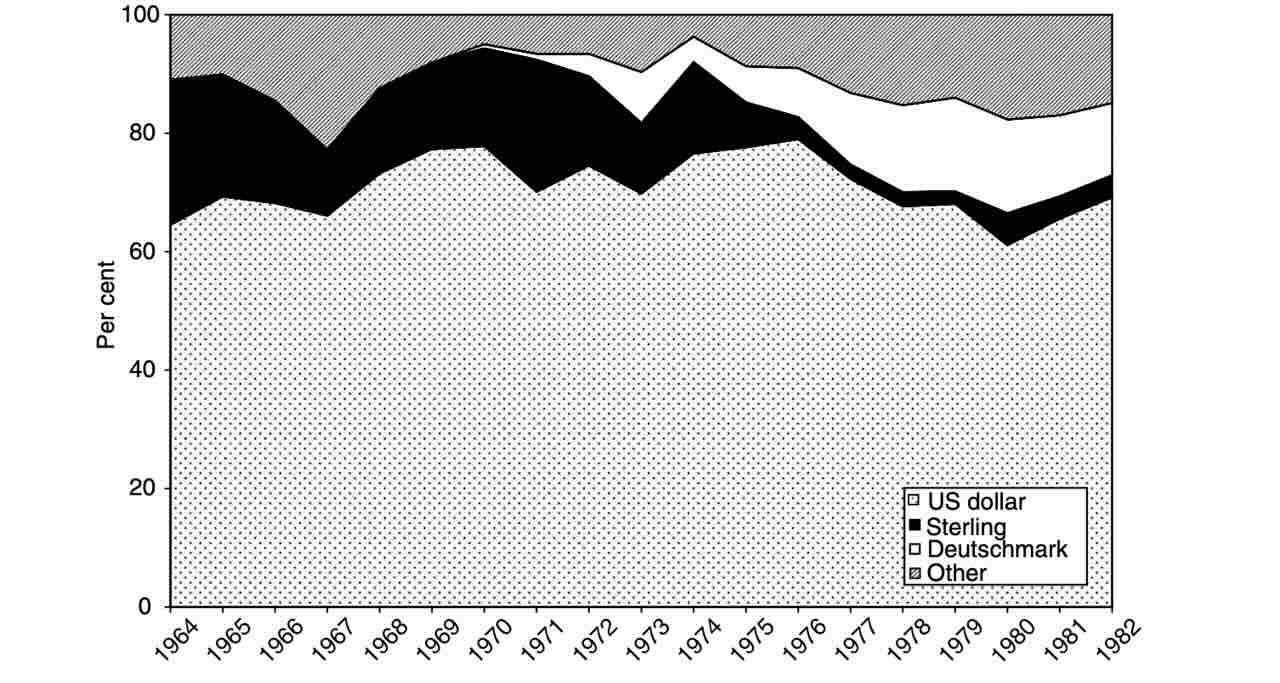
What tends to go unexamined, however, is whether it is even appropriate to invoke that Agreement, which was born to remedy the international monetary confusion caused by wartime conditions — but above all by the 1931 collapse of the British pound, then used as a global medium of exchange, which definitively ended the gold standard.
That international monetary regime had provided a way to settle global trade balances in gold, following the failed attempt to pair it with, or replace it with, silver, which was already present both within and outside many countries.
Distinguished scholars and political leaders of the era helped shape that Agreement, with the goal of building a more stable postwar international monetary order and avoiding a repeat of the mistakes made after the First World War — mistakes that placed unbearable burdens on the defeated countries, above all Germany, and that historians consider to be at the root of the rise of a dictatorship that led to the new world conflict.
Discussing a new Bretton Woods today reminds us of the need to renew a global cooperation agreement to address problems that can only be solved through collaboration.
But today the circumstances suggesting a repeat of such an agreement have changed profoundly, and they intersect not only with issues arising from the spread of crypto and AI technologies, but also, in our own time, with a shifted orientation in geopolitical, military, and economic relations, which weigh heavily on global coexistence.
To the unresolved problems of monetary governance has been added the complication that securities transactions are increasingly migrating from the physical world to the ether (the Infosphere, the sphere of Information Technology), stored within the physicality of a computer — the modern network for storing and managing information, which has ushered in a new era of human life. Proof of the property right that legitimizes an exchange — initially handled in written form at a centralized level — moved from paper to digitization on magnetic tape held by an authorized entity, and then to a decentralized mechanism whose access is granted only to the holder of a code, part of a predetermined and closed computer system known as Blockchain (a linked chain) or DLT (Distributed Ledger Technology).
Managing this mechanism entails certain technical complications, among which — emerging with growing intensity of late — is the need to ensure the cybersecurity of records against attacks (hacking) by private individuals or by states in conflict with one another, as well as the need to confront the quantum development of computers and of “powerful AI.”
These problems demand a very different set of content and a far greater commitment to reach an international agreement than those that served as the reference point for the Bretton Woods Agreement.
There are also more substantial problems. According to the plans, the crypto should be backed by real estate assets, hence the new name “stable currency”. However, it’s unclear who will control the real assets underpinning the currency and how. This is a sticky point, as it may resemble the derivatives issue that triggered the 2008 financial crisis.
Even then, derivatives should have been backed by real assets and prudent estimates. That was not always the case. Sometimes flimsy assets and shaky estimates backed massive derivatives. Eventually, the failure of one of those assets or estimates brought down the system.
Crypto or stable currencies should be different, but the hazy nature of those new tokens of economic exchange could lend itself to unfair play. Could the US drop crypto and save the old-fashioned dollar? Or can US enemies use crypto to undermine the dollar? This is paired with mounting global debt and growing inflation. Servicing those debts could soon cripple every economic movement and push the world economy over the edge.
These are new questions that might be important to address as we move forward in a new world of money exchanges.
(Adapted from the Preface of Savona’s book: The troubled life of fiat money: from ostrakas to cryptocurrency, 2026)