

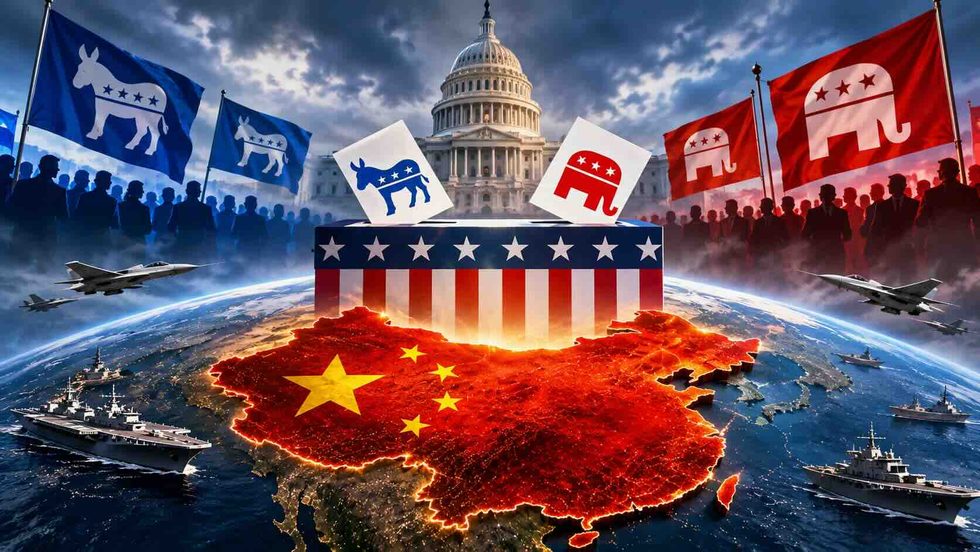
The election results prove democracy is alive, but they don’t address all the issues Trump’s camp raised. The Relationship with Islam and the Pope’s new role could help America’s core tenets.
In less than a couple of weeks, the world has watched two major superpowers, the US and China, handle their politics in very different ways.
At the beginning of October, the Chinese communist Party (CPC), led by Xi Jinping, purged its top body, the Central Committee, of at least 45 members in secretive meetings. The public in China or in the world didn’t know if it was right or wrong, fully justified or utterly capricious. The public could not vote or even openly root for or against the 45. They were called only to acquiesce, not oppose the choices made elsewhere.
It was all conducted in silence, and outside silence surrounded it. It made no waves, no negative, but most importantly, no positive.
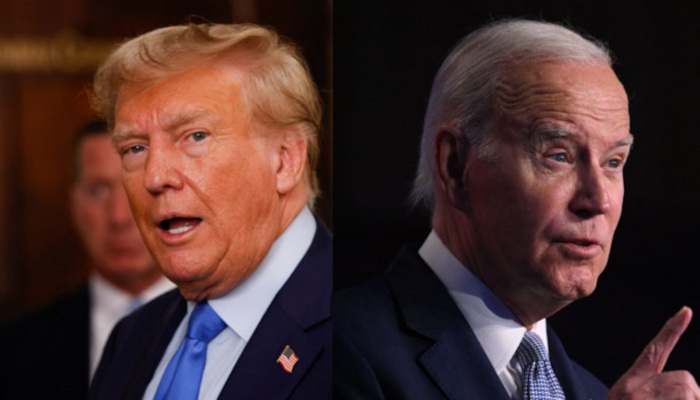
A few weeks later, the American people, amid the world’s audience loudly cheering for or against, slapped down their president, Donald Trump, and spurned the lure of millions thrown at them by his court of techno-billionaires. The Democratic Party scored its biggest victory since 1958. The victory was expected, but not to this extent.
It was a tsunami against Trump, but also a positive tsunami for America. It proved US democracy is real and can win against the threats or temptations of a sitting president or of plutocrats. America is not led (alone) by money and power but most significantly by ideas and actions.
In fact, after years of strong rhetoric about the imminent death of liberal democracy and the rise of global authoritarianism, in a few months, the opposite came about. Elections in Hungary, Serbia, Brazil, Israel, and the US chastened pro-authoritarian forces.
It’s not the end of the story, but at least the oft-predicted end of democracy won’t happen yet. The US moves in fits and starts, making mistakes. This may not be best for everyone, but perhaps we shouldn’t mistake what we don’t understand for decline.
Still, the rollercoaster of democracy isn’t for the tenderhearted. It is unsettling and can be very unnerving, especially for people raised in traditions that, right or wrong, aren’t used to these ups and downs. The Chinese are long accustomed to a political flatline and weary of political turmoil, which they link in their minds and culture to earth-shattering revolutions.
A society that first votes for Trump and, just two years later, turns against him is hard to comprehend; thus, it’s even harder to emulate. This has nothing to do with whether the system is good or bad. The summary in Beijing could be: democracy is alive and kicking, but its wild gyrations are impossible for the Chinese state, which is geared on different nuts and bolts.
Swinging democracy
Still, the message is not only for China but for a world of which China is an integral part and from which it might want to divorce, but it can’t.
The story of US democratic swings will certainly resonate more loudly in Russia or Iran, Chinese semi-allies, but part of the Mediterranean cultural world which also spawned America. Even if a liberal America may structurally frighten China, if it appeals to its allies’ people, this might create a different dynamic for Beijing as well.
One of the divisive arguments hawked by Western right-wingers is actually a very difficult issue – the integration of muslim immigrants in the heart of Christian societies. This is a common problem for the US and Europe, where divisions between Protestants and Catholics (‘papists’) were buried just a few years (not decades) ago.
Some in both Europe and America tried to deal with this new Muslim challenge by harking back to a ‘Christian denominator’ and tried to pull the Catholic Church (considered a bastion of tradition) with them. At the heart of the matter is a deep identity crisis. If Islam is to be integrated into American or European societies, these societies could lose their cultural identity and be swallowed by uncompromising Muslims, turning the US or the EU into Islamic states.
The Church has been reluctant to go along. After centuries of insults from liberal capitalist societies that emerged in the 17th century, the Church has found a new balance with liberal societies and, in doing so, has awakened with different traits and sensibilities. It now has a voice heard in both the East and the West, by Christians and Muslims, Hindus and Buddhists.
Still, the question is right. If the bond between Christianity and liberal societies is consumed, what can hold Western liberal societies together? What can be Europe or the US’ new identity? And thus, what should be, and can be, the identity of China or Russia?
Here it is necessary to make a little detour.
Heresies
For centuries, the Catholic Church considered Muslims heretics, like the Arians, the Donatists, and later the Cathars and the Waldensians, among others. Even Franciscans were nearly labeled heretics by the Church. There were crusades against Muslims, but also against other heretics, who were now considered fully ‘Christian’.
The Occitan-speaking Waldensians, close to the Franciscans, were persecuted and massacred many times. The last crusade against them ended in the 16th century, in Guardia Piemontese, Calabria, at the Porta del Sangue, the Gates of Blood, where the surviving few hundred were cruelly slain or forced to convert. It was in the middle of the Reformation sweeping Europe.
The Muslims, who during the Reformation aided and abetted the Protestants against the Catholics, were not so special. They were part of the large ‘unholy alliance’ against the Catholic Church and its earthly incarnation, the Holy Roman Empire. On the other side stood the Caliph, also claiming the legacy of the Roman Emperor, and the many breakaway states seeking identity and independence from the Roman Shadow.
Then, rapidly, in the 17th and 18th centuries, with the seemingly unstoppable success of the Christian West and the utter defeat of the Ottomans at the gates of Vienna in 1683, everything changed. Vienna was the imperial capital, and the defeat came just three decades after the Peace of Westphalia, which had left the Holy Roman Empire mutilated and weakened.
The Caliph, the old protestant ally, tried to strike at its sworn enemy, deprived of its North German vassals, now freely protestant. Yet Vienna managed to call on the Polish force, shaping its power between the Protestant western German neighbors and the Eastern Orthodox Russians. The winged Polish cavalry stormed the Ottomans and put an end to Turkish ambitions. After that, the Ottoman Empire started a fairly quick decline. In those years, the Protestant English and Catholic French began carving up the Muslim Mughal Empire in India, while the Mughals’ cousins, the Manchu, took control of Ming China. Global geography was changing.
The Catholics would not be swallowed by the Muslims, and they were still a force the rising protestants had to reckon with.
A different taxonomy of world religions emerged: Christianity, Judaism, Islam, and paganism, with Hinduism and Buddhism later added as subdivisions. The label changed too. Until the late 18th century, there were “Saracens,” “Moors,” or “Mahometan heretics”; then they became simply “Islam,” just a step above the supremely despised pagans. This taxonomy justified colonial and geopolitical ambitions. If ‘Islamists’ were almost pagans, Christians could vanquish and “civilize” them in the same fashion.[1]
At the time, the Near East was southern Italy and Greece; beyond that, it was the Middle East, and the Far East was the immense lands east of Turkey.
Historian Cemil Aydin argues that the idea of a Muslim world was forged in the second half of the 19th century. Muslims had long had the concepts of the ummah (the community of believers) and dar al-Islam. But these did not match the modern notion of a politically and culturally unified “Muslim world” that shares a common fate and a common set of interests.
Muslims adopted and reshaped the “white Christian” idea of a Muslim world in which everyone was lumped together. Facing colonial rule and racial discrimination, Muslim intellectuals and rulers turned the category into a tool of solidarity and anti-imperial resistance. The idea persisted after the Ottoman caliphate was abolished in 1924. It was the last of the ancient self-proclaimed heirs of the Roman Empire to fall.
The first had been the Russians, when the empire crumbled in 1917; then came the Holy German Empire in Vienna, which collapsed in 1919; last came the Ottomans. Over two thousand years of legacy that had bound and split the Mediterranean and the world spinning from it had ended.
Only with the end of the Heirs of the Roman Empires did the guardians of the orthodoxy also end. The only Roman imperial legacy surviving the massive tumble, the Catholic Church, had to adapt quickly to the new environment. In 1871, it lost its territorial state, and half a century later lost imperial protection. Without that, the Holy See had to reinvent itself. Moreover, it was caught in a new vise of two emerging challenges, deist capitalism and atheist communism. It pushed forward, forging a new middle ground and trying to talk to everybody.
The lack of territorial interests or an imperial bond liberated the Church from centuries of limits. First,
the third-century pact with Emperor Constantine (making Christianity the official religion of the empire) provided a safe ground for growth of the Church. Second, the 8th-century pact with the Germanic kings (proclaimed holy emperors) granted room for maneuver that the Emperor in Constantinople didn’t give.
Over the past century, the Church has wiggled a space for itself, first helping the capitalist West fight the communist enemy, and now filling the yawning void left by weakening international institutions.
The net result is that the Church, for centuries a keystone of an imperial history, took decades to shift around and find a new cultural position.
Now that Western historical perspective is gone, and the Church is talking with the once-hostile Protestants, and even the atheists, it is thus rightly intensifying its dialogue with Islam. This is both with Islamic countries and with Muslims who migrated into Western democracies.
Institutions
The present problem with Islam in Western countries may not be “religious” or racial, but institutional. It’s about the civil application of Sharia law, which may break the modern principle that all citizens should be equal before the law, regardless of their faith, sex, or race. Sharia may interfere with and undermine state law when some demand that its application prevail over state law.
Radical Muslims can also claim that other minorities, such as ultra-Orthodox Jews, radical Christians, or other small religious movements, do the same. But none presents interference as large in scope and breadth as radical Islam in Western societies.
Small exceptions can be tolerated and digested; large exceptions subvert the institutions and the state. Sharia law and the sharia tribunals should not be allowed to undercut the foundations of democracy. Then it’s vital for democracies to forbid the civil application of sharia law. Here, radical Muslims and their enemies play with the contradictions of democracy.
The left may want the votes of the Muslim and decide to gloss over the problems with sharia; the radical right may forget about the differences between sharia and a Muslim individual, equate the two, and fan trendy hatred against Muslim immigrants as populist scapegoats.
Vicious circles
From there, it’s a vicious cycle on a slippery slope, where more sharia means more radical right-wingers. Nothing new under the sun. It’s the start of every revolution; revolutionaries and reactionaries go hand in hand, hoping that greater demands will fuel greater resentment and that the tide will eventually spark a groundbreaking revolution or a fascist reaction.
Democracy’s strength, which calls on voters to cast their ballots responsibly, becomes its weakest link: elections held in tense times “force/help” both the extreme right and left, amplifying their messages to win votes.
Perhaps the solution could be to build consensus at the center through courts, or something not subject to elections, against the civil application of sharia law.
Christians maybe could open a dialogue with Muslims, considering them just one of the many “Jewish heresies” within the framework of Western democracy.
If unchecked, it could become the dangerous mix of the 1979 Iranian Revolution: leftist libertarians, unwillingly, harbored radical Islamists who devoured the revolution once the old regime was toppled. If the link is not addressed structurally, it could be messy. It could lead to either the ayatollahs or a fascist dictator.
China’s wavelength
Almost paradoxically, today the strongest defenders of the liberal res publica are those who opposed modern reforms two centuries ago. European monarchs, the Pope, and many religious leaders have become its standard-bearers, advocating a separation of state and religion that guarantees freedom of conscience for all.
In theory, China should be on the same cultural wavelength. It has a long tradition of keeping religion under state authority. In practice, three things are missing: a fully convertible RMB, an open political system, and geopolitical ambitions that others can accept.
There is no real “religious” challenge to the liberal order from China. The challenge comes from elsewhere, and not only from Islamic law. Russian President Vladimir Putin has adopted what could be called a premodern “Christian Sharia,” in which religion and state almost fuse into one moral and legal order. The modern ‘Czar’ lends authority to the Orthodox Church and vice versa. Possibly, some in the West would like to see a new “Christian Sharia” of their own.
That is the heart of the matter. The threat is not one religion but the idea that a single religious law can be the highest authority in a state, whatever the religion. A liberal res publica is secular in that sense: it protects every faith precisely by privileging none.
Then, in a nutshell, what could and should the US identity be? Every large political unit has an essential core belief that can be expressed in a few words.
For instance,
The Catholic Church
One and triune God, consubstantial. Salvation is obtained through the works of men and through the grace of God.
The present Russian ideological core:
Western world is in chaos; to save from that chaos, Russia has to go back to its Russian civilization rooted in its geography, and therefore in its ethnicity.
The present Chinese core:
The Party knows what to do for China’s good, and the past 50 years of growth and development prove it. The Party is grounded in Chinese civilization, rooted in its geography and therefore in its ethnicity.
The United States
What, then, is the foundation, the creed of the USA? Away from the old (White Anglo-Saxon Protestant) consensus, it can’t remold into a papist accord where the Holy See is dragged into a new religious animosity against all non-Christians.
It could be liberal capitalism. It works as a powerful engine of growth, grounded in cultural values, political institutions, and the free market. This mix works for everyone, regardless of religion or race, as the past 300 years of history have shown. US liberal capitalism works so well that it even helped China and the world grow through globalization, as long as they followed it. Liberal capitalism is the new essence of the West, beyond its geographic or ethnic boundaries.
Russia or China seeks a territorial or ethnic root. The US doesn’t need one. Western liberalism evolved and migrated from ancient Greece to Rome to Western Europe, to Northern Europe, and to America, Japan, Korea, et cetera.
Inefficient cores
On the other hand, Russian and Chinese cores also do not work. Defending territory to mark an ethnicity and a culture is practically hard and generates all kinds of friction with neighbors that can (and does) easily backfire.
In Russia, Putin, caught in a war about ‘Russianness’ with Ukraine, is trapped in his own rhetoric, but China isn’t. Mr. Xi may have a chance to tweak China’s core belief at next year’s Party Congress. It’s unclear whether he’ll do it, but the next few months of “regained democratic thrust” in America could be a significant factor in Chinese thinking.
In the plenum, there was an interesting emphasis on ‘self-revolution’ (自我革命) that recalls Mao’s ideas leading to the Great Cultural Revolution (1966-1976) and may have been inspired by Trotsky’s notion of a permanent revolution. It may also be influenced by the old Mencius’s maxim 生于忧患,死于安乐 (“life is in doubt and adversity, death in comfort and pleasure”).
These concepts address the main weakness of authoritarian systems: the difficulty of recognizing and embracing change. Some communist revolutionaries tried to deal with this by offering cumbersome solutions (‘revolutions within revolutions’) that ruled out open elections but were meant to shake bureaucratic complacency.
If the Plenum’s spirit is true, doubt and adversity could be dangerous and disruptive to the state, as Mao’s experience proved. Mr. Xi has investigated perhaps millions of officials and punished hundreds of thousands, creating enormous entropy and uncertainty in the system. In modern times, adversities may be better managed and controlled in the peaceful environment of an open democracy, such as that of the US.
Just hours after the Midterm elections, China reported that a large-scale grassroots election is underway, with 2.6 million grassroots representatives being elected by over 1 billion registered voters.
Chinese one-party elections without fiery open debates won’t get the same global coverage as US elections. But Beijing’s coverage proves that the American vote and results had a massive global impact, even within China, and that it realizes it has to do something about it.
Beijing’s reaction also shows that the US’s complex system of open democracy is one of the main tools for dealing with China. Tariffs and military pressure apparently didn’t solve all the problems.
[1] Masuzawa, Tomoko. The Invention of World Religions, or, How European Universalism Was Preserved in the Language of Pluralism. Chicago: University of Chicago Press, 2005. And Aydin, Cemil. The Idea of the Muslim World: A Global Intellectual History. Cambridge, MA: Harvard University Press, 2017.