



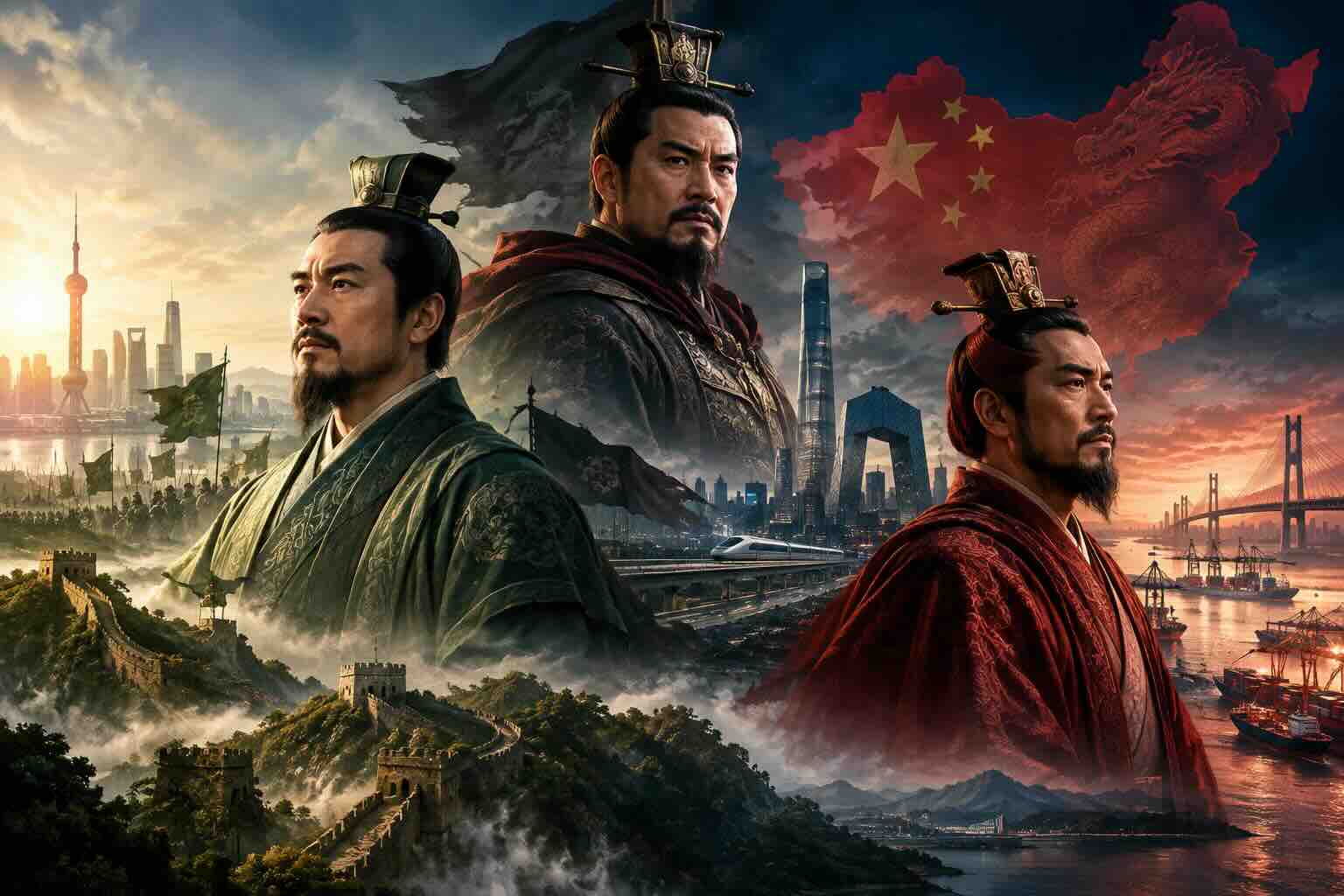
China is fully prepared to confront the United States, ultimately leading to a possible global financial collapse. With Covid, it had almost a rehearsal of a war economy. The USA apparently isn’t, and perhaps it doesn’t have a plan B other than talks.
America has upended its system and network of alliances, irritated allies and trading partners, and is surrounded by an unprecedented distrust not seen in at least 35 years. In this condition of relative US weakness, China has unleashed a “preventive counteroffensive” with sanctions on rare earth elements, backing America into a corner.
America has potential countermeasures, but they are highly escalatory, such as removing air traffic control services, which could be tantamount to an act of war, as it would cut off civil air traffic to and from China. Or they are largely ineffective, like cutting off the supply of sophisticated chips for smartphones, which can be replaced by less efficient but ultimately still usable chips.
REE (Rare Earth Elements) is conversely appropriate, threatening to crash the markets and trigger a global recession immediately. Thus, they pit the markets against the US President Donald Trump. In China, President Xi Jinping has full control over the markets, which are largely unhinged from the real economy, and politics is indifferent to market reactions.
In many ways, indeed, the 2020 COVID pandemic was like a dress rehearsal for a state of war for China. COVID proved that if the Chinese feel under threat, they adapt quickly and follow the government, trusting its good judgment. Anti-COVID measures worked even when Shanghai was in an almost besieged situation in 2022.
They only stopped working when, in Beijing, next to the center of power, people felt that such measures were no longer serving any purpose, given that the rest of the world was largely recovered from COVID. Then the country accepted a massive wave of infections and deaths that we still don’t fully understand today.
Indeed, today, a second “Chinese lockdown” could be harder or difficult to swallow for the population. Or maybe not. Chinese people read in the domestic and foreign press that there is war in Europe and the Middle East, the United States is split and under the thumb of a tyrannical and unreasonable president, oblivious of the democratic ideals that once charmed and seduced ordinary Chinese. So, they feel, and they might continue to feel, that their government protects them best.
From a Chinese perspective, what should China do to confront the threat of high American tariffs undercutting its exports? If it waits and doesn’t move, it risks dying by the torture of a thousand cuts, because the United States wants to reduce China’s trade surplus, which is currently the only operative driver of its troubled economy.
Then, it leads to a harsh and pure confrontation, with a series of measures that could cause the global market to collapse. China is prepared for a collapse of the worldwide market; it had a general rehearsal with COVID. Instead, the United States and the world are not prepared. Indeed, Trump’s first administration tried to deny all anti-COVID measures in a vain attempt to support the market. In the end, Trump had to bow to reality, introduce restrictions, and still lost the election.
Apparently, China has prepared many cards up its sleeve to fight the United States. The US, conversely, was ready only for a straightforward trade negotiation, and in fact, Treasury Secretary Scott Bessent speaks about it.
But for China, it’s a matter of national security. That is, if the US were to take things properly, National Security Advisor/Secretary of State Marco Rubio should address it. But if the US makes the switch, it could shake the markets, signaling an escalation of tension. If it doesn’t, it’d be like going with a knife to a gun fight. From Beijing’s point of view, it seems that the US entered this confrontation without a real carrot or a stick, without a proper incentive or disincentive.
Then the US is in a vise. There is no simple trick to get out of it. Trump needs a plan, but does he want it? China bets he doesn’t and thus plays a hard bargain; so far, it has proved correct. The bets are that, after a lot of huffing and puffing, the US will fold. It doesn’t have instruments ready, and it will take at least a few years to replace Chinese REE. Meanwhile, China will have gained time, and in a couple of years, it will be in a different situation anyway.
Still, it’s not the end of the story. The Netherlands has recently nationalized the Chinese tech company Nexperia due to security concerns. About 60 years ago, many developing countries followed a similar path when they nationalized assets from former colonial powers. All Chinese assets abroad could thus be at risk. Moreover, more voices are calling for a concerted global response to Chinese REE sanctions. Even if the US folds, if the summit between Trump and Xi proceeds, something is unfolding rapidly around China, and it could become very complicated very soon.
With COVID, China prepared; America didn’t. But in the end, the US produced a successful vaccine that changed everything; China didn’t and ‘lost’. With trade, will it be the same? What can be the US ‘vaccine’ now? The US and the world seem to have realized that things are changing and are in motion.




Trade, Covid, rare earths and a real danger of global recession | Today Headline
Trade, Covid, rare earths and a real danger of global recession - Voice of Germany
Trade, Covid, rare earths and a real danger of global recession - Day News Space